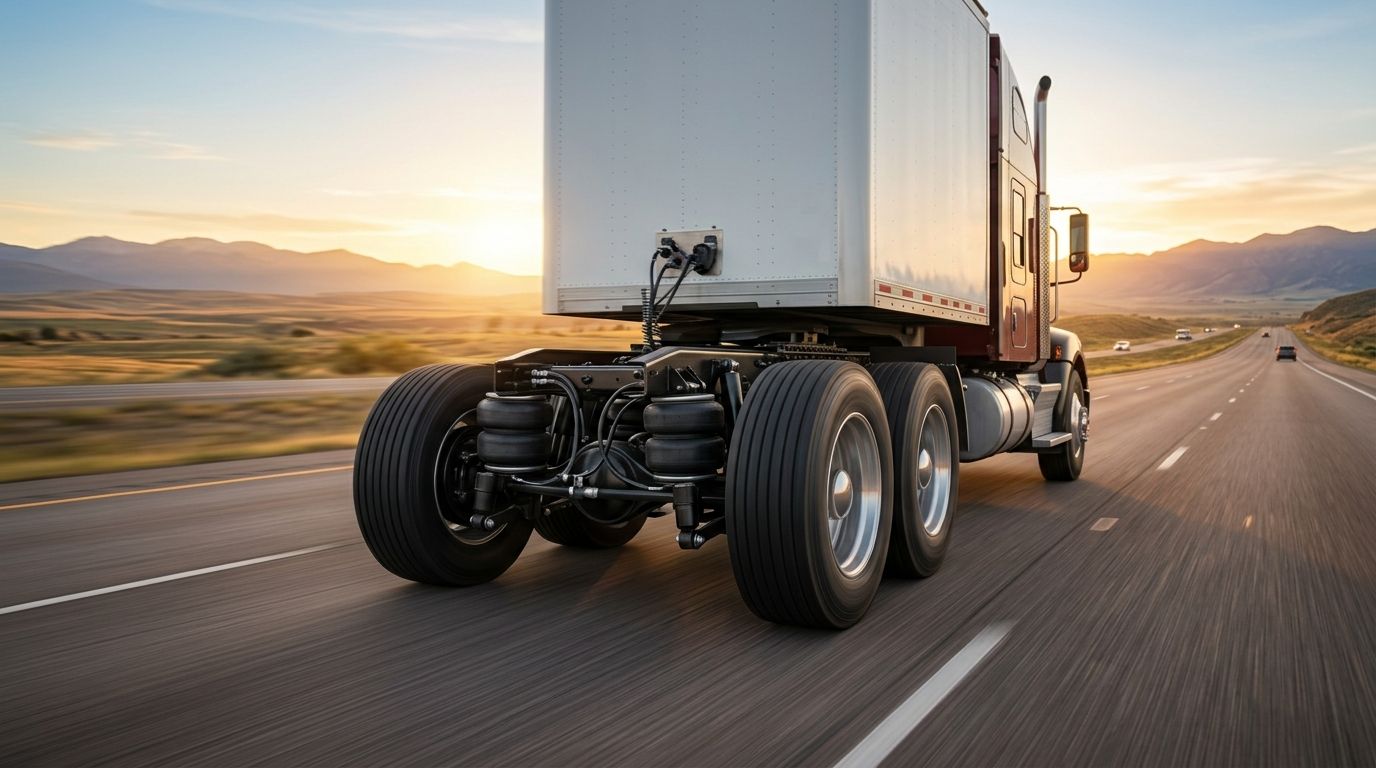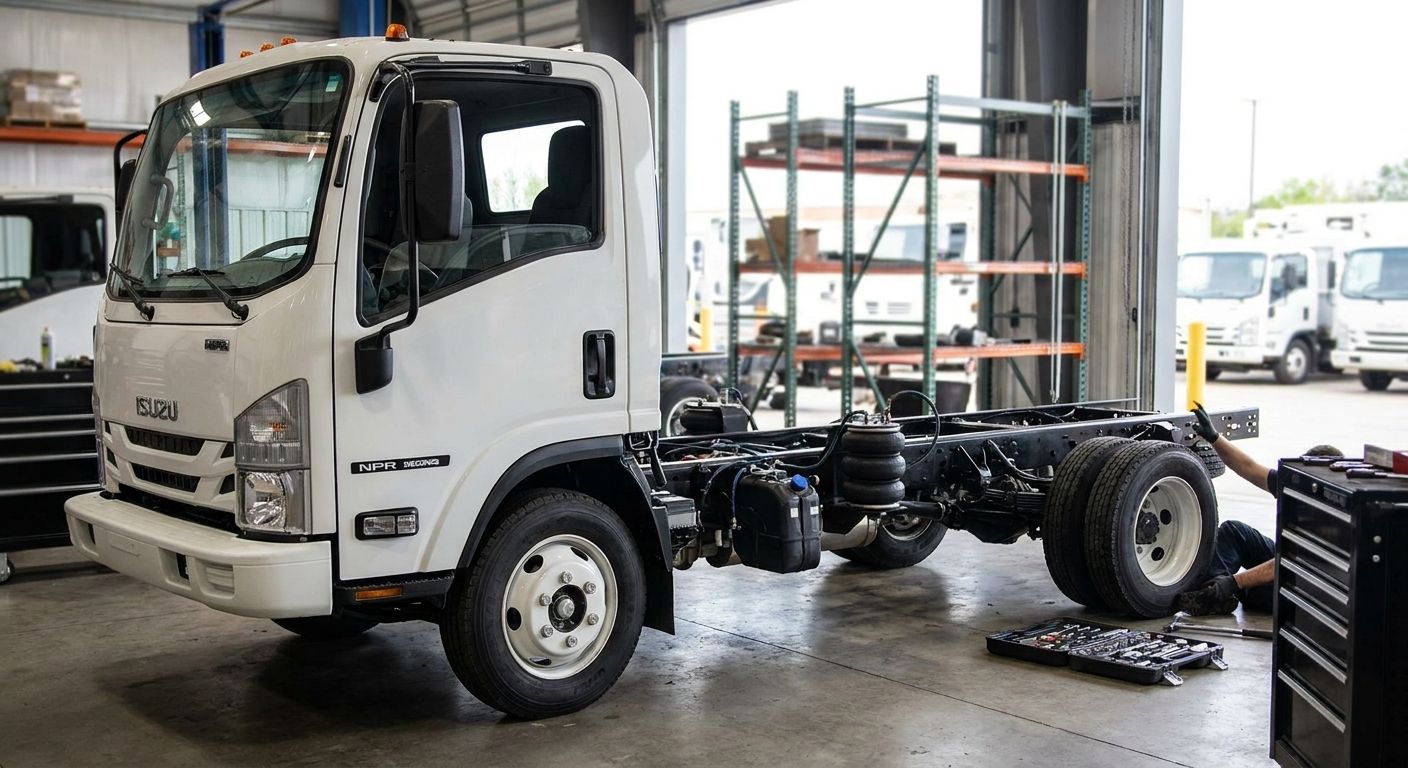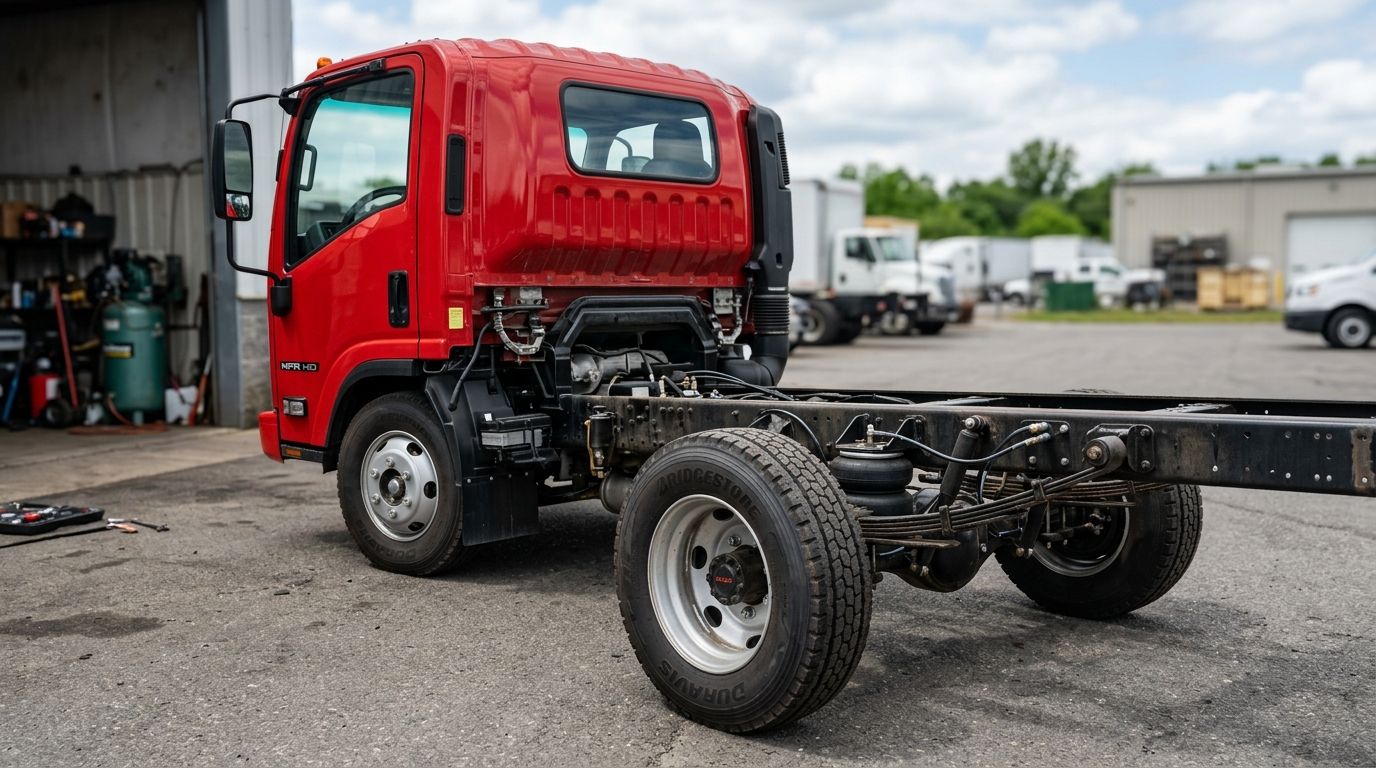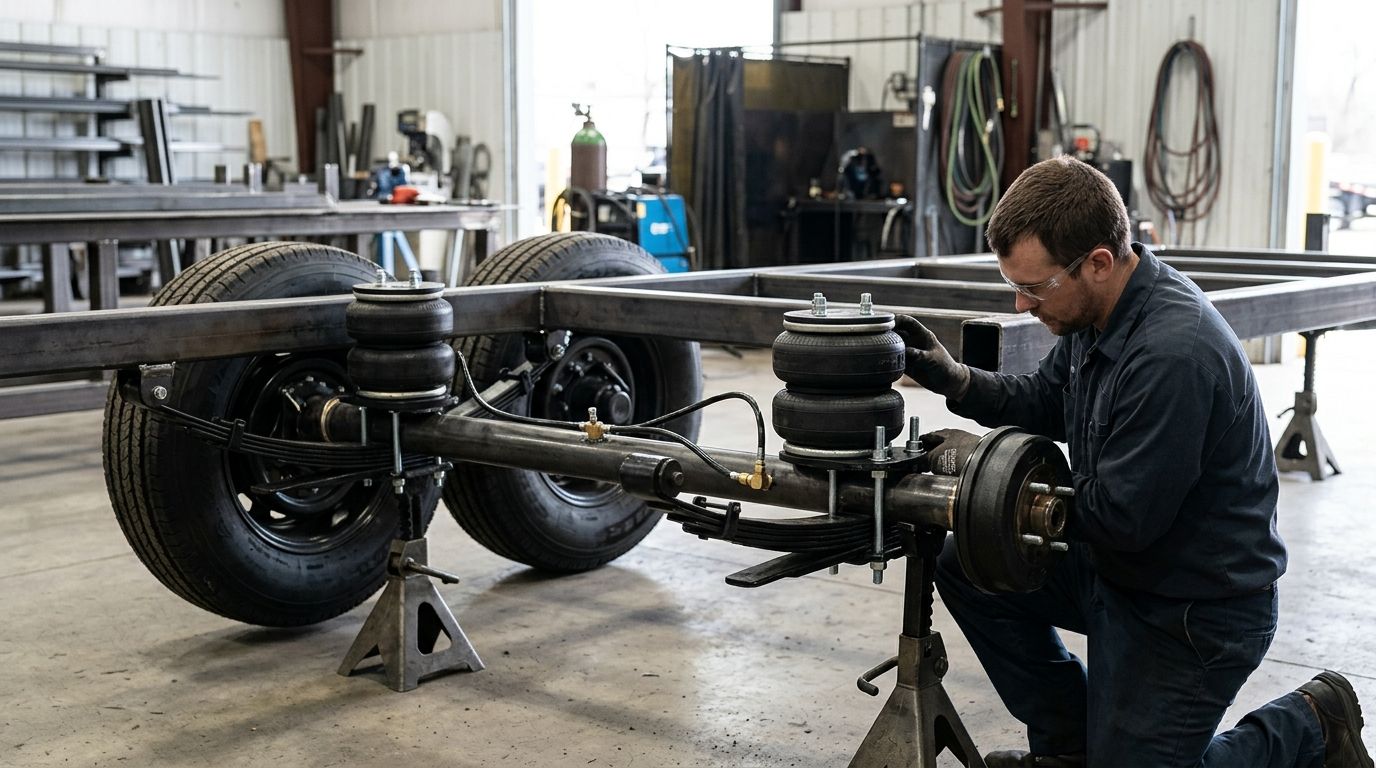
Trailer manufacturers’ load assist airbag selection is the process of matching rear suspension support to a specified tow vehicle, with the aim of reducing sag under load without changing its legal limits. The distinction matters in a trailer build: a kit fitted to the tow vehicle is not automatically a suspension solution for the trailer axle.
- Load assist airbags for trailer manufacturers belong in the tow-vehicle specification only after vehicle-specific fitment is confirmed.
- Boss Air Suspension is best for builders specifying vehicle-specific load assist kits with Australian technical support.
- A trailer axle suspension design needs its own assessment; a tow-vehicle load assist kit does not establish trailer compatibility.
- Check the loaded vehicle, towball load and legal ratings before recommending rear suspension support.
Why load assist matters for trailer manufacturers
Your customer experiences the vehicle and trailer as one towing setup. If the rear of the tow vehicle sits low when the trailer is coupled, load assist airbags can help support the existing rear suspension and restore a more level stance. They do not correct an overloaded vehicle, unsuitable towball load or poor trailer loading.
In 2026, the useful question for a builder is not simply whether to offer airbags. It is which vehicle carries the load, which suspension needs support and what fitment has been confirmed. Boss Air Suspension supplies vehicle-specific load assist kits and technical advice, but the trailer specification and the tow vehicle specification still need separate checks.
How to specify load assist for a trailer build
1. Separate tow-vehicle support from trailer suspension
Start by identifying where the proposed airbag will be installed. A load assist kit for a ute or 4WD works with that vehicle’s existing suspension. A trailer axle suspension system is part of the trailer’s own running gear. Similar terminology does not make the parts interchangeable.
This decision comes before bracket drawings or customer-facing claims. If the concern is rear-end sag on the tow vehicle, investigate its rear suspension and loading. If the concern is trailer ride height or axle movement, assess the trailer suspension as a distinct design. Do not list a tow-vehicle kit as a trailer component because both use compressed air.
- Record whether the complaint concerns the tow vehicle, trailer or both.
- Note the tow vehicle’s make, model, variant and suspension type.
- Identify the trailer’s axle and suspension arrangement separately.
- Keep tow-vehicle and trailer component specifications on separate build records.
2. Measure the towing setup as it will be used
Check the assembled setup with its normal equipment and intended load. A level-looking tow vehicle when uncoupled does not show what happens after a trailer is connected. Conversely, a low rear end does not by itself prove that airbags are the correct remedy: loading position, towball load and existing suspension condition all matter.
Record the vehicle’s applicable ratings from its documentation, then obtain the relevant loaded measurements through the builder’s normal weighing process. Account for accessories already fitted to the vehicle. Air pressure is an adjustment to suspension support, not a way to approve excess mass. If the setup exceeds a legal or manufacturer limit, correct the loading or specification before considering a kit.
- Compare the vehicle’s loaded condition before and after coupling.
- Check applicable GVM, axle and towing limits against the vehicle documentation.
- Include permanent tools, canopies and touring equipment in the assessment.
- Document the customer’s usual trailer configuration, not just an empty handover setup.
3. Confirm the exact vehicle application
Match the kit to the tow vehicle rather than to the trailer category. A caravan, plant trailer and boat trailer can all be towed by vehicles with different chassis and rear suspension arrangements. Even within a model line, fitment needs the correct variant and relevant vehicle details.
You can start with a manual vehicle record and application guide. Then check the proposed kit’s fitment information and installation instructions. Choosing the right load assist airbag kit sets out the selection questions; the guide does not replace confirmation for a particular vehicle. Boss Air Suspension can provide technical advice when the recorded vehicle configuration needs a closer check.
- Record make, model, variant and build details from the actual vehicle.
- Confirm whether the rear suspension uses coil or leaf springs.
- Identify fitted accessories that affect mounting space.
- Check the kit documentation for the exact application and installation conditions.
- Resolve an unclear fitment before adding the kit to a build specification.
4. Decide what the airbags must address
Write down the symptom the customer wants to improve. A load assist kit is relevant when a compatible tow vehicle’s rear suspension needs additional support under a changing load. Adjustable air pressure lets the driver respond to different loading conditions within the kit’s instructions. It is not a substitute for fixing worn suspension or redistributing a poorly loaded trailer.
The recommendation should describe the expected job in plain terms: support the rear, reduce sag and help the vehicle remain more level while towing or carrying equipment. Avoid promising that every handling complaint will disappear. A steering or braking concern calls for a wider vehicle and towing assessment, not an airbag setting chosen by appearance alone.
- Describe when the sag occurs: loaded, coupled or both.
- Check the existing springs and other suspension components for faults.
- Review trailer loading before specifying rear support.
- Define the desired loaded ride height using the vehicle’s instructions.
- State what the kit will not change, including legal mass limits.
5. Plan adjustment and air supply around the user
A basic setup can be adjusted through accessible inflation points using an appropriate air source and pressure gauge. Onboard air and air management are options when the intended use calls for adjustment without finding an external compressor. Neither is a prerequisite for selecting the correct vehicle-specific airbags.
If onboard air is proposed, confirm the vehicle electrical system and the requirements of the chosen components. Boss Air Suspension supplies 12V and 24V compressors, air lines, fittings, valves and controllers; that product range does not mean every combination suits every build. Specify components as a matched system and follow their individual installation instructions. Keep controls understandable for the person who will tow the trailer.
- Choose accessible inflation points for a manually adjusted setup.
- Confirm whether the vehicle and selected equipment require 12V or 24V power.
- Check routing and protection for air lines and wiring.
- Select a control method the customer can operate correctly.
- Give the owner the component instructions and adjustment procedure.
6. Check installation clearance and engineering requirements
Inspect the actual vehicle before treating a drawing as an installation approval. Mounting space, suspension travel, nearby components and air-line routing need to match the chosen kit’s instructions. A bracket that appears to fit at normal ride height also needs assessment across the vehicle’s permitted movement. Do not substitute a fabricated mount without the required technical review and approval.
This matters to manufacturers that fabricate their own components. For in-house metalwork, custom press brake tooling is relevant to forming a repeatable bracket, but repeatable fabrication does not establish that a modified vehicle mounting arrangement is suitable or approved. In 2026, keep manufacturing control and vehicle engineering approval as separate sign-offs.
- Read the kit instructions before finalising mounting locations.
- Inspect clearance around suspension movement and adjacent parts.
- Protect air lines from abrasion and heat as the instructions require.
- Refer any proposed bracket or mounting change for appropriate review.
- Record the approved installation arrangement in the build file.
7. Test the loaded result and document the handover
Check the installation and towing setup in the condition the customer will use. Follow the kit instructions when setting pressure; there is no universal pressure that suits every vehicle and load. Recheck the loaded stance, air-line connections and the vehicle’s behaviour through the builder’s normal inspection process. If the result still indicates poor balance, revisit loading and suspension condition rather than simply adding more air.
Give the customer a clear distinction between support and capacity. Boss Air Suspension load assist airbags are intended to work with the existing suspension; they do not increase the vehicle’s legal GVM, payload or towing rating. In 2026, a sound handover also identifies the exact fitted kit and directs the owner to its instructions for operating limits and maintenance.
- Check the fitted system for leaks using the kit procedure.
- Set pressure to the documented instructions for the actual load.
- Recheck the coupled vehicle’s stance and applicable ratings.
- Record the kit and confirmed vehicle application.
- Explain adjustment and inspection responsibilities to the owner.
Compare the options for a trailer-building program
Boss Air Suspension load assist airbags are best for trailer builders whose customers need confirmed, vehicle-specific rear suspension support on the tow vehicle. Their limitation is equally clear: they are not a default trailer axle kit and cannot authorise additional vehicle capacity. Choose the option by the problem it addresses, not by which component is easiest to add to a sales package.
| Option | Best for | Key limitation |
|---|---|---|
| Vehicle-specific load assist airbags | A compatible tow vehicle that sags under an otherwise compliant load | Fitment must be confirmed; legal ratings do not increase |
| Existing suspension inspection or repair | A vehicle with worn or faulty suspension components | Does not resolve an unsuitable trailer load or vehicle specification |
| Trailer axle suspension assessment | A concern arising from the trailer’s own suspension design | Requires a separate trailer engineering and component decision |
| Onboard air and air management | A confirmed airbag installation needing convenient adjustment | Adds components and installation requirements; does not establish airbag fitment |
In 2026, start with the vehicle and trailer records you already hold. Use the table to identify the next assessment, not to approve a component. Where a customer changes tow vehicles after ordering a trailer, repeat the vehicle fitment check rather than transferring the earlier kit recommendation.
Common mistakes trailer manufacturers make
- Treating tow-vehicle and trailer airbags as the same product. The mounting points, application and engineering decisions differ. Identify the installation location before preparing a parts list.
- Specifying a kit from the trailer type alone. A trailer description does not identify the tow vehicle’s rear suspension. Obtain the actual vehicle details and confirm fitment.
- Using air pressure to disguise excess load. A level stance does not establish compliance with GVM, axle, towing or trailer limits. Check the loaded combination against its applicable ratings.
- Assuming every customer needs onboard air. Manual inflation is a workable starting point when it meets the user’s needs and the kit instructions. Add air management for a defined adjustment requirement.
- Skipping the handover explanation. An owner needs to know what was fitted, how to adjust it under the supplied instructions and what limits remain unchanged.
FAQ
Are load assist airbags fitted to the trailer or the tow vehicle?
A vehicle-specific load assist kit is fitted to its approved tow-vehicle application. Trailer axle air suspension is a separate design decision and cannot be assumed compatible with that kit.
Can trailer manufacturers specify airbags before knowing the tow vehicle?
No. Confirm the tow vehicle’s exact application and intended loaded use before specifying a vehicle-specific kit. A trailer type alone does not establish vehicle fitment.
Do load assist airbags increase towing capacity?
No. Load assist airbags do not increase legal towing capacity, GVM or payload on their own. Use the vehicle’s applicable ratings when assessing the loaded setup.
Will airbags fix rear-end sag while towing?
A correctly fitted load assist kit can help support a compatible vehicle’s rear suspension under load. First check loading, vehicle ratings and suspension condition; airbags do not correct those problems.
Does a trailer builder need to include an onboard compressor?
No. A compatible load assist setup can use accessible inflation points and an appropriate air source. Specify onboard air only when the chosen system and customer use justify it.
Is a 12V or 24V compressor right for the build?
Choose the electrical supply that matches the vehicle and the selected equipment’s instructions. Boss Air Suspension supplies both 12V and 24V compressors, but the correct system depends on the confirmed application.
How should a manufacturer confirm airbag fitment?
Check the exact vehicle details against the kit’s application information and installation instructions. Ask Boss Air Suspension for technical advice if the configuration or mounting clearance remains unclear.
One last thing
A level tow vehicle is an observation, not a capacity certificate. In 2026, give the customer both the confirmed fitment record and the applicable loading limits at handover. That makes the value of rear suspension support clear without suggesting the vehicle can legally carry or tow more.