Tilt tray and vehicle recovery trucks carry the heaviest, most variable loads on the road: a hydraulic tray, a winch, recovery gear, and sometimes a full-size vehicle strapped down for transport. This guide covers what to look for in air suspension for tilt tray trucks, where load assist airbags fit into a working recovery vehicle, and what to leave off the truck entirely.
- Heavy-duty airbag suspension kits work with existing leaf springs to reduce rear-end sag on tilt tray trucks - Buy for daily recovery work.
- A self-levelling valve or digital controller adds convenience for multi-driver fleets but isn't essential on a single-operator truck - Consider.
- A 24V onboard air compressor with an aluminium air tank covers tyre work and air tools on recovery jobs - Buy for trucks doing regular roadside work.
- Load assist airbags don't increase legal GVM or towing capacity - confirm your truck's compliance plate before adding weight in 2026.
Why this matters
A tilt tray or recovery truck spends most of its working life close to its GVM. The tray itself weighs several hundred kilograms, the winch and rigging add more, and then there's the vehicle being recovered sitting on the deck.
That weight sits behind the rear axle, which is exactly where leaf spring suspension sags first. A sagging rear end lifts the headlights, reduces steering feel and makes the truck harder to control when towing at night or on uneven ground.
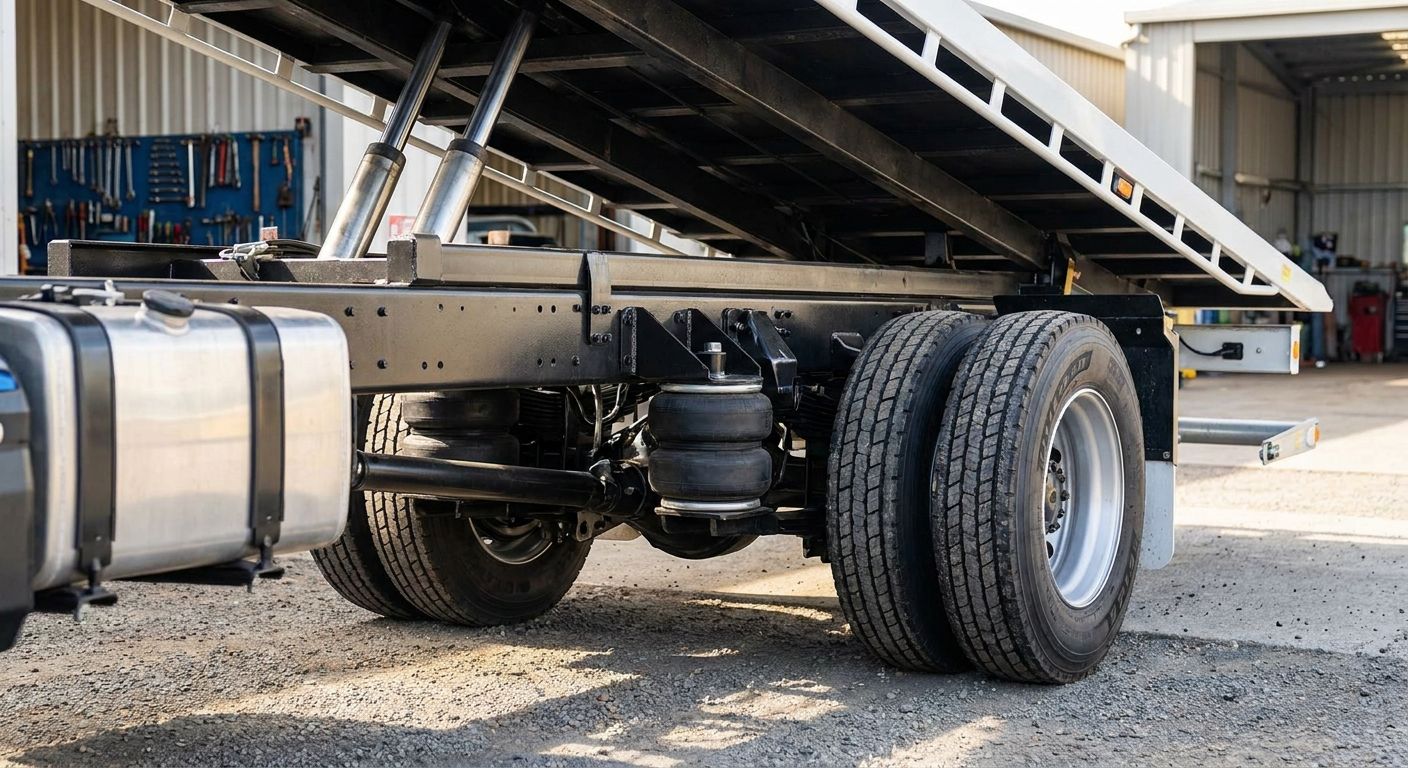
Air suspension for tilt tray trucks - specifically load assist airbag kits from Boss Air Suspension - works with the factory leaf springs to help support that rear-end weight and keep the truck sitting closer to its designed ride height. It doesn't change what the truck is legally rated to carry. It changes how the truck behaves while carrying it, and that difference matters every single shift in 2026.
Who this guide is for
This is for tow truck operators, tilt tray fleet owners, recovery vehicle builders and workshops fitting out commercial trucks that regularly run at or near GVM. If your truck sags at the back with a vehicle on the tray, wanders under brakes when loaded, or needs onboard air for tyre work and pneumatic tools on the job, the sections below apply directly to you.
What to look for in air suspension for tilt tray trucks
Compatibility with your existing leaf spring suspension
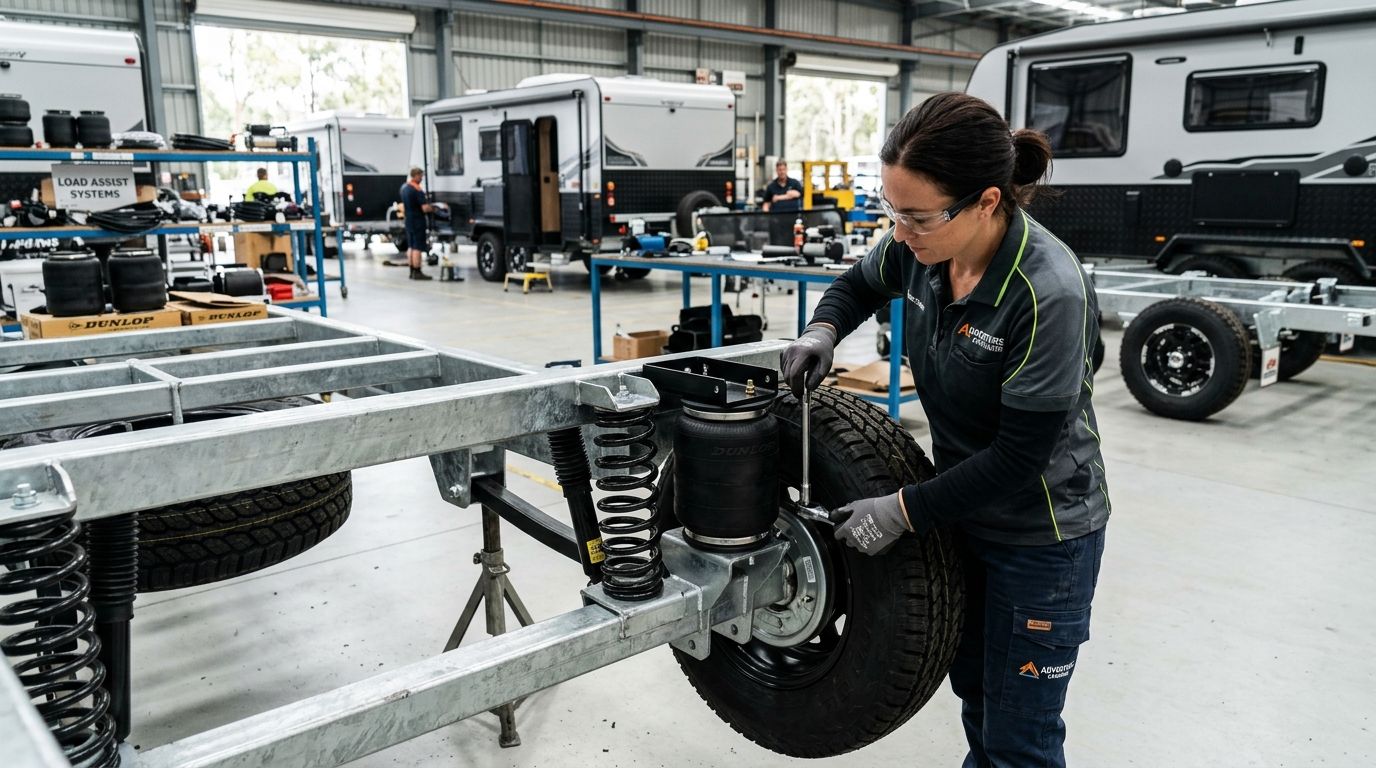
Load assist airbags for a tilt tray or recovery truck have to work with the leaf springs already fitted, not replace them. A kit that isn't matched to your axle and spring configuration won't seat correctly, and it can rub, chafe or fail early under constant rear-end loading.
Air pressure range and adjustability
A truck that runs empty on the way to a job and fully loaded on the way back needs airbags rated for a wide pressure range, not a fixed setting. Being able to wind pressure up when towing a vehicle and back off when running light protects tyre wear and ride comfort between jobs.
Bracket and mounting quality for continuous duty
A recovery truck isn't a weekend tow rig. Brackets and mounting hardware take constant flex from corrugated yards, kerb ramps and loading docks, so look for brackets built for commercial-duty cycles, not light passenger vehicle fitments.
Onboard air integration
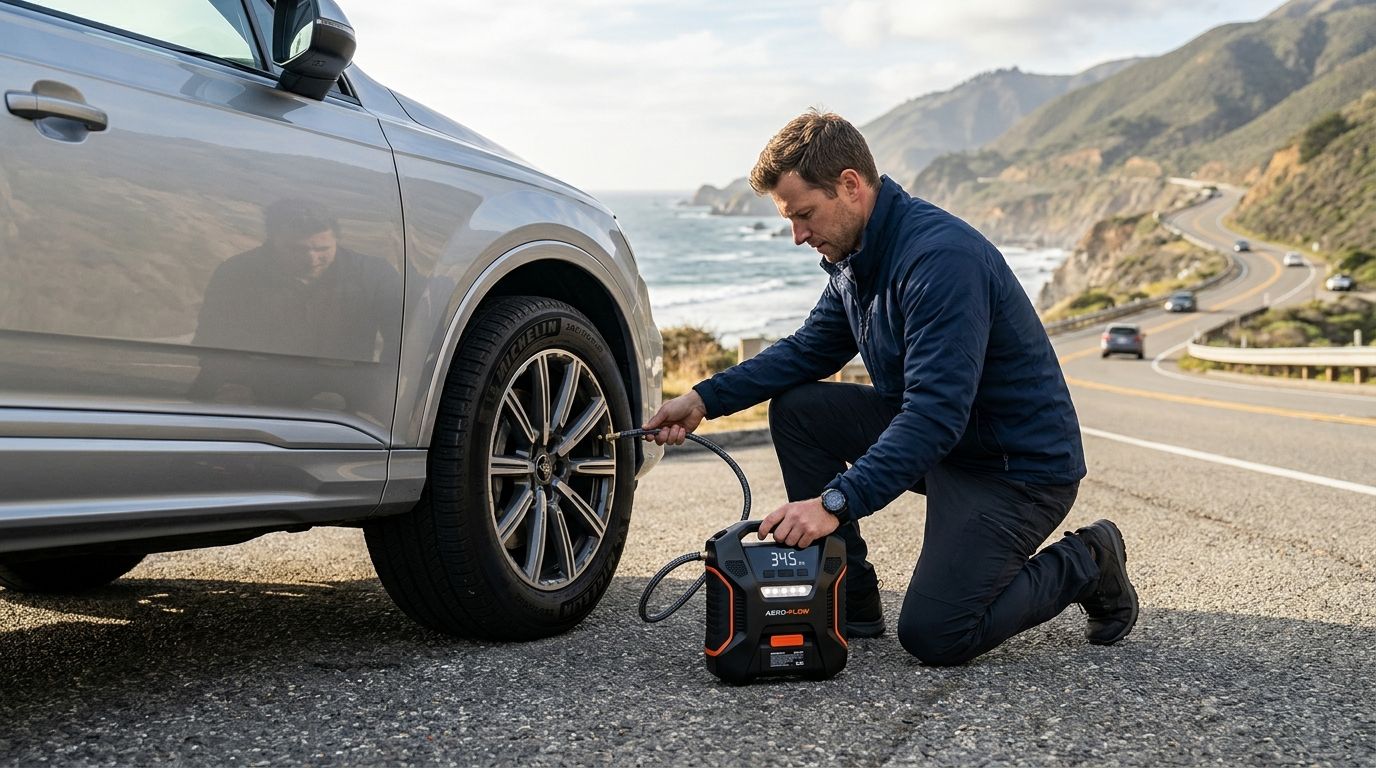
Most tilt tray operators already run onboard air for tyre inflation or pneumatic tools. Choosing a load assist setup that can share a compressor, tank and manifold with the rest of the truck's air system saves a second compressor install down the track.
Warranty and support for fleet use
A truck running six days a week wears parts faster than a private touring vehicle. A five-year warranty on the airbags themselves matters more here than on a weekend tourer, and local Australian support from Boss Air Suspension means less downtime waiting on parts.
GVM and compliance plate limits
Air suspension improves how the rear end sits and behaves under load. It does not increase the truck's GVM, payload or towing capacity. Any load assist kit needs to sit within the ratings already on your compliance plate - check with your workshop if you're unsure.
Top picks for tilt tray and recovery truck operators
The core fix: heavy-duty airbag suspension kit For a truck that sags every time the tray is loaded, this is the first thing to fix. A heavy-duty airbag suspension kit for commercial towing uses SAE J844-rated double bellow airbags designed for commercial towing loads, not light passenger use. Buy this before anything else if rear-end sag is your main issue in 2026.
The convenience upgrade: self-levelling valve or digital controller A self-levelling valve adjusts air pressure automatically as load changes, which matters if more than one driver runs the truck or loads vary job to job. It's not essential on a single-operator recovery truck running the same tray weight daily. Consider it for multi-driver fleets, skip it for a one-truck operation.
The onboard air backbone: 24V compressor and tank Tilt tray trucks running 24V electrical systems need a compressor built for that voltage, not a 12V unit wired through a converter. A 24V air compressor for commercial fleet vehicles paired with an aluminium air tank covers tyre inflation and air tools without pulling from the truck's main electrical load. A 100% duty cycle unit, like the 12V PX06 compressor Boss Air Suspension stocks for smaller onboard air setups, keeps running under constant on-the-job use without overheating. Buy this if your truck doesn't already run onboard air.
The reserve capacity pick: aluminium air tank A compact aluminium air tank, something in the 1.5-gallon range, gives a recovery truck enough reserve air for a tyre top-up or a quick tool job without waiting on the compressor to catch up. Consider adding one if your current setup runs the compressor constantly during a shift.


What to avoid
Kits marketed as a GVM fix. No load assist airbag kit increases a truck's legal GVM, payload or towing capacity. If a supplier implies otherwise, check for an actual approved GVM upgrade with engineering certification. GVM upgrade explained covers the difference in plain terms.
Single bellow airbags sized for utes. Airbags designed for a dual-cab ute's coil or leaf springs aren't built for the sustained rear-end load a tilt tray carries daily. They may fit physically and still be the wrong product for the job.
No air pressure adjustment at all. A fixed-pressure kit with no way to wind pressure up or down between an empty run and a fully loaded one defeats the purpose. If you can't adjust it, you can't match it to the load in front of you.
How the options compare
| Option | Best for | Load capacity support | Install complexity | Verdict |
|---|---|---|---|---|
| Heavy-duty airbag suspension kit | Daily rear-end sag under tray and winch weight | High - works with existing leaf springs | Moderate, bolt-on | Buy |
| Self-levelling valve / digital controller | Multi-driver fleets with variable loads | Adds automatic adjustment | Higher, needs air management setup | Consider |
| 24V onboard air compressor + tank | Trucks needing tyre and tool air on the job | Not suspension-related | Moderate, wiring required | Buy |
| Single bellow ute-spec airbags | Light utes, not commercial trucks | Low for sustained heavy loads | Low | Skip |
FAQ
What is the best air suspension for tilt tray trucks in 2026?
A heavy-duty load assist airbag kit rated to SAE J844 is the best starting point for tilt tray trucks in 2026, because it works with the existing leaf springs to reduce rear-end sag under tray and winch weight. Pair it with an onboard air compressor if the truck also needs air for tyres or tools.
Does load assist air suspension increase a truck's GVM or towing capacity?
No, load assist airbags do not increase a truck's legal GVM, payload or towing capacity. They help the existing suspension carry the load it's already rated for more evenly, and any change to GVM needs an approved engineering upgrade.
Can airbag suspension fit a tilt tray truck with standard leaf springs?
Yes, load assist airbags are designed to work alongside existing leaf spring suspension rather than replace it. Fitment still depends on the specific chassis and axle configuration, so confirm compatibility before ordering.
What PSI should airbags run under a loaded tilt tray?
There's no single PSI figure that suits every truck, because it depends on the airbag kit, the tray weight and what's loaded on the deck. Set pressure with the truck loaded the way it actually runs, then check it again as loads change.
Is a self-levelling valve worth it on a recovery truck?
A self-levelling valve is worth it if more than one driver runs the truck or loads vary significantly between jobs, because it adjusts pressure automatically. A single-operator truck running the same tray weight daily can usually skip it.
What onboard air system suits a tilt tray or recovery truck?
A 24V compressor matched to the truck's electrical system, paired with an aluminium air tank, covers tyre inflation and pneumatic tools without overloading the vehicle's main electrical circuit. Sizing depends on how often the truck needs air on the job.
How long do load assist airbag kits last on a working commercial truck?
Life span depends on duty cycle and conditions, but commercial-grade kits are typically backed by a five-year warranty, which reflects the level of continuous use they're built for. Regular inspection of brackets and air lines extends service life further.
One last thing
The airbags themselves are only half the system. A kit with SAE J844-rated bellows and solid brackets still needs the right air pressure for your actual loaded weight, set with the tray loaded the way you actually run it, not empty in the yard. Set it once with a real job on the deck, then check it again after the first few thousand kilometres of commercial use in 2026 - that's the step most operators skip, and it's the one that makes the whole setup worth the money.