Fleet operators running vans, utes and light trucks on 24V electrical systems need an onboard air compressor that survives daily duty cycles, not weekend touring use. This guide ranks the setup considerations that matter most when specifying a 24v air compressor for commercial fleet in 2026, and where Boss Air Suspension's onboard air componentry fits into that build.
- A 24v air compressor for commercial fleet vehicles needs a continuous or near-continuous duty cycle rating - treat this as non-negotiable in 2026.
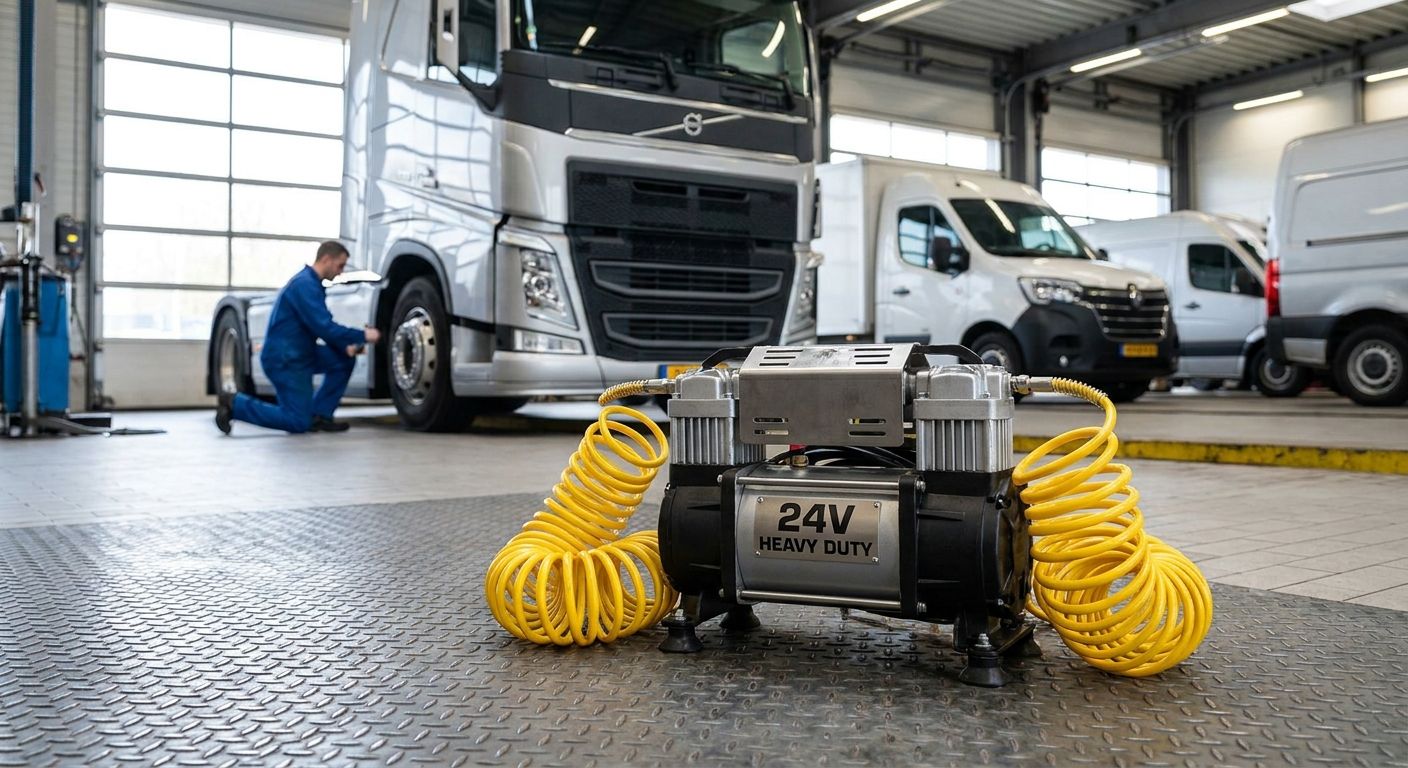
- Twin-compressor setups suit high-volume depots running multiple vehicles a day; a single unit suits lighter fleet cycles.
- Pressure switch integration and tank buffering cut compressor run time and extend service life across a fleet.
- Boss Air Suspension's onboard air range covers 12V and 24V builds, from compressors to tanks and switches.
Why this matters
A fleet vehicle doesn't get a rest day. If it's inflating tyres, running an air locker, or feeding a load assist airbag kit every shift, the compressor behind that system is working harder than anything fitted to a weekend tourer.
Get the spec wrong and you're not looking at a warranty claim on one vehicle - you're looking at downtime across a depot. That's the real cost of choosing a compressor on price alone, and it's why fleet buyers in fleet ute fit-out programs tend to spec componentry differently to private buyers.
Most of the failures workshops see aren't voltage failures. They're duty cycle failures - a compressor rated for occasional use, running continuously because nobody matched the spec to the job.
How this list was ranked
This ranking weighs four things: duty cycle rating against expected daily run time, compatibility with a 24V electrical architecture, how well the compressor integrates with a pressure switch and tank buffer, and how straightforward the setup is to service across a fleet of vehicles rather than a single private vehicle.
It's built from the same fitment logic Boss Air Suspension applies across its onboard air range - vehicle-specific matching, not a generic "biggest number wins" approach. None of the picks below assume every fleet has identical needs; a courier van and a mine-site ute don't draw air the same way.
The ranked list
1. Duty cycle rating - the spec that decides fleet survival
The single biggest factor in whether a 24V air compressor lasts in fleet service is its duty cycle rating, not its peak output. A unit rated for short bursts will overheat and shut down if it's asked to run continuously across a full shift of tyre inflation or airbag adjustment.
For 2026 fleet builds, this is the first spec to check before anything else - tank size, fittings, wiring - gets locked in. The duty cycle guide breaks down how to match a compressor's rating to actual usage patterns rather than guessing.
Buy priority: this is the criterion that overrides all others for fleet use.
2. Twin-compressor setup - the high-volume depot pick
Running two compressors in parallel halves the strain on each unit and cuts fill time, which matters when a depot is cycling several vehicles through the same onboard air bay in a day. It's more wiring and more componentry to manage, so it only pays off once volume justifies it.
A single fleet ute or van doing routine tyre checks doesn't need this. A workshop or depot servicing multiple vehicles daily usually does.
Verdict: Buy for high-volume depots, Skip for single-vehicle use.
3. Onboard air system for mining and remote-site fleets - the remote-duty build
Remote and mining fleets run compressors harder and further from support than metro fleets ever will. Corrugated roads, air lockers, and tyre pressure adjustments on the move all add up to more compressor cycles per day than a suburban delivery van sees in a month.
The onboard air system for mining and remote fleets covers how these builds are specced differently - bigger tank buffers, more robust wiring, and compressors chosen for sustained rather than intermittent demand.
Verdict: Buy for remote and mining fleets running daily off-road cycles.
4. Pressure switch integration - the component that stops premature failure
A compressor without a properly matched pressure switch will short-cycle, switching on and off far more often than necessary. That extra cycling wears out contacts and shortens compressor life faster than continuous running does.
This is the part fleet buyers overlook most often because it's cheap relative to the compressor itself. It shouldn't be treated as an afterthought on a 24V fleet build.
Verdict: Buy - a compressor without a matched switch is a compressor on borrowed time.
5. Aluminium air tank buffering - the extra that reduces compressor cycling
Adding a tank between the compressor and the outlet means the compressor doesn't have to run every time air is drawn - it tops up the tank periodically instead of firing constantly. This reduces total run hours across the year, which matters for fleet maintenance budgets.
It's not essential for light, occasional use, but for a fleet running daily tyre inflation or airbag adjustment, it earns its place in the build.
Verdict: Hold - worth adding once duty cycle demand justifies the extra plumbing.
6. Tyre pressure monitoring and inflation combo - the compliance-driven add-on
Fleets managing multiple vehicles increasingly pair onboard air with tyre pressure monitoring, mainly to catch slow leaks and uneven wear before they become a roadside call-out. It's not core to the compressor spec itself, but it changes how often the compressor gets used.
For fleets already committed to a monitoring program, this is a natural pairing rather than a separate purchase decision.
Verdict: Wait until the core compressor and tank spec is locked in, then layer this on.
“Most fleet compressor failures aren't voltage failures - they're duty cycle failures from a unit built for occasional use, running all day at a depot.”
Comparison table
| Consideration | Priority for Fleet Use | Best Suited To | Verdict |
|---|---|---|---|
| Duty cycle rating | Highest | Any fleet running daily air draw | Buy |
| Twin-compressor setup | High for volume | Multi-vehicle depots | Buy / Skip by volume |
| Remote/mining onboard air build | High for remote ops | Mining, remote-site fleets | Buy |
| Pressure switch integration | High | Every 24V install | Buy |
| Aluminium tank buffering | Medium | Daily-use fleets | Hold |
| Tyre pressure monitoring combo | Medium | Fleets already monitoring pressures | Wait |
Where to buy
Match the compressor to the vehicle's existing electrical architecture before anything else - confirm whether the fleet vehicle actually runs 24V or 12V, since this varies across ute, van and truck platforms even within the same fleet.
Buy the pressure switch and compressor as a matched pair rather than sourcing them separately from different suppliers. The air compressor pressure switch guide covers how mismatched switches cause the short-cycling that shortens compressor life.
Have wiring done by a qualified auto electrician on any 24V fleet install. The higher voltage and continuous-duty wiring involved isn't a plug-and-play job the way a small 12V accessory install can be.
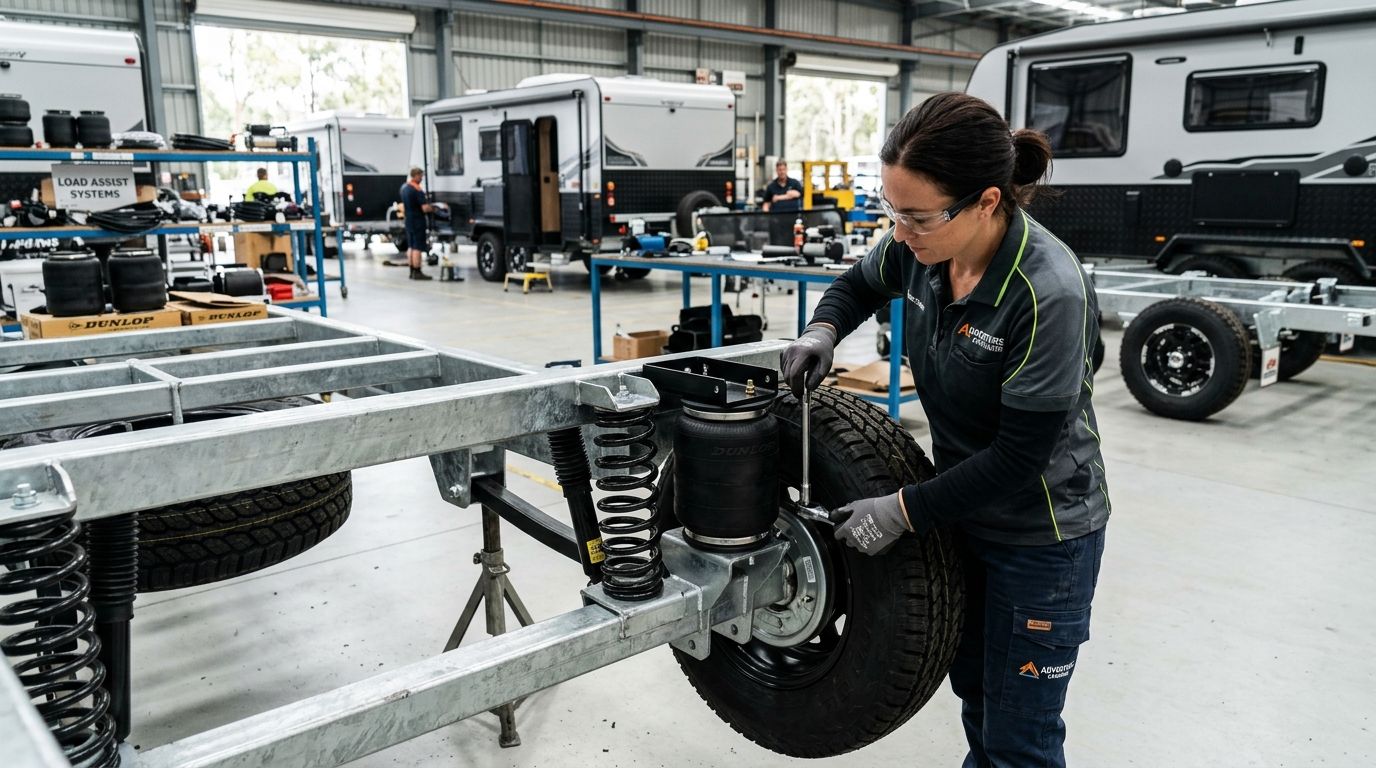
Boss Air Suspension supplies onboard air componentry - compressors, tanks, switches and fittings - built for Australian fleet conditions, with fitment support for matching the right spec to the vehicle rather than guessing.
FAQ
What's the best 24V air compressor for commercial fleet vehicles?
The best 24v air compressor for commercial fleet vehicles is the one matched to duty cycle demand and existing 24V wiring, not necessarily the highest-output unit. In 2026, duty cycle rating and pressure switch integration matter more to fleet longevity than raw CFM figures.
Is a 24V air compressor better than a 12V unit for fleet work?
A 24V compressor draws less current for equivalent output on vehicles already wired at 24V, which suits medium and heavy commercial platforms. A 12V unit is still the correct choice for vehicles running a 12V electrical system - the vehicle's existing architecture decides this, not preference.
Do commercial trucks and vans run 24V or 12V electrical systems?
It varies by platform. Many utes and light commercial vans run 12V, while medium and heavy trucks and buses commonly run 24V using two 12V batteries in series. Confirm the specific vehicle's electrical architecture before buying a compressor.
Can a 24V air compressor run continuously in fleet use?
Only if it's rated for continuous or near-continuous duty cycle. A compressor without that rating needs rest periods between uses, which slows down tyre inflation and airbag adjustment across a depot running multiple vehicles.
What tank size suits a 24V onboard air system for a fleet vehicle?
Tank size depends on the number of outlets in use and how often air is drawn across the fleet's daily routine. A larger buffer tank reduces how often the compressor cycles, which matters more for high-use fleet vehicles than for occasional private use.
Does Boss Air Suspension supply 24V air compressors for commercial fleets?
Boss Air Suspension's onboard air range includes 12V and 24V compressors alongside tanks, pressure switches and management components suited to fleet-spec builds. Check the current range for the specific output and fitment your vehicle needs.
How is a 24V air compressor wired into a fleet vehicle?
A 24V compressor is wired through a relay and pressure switch drawing from the vehicle's 24V circuit, typically with a dedicated fuse and hardwired connection rather than a plug-in accessory setup. Fleet installs should be handled by a qualified auto electrician given the voltage and continuous-duty wiring involved.
What's the difference between a single and twin compressor onboard air setup?
A twin setup runs two compressors in parallel to cut fill time and share duty-cycle strain, which suits high-volume depots servicing several vehicles a day. A single compressor is sufficient for fleets with lighter, occasional air demand.
One last thing
The number that trips up most fleet buyers isn't voltage - it's run time. A compressor spec'd for a weekend 4WD trip and dropped into daily depot use in 2026 will fail well before its rated lifespan, regardless of whether it's 12V or 24V. Duty cycle, not voltage, is the number worth arguing about before signing off on a fleet-wide order.