Picking an air compressor for dirt bike trailers comes down to one question: how much air do you need, how fast, and where. This guide ranks the setups that actually hold up to weekend towing, dusty tracks and back-to-back tyre pressure changes in 2026, and tells you which one fits a single-bike box trailer versus a full enclosed rig.
- A compact 12V air compressor for dirt bike trailers suits single-bike setups doing quick trackside top-ups - Buy.
- An onboard air tank system fills faster for multi-bike trailers and dual-axle rigs - Buy for regular racers.
- Pairing a compressor with a deep cycle battery solves no-power trackside charging - Consider for remote meets.
- Twin compressor setups suit enclosed trailers running air tools, not casual weekend riders - Skip unless you're workshop-equipped.
Why this matters
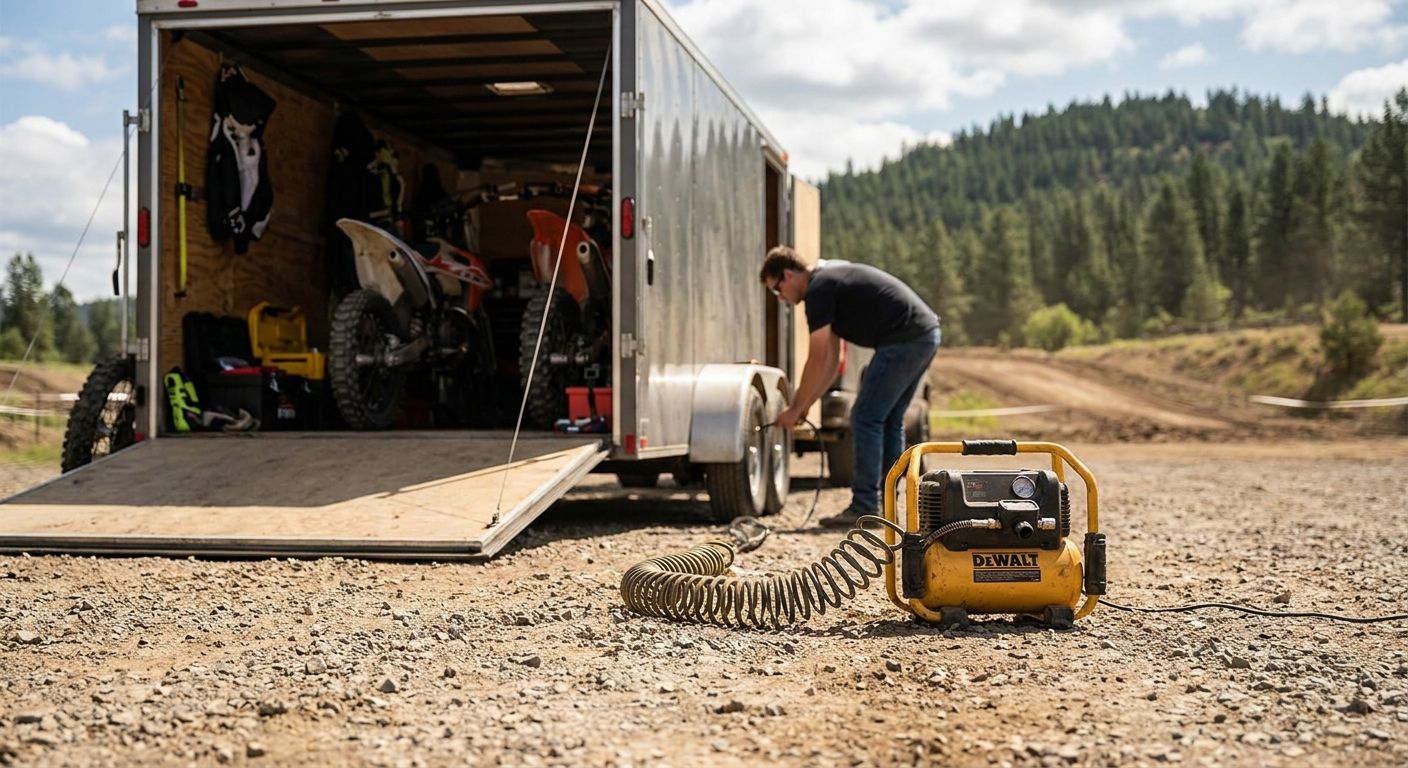
Dirt bike trailer tyres run at different pressures for bitumen towing versus soft paddock ground, and getting that wrong either wears the tyre unevenly or bogs the trailer at the gate. A 12V air compressor built for tyre inflation lets you adjust pressure at the track instead of guessing before you leave home.
Most riders towing a bike trailer behind a ute or wagon already have 12V power on tap. The problem is duty cycle - cheap inflators overheat after a few minutes, which is exactly when you're trying to drop pressure on four trailer tyres plus the bikes' own tyres before a moto race.
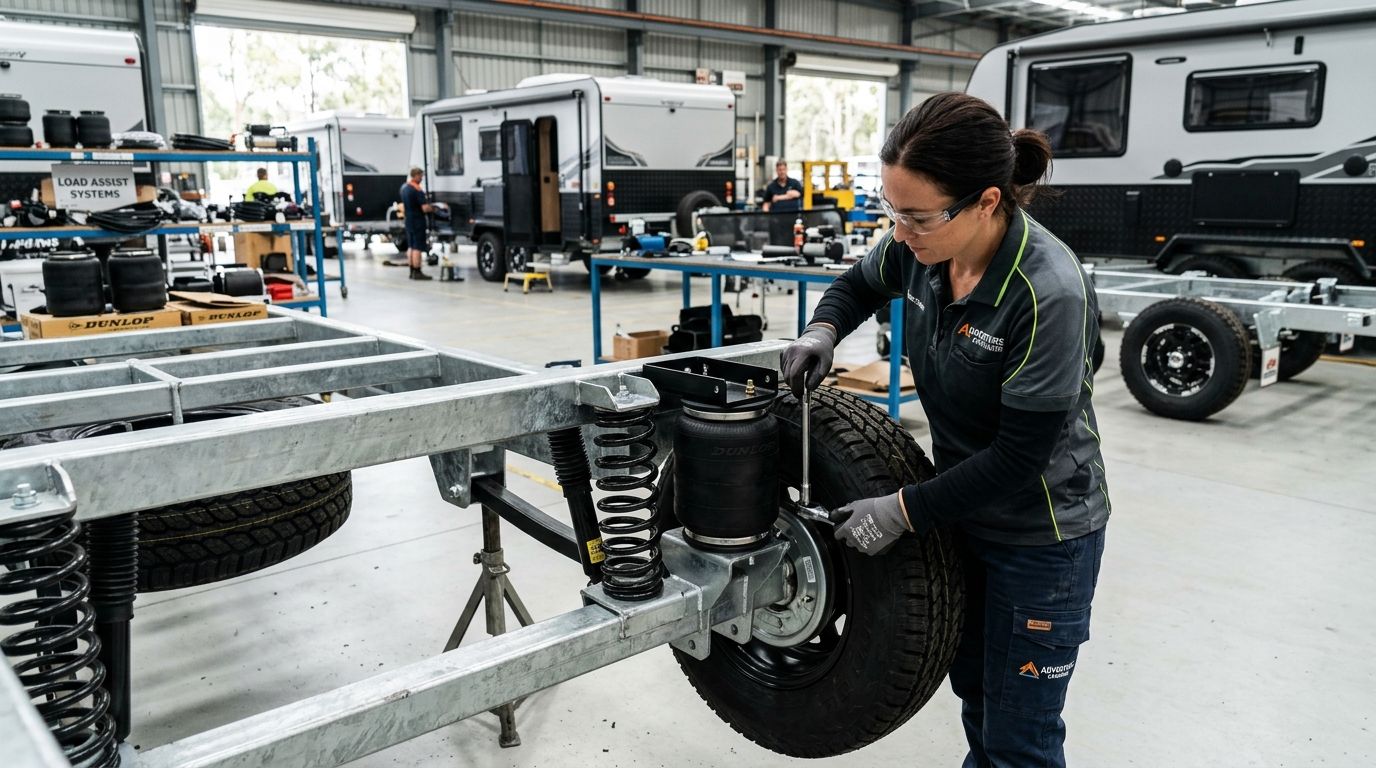
Boss Air Suspension supplies 12V and 24V air compressors as part of a broader onboard air range, and the same duty-cycle and plumbing rules that apply to load assist airbags apply here: match the compressor to the job, not just the price tag.
How we ranked these
Each setup below is scored on three practical factors: duty cycle (can it run long enough to fill multiple tyres without stopping), portability (does it need to stay bolted to the vehicle or can it move with the trailer), and whether it needs a dedicated power source away from the tow vehicle.
Recreational vehicle owners and workshop fit-out customers ask the same fitment and duty-cycle questions before buying onboard air gear, so the ranking favours setups with a clear, single use case over jack-of-all-trades units that compromise on all three.
The ranked list
1. Compact 12V air compressor - the trackside starting point
A basic 12V compressor wired to the trailer or tow vehicle battery is the minimum setup for anyone towing a dirt bike trailer regularly. The Boss 12V Air Compressor PX06 runs a 100% duty cycle, which means it can run continuously without the thermal cutout tripping mid-fill - important when you're topping up two trailer tyres and two bike tyres back to back.
At $230.00 for the clearance unit, it's the cheapest entry point on this list and the one most riders should start with. Verdict: Buy for anyone without an existing onboard air setup.
2. Onboard air tank system - the multi-bike fill
For trailers carrying two or more bikes, an aluminium air tank sized for an onboard air system stores compressed air ahead of time, so you're not waiting on the compressor motor every time a tyre needs a top-up. A 1.5 gallon stubby tank fills fast from a compact compressor and holds enough reserve for several tyres in a row.
This setup costs more upfront - the stubby tank alone runs $395.00 - but it cuts fill time at the track significantly compared to a compressor working alone. Verdict: Buy for multi-bike trailers and regular race-day use.
3. Compressor plus deep cycle battery - the no-power trackside setup
Some motocross meets and remote tracks in 2026 still don't offer powered sites, and running a compressor off a starting battery for extended periods isn't good practice. A dedicated deep cycle AGM battery, such as the Fullriver DC85-12 at 85Ah, gives you a stable 12V supply for the compressor without drawing down the vehicle's starting battery.
At $465.00, this is a setup for riders who camp at the track or tow to venues without mains power. Verdict: Consider if you regularly stay overnight or tow to remote circuits.
4. Compact glovebox compressor - the backup unit
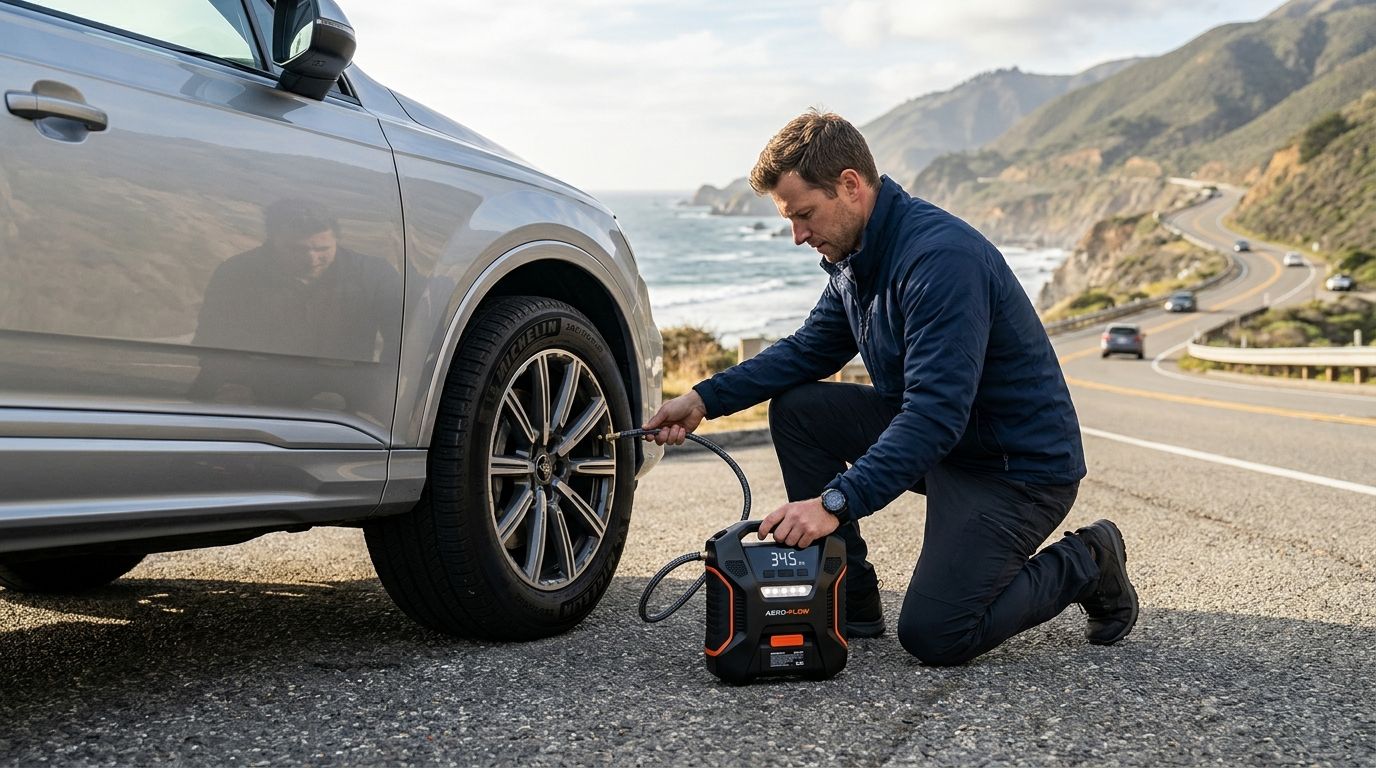
A small, glovebox-sized compressor won't keep pace with a full onboard air system, but it's a sensible backup for the tow vehicle's own tyres if the primary trailer setup is busy or unavailable. It's not built for high-volume use across multiple tyres in a row.
Verdict: Consider as a secondary unit, not a primary fill solution for the trailer.
5. Twin compressor high-volume setup - the workshop-grade option
Enclosed trailers running air tools, air lockers or pit equipment alongside bike tyre inflation need more volume than a single compressor delivers. A twin compressor arrangement covers that load without one motor doing all the work, but it adds cost and complexity most weekend riders don't need.
Verdict: Skip unless the trailer doubles as a mobile workshop.
6. Unbranded bargain-bin inflator - the false economy
Sub-$50 inflators sold as universal tyre pumps rarely list a real duty cycle figure, and most overheat within a few minutes of continuous use. For a trailer carrying two bikes plus its own tyres, that's not enough run time to finish the job.
Verdict: Skip - the saving disappears the first time it cuts out mid-fill.


Comparison table
| Setup | Best for | Duty cycle | Approx. price | Verdict |
|---|---|---|---|---|
| Compact 12V compressor (PX06) | Single-bike trailers, quick fills | 100% | $230.00 | Buy |
| Onboard air tank (1.5 gallon stubby) | Multi-bike trailers, faster fills | Stored reserve | $395.00 | Buy |
| Compressor + deep cycle battery (DC85-12) | No-power trackside use | 85Ah supply | $465.00 | Consider |
| Glovebox compact unit | Backup / tow vehicle tyres | Limited | Varies | Consider |
| Twin compressor setup | Enclosed trailers with air tools | High volume | Varies | Skip (most riders) |
| Unbranded bargain inflator | Nothing sustained | Low / unlisted | Under $50 | Skip |
Where to buy
- Buy from a supplier that lists the actual duty cycle figure, not just amps draw - a compressor without a stated duty cycle is a guess, not a spec.
- Check the wiring and fitting kit is included, or confirm what's needed separately before checkout - a compressor with no fittings still needs airline and connectors to work.
- Favour Australian suppliers with local warranty support over overseas listings, since replacement parts and fittings are harder to source quickly if something fails mid-season in 2026.
FAQ
What's the best air compressor for dirt bike trailers in 2026?
A 12V compressor with a 100% duty cycle, such as the Boss PX06, suits most single-bike trailers doing trackside tyre top-ups in 2026. Multi-bike trailers benefit from adding an onboard air tank to speed up repeat fills.
Do I need an air tank or just a compressor for a dirt bike trailer?
A compressor alone is enough for occasional single-tyre fills, but an air tank stores pressure ahead of time and fills faster when you're doing several tyres in a row. Multi-bike trailers and regular racers get more value from the tank.
Is a 12V or 24V air compressor better for a dirt bike trailer?
Most utes and wagons towing dirt bike trailers run 12V electrics, so a 12V compressor is the correct match for the majority of setups. 24V compressors are built for commercial and fleet vehicles, not typical trailer tow vehicles.
How much does an air compressor for a dirt bike trailer cost?
A basic 12V compressor starts around $230.00, while a compressor paired with an onboard air tank runs closer to $600-$700 combined. Adding a dedicated deep cycle battery for remote use adds a further $400-$500.
Can I run a trailer air compressor off a normal car battery?
You can for short, occasional use, but repeated deep draws shorten a standard starting battery's life. A deep cycle AGM battery, such as an 85Ah unit, is the better long-term option for regular trackside use.
What duty cycle do I need for a dirt bike trailer compressor?
Look for a 100% duty cycle if you're filling multiple tyres back to back, since anything lower risks the compressor overheating mid-job. A lower duty cycle unit is fine as an occasional backup only.
Does an onboard air system fit a single-bike box trailer?
Yes, a compact compressor and a small stubby tank both fit within typical box trailer dimensions without adding significant weight. Sizing the tank to the trailer's available mounting space is the main consideration.
One last thing
The detail most riders miss is checking the compressor's duty cycle before checking its price. A $50 inflator that cuts out after ninety seconds costs you more time at the track than a $230.00 unit rated to run continuously, and that gap only grows once you're filling four tyres instead of one.