Bead seating and 4WD recovery both come down to one thing: how fast a compressor can deliver air, not just how long it can run. This guide ranks the setups worth running in 2026, from twin 12V builds through to 24V commercial units, and calls out where each one falls short.
- Twin 12V Compressor Setup is the top pick for the best air compressor bead seating job because two units double burst airflow.
- Compressor + Aluminium Air Tank Combo wins for recovery reinflation - stored pressure releases instantly instead of building slowly.
- 24V Air Compressor suits commercial and fleet recovery vehicles already wired for 24V, not standard 12V utes.
- High-Flow Single 12V Compressor handles routine highway reinflation but is slower on a stubborn bead than a twin setup.
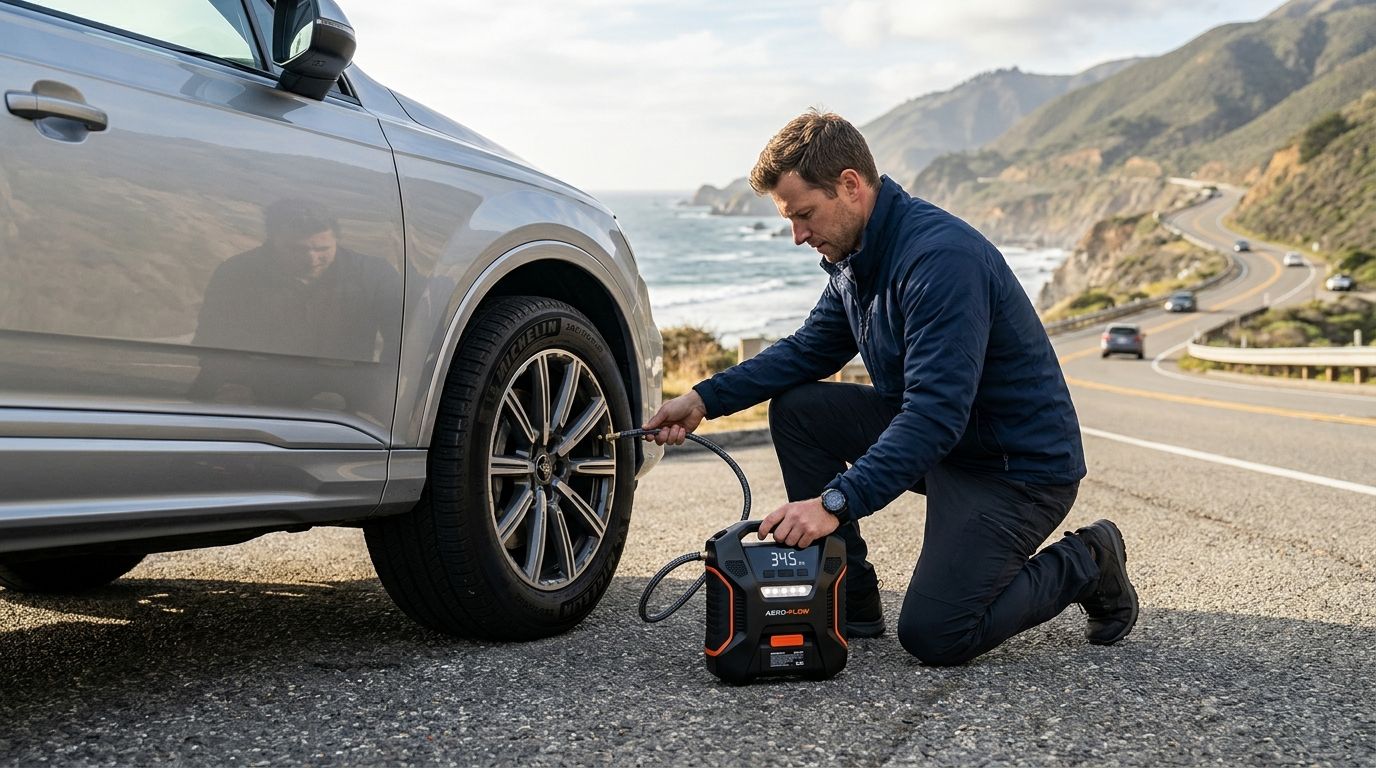
- Compact Glovebox Compressor is a fine backup inflator in 2026 but was never built for repeated bead-seating work.
Why this matters
A tyre bead that's broken free from the rim during a sand or rock run won't reseal with a slow trickle of air. It needs a fast burst, and that's exactly where a lot of compressor setups fall short. If you've ever watched a bead hiss and never quite pop back into place, the compressor was almost certainly the bottleneck, not the tyre.
Recovery situations add another layer. After digging a vehicle out of sand or mud, you're usually reinflating several tyres from a low pressure back to touring or highway pressure, and doing it in the field without mains power. Air compressor duty cycle matters here as much as raw output, because a compressor that overheats halfway through the third tyre leaves you stuck longer than the recovery itself.
Most 4WD tyres run somewhere in the high teens to low 20s PSI for sand or soft ground, then back up around 35 to 40 PSI for the highway. Moving through that whole range on four tyres, on top of a bead-seating job, is a genuinely different task to topping up one tyre that's lost a few PSI overnight.
What makes the best air compressor for bead seating and recovery
- Burst airflow, not just steady CFM - a bead needs a fast hit of air, not a slow climb to pressure
- Duty cycle rated for real recovery use - back-to-back tyres, not one top-up and a rest
- Voltage matched to the vehicle - 12V for most utes and wagons, 24V for many commercial trucks
- Compatibility with an air tank - stored pressure discharges faster than a compressor working alone
- Sealed housing for outback conditions - dust and water get into everything on corrugated roads
- Realistic wiring and mounting effort - the best setup on paper is useless if it never gets fitted
At a glance
| Setup | Best for | Standout feature | Key limitation |
|---|---|---|---|
| Twin 12V Compressor Setup | Bead seating | Combined airflow reseats a bead fast | Needs a proper wiring and relay setup |
| Compressor + Aluminium Air Tank Combo | Recovery reinflation | Stored air discharges in one burst | Tank adds weight and mounting space |
| 24V Air Compressor | Commercial and fleet recovery vehicles | Matches factory 24V wiring | Not usable on a standard 12V 4WD |
| High-Flow Single 12V Compressor | Rapid highway reinflation | Simple wiring, one unit to manage | Slower than a twin setup on a stubborn bead |
| Compact Glovebox Compressor | Occasional and emergency use | Small enough to store anywhere | Limited duty cycle, not a bead-seating tool |
1. Twin 12V Compressor Setup: best air compressor for bead seating
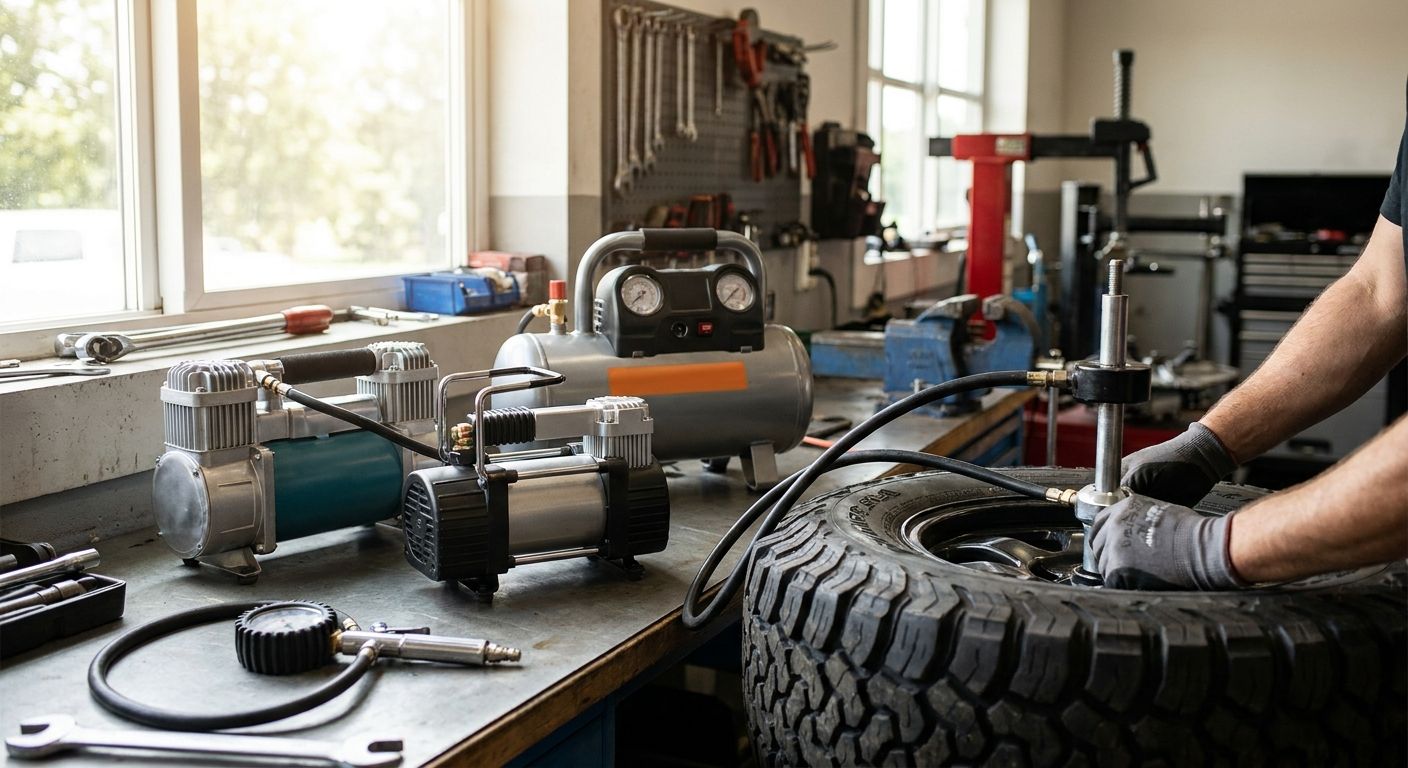
Running two 12V compressors off one manifold roughly doubles the airflow available at the valve, which is what actually gets a stubborn bead to pop back onto the rim instead of leaking down as pressure slowly climbs. Boss Air Suspension's 12V compressor range and manifold hardware are built to support this kind of onboard air setup on utes and 4WDs.
Twin 12V Compressor Setup pros:
- Delivers the burst of air a resistant bead genuinely needs
- Doubles as a fast tyre inflation system for touring days
- Works with a manifold and existing 12V accessory wiring
Twin 12V Compressor Setup cons:
- Draws more current, so battery capacity and wiring need to be sized correctly
- Two units to mount, wire and service instead of one
- More than most drivers need if bead seating is a rare event
Best for 4WD owners who regularly air down for sand, rock or corrugations and occasionally have to reseat a bead in the field. Verdict: Buy.
2. Compressor + Aluminium Air Tank Combo: best air compressor for recovery reinflation
Pairing a 12V compressor with an aluminium air tank lets pressure build up while you're driving or working through a recovery, then release in one controlled burst rather than waiting on the compressor to catch up in real time. That stored discharge is often more effective on a broken bead than a compressor fighting a slow leak alone.
Compressor + Aluminium Air Tank Combo pros:
- Immediate air delivery straight from the tank, no lag
- Same tank runs a tyre inflation gun or other pneumatic accessories
- Sized options suit ute tray, canopy or cabin mounting
Compressor + Aluminium Air Tank Combo cons:
- Tank and brackets add weight and take up storage space
- Needs a pressure switch and correct plumbing to work as intended
- Refilling the tank after a big burst takes longer than a standalone compressor
Best for drivers who recover vehicles or reinflate several tyres after deep sand or mud work. Verdict: Buy.
3. 24V Air Compressor: best for commercial and fleet recovery vehicles
Heavier commercial trucks, tilt trays and some fleet vehicles run on a 24V electrical system, and a 24V-rated compressor works directly with that voltage without a step-down converter in the loop.
24V Air Compressor pros:
- Matches factory 24V wiring with no converter required
- Built for continuous or heavy fleet duty
- Suits recovery trucks already running other 24V accessories
24V Air Compressor cons:
- Not compatible with a standard 12V ute or wagon
- Narrower use case than a 12V setup for most private buyers
- Sourcing 24V-specific fittings and switches takes extra planning
Best for fleet operators and recovery truck owners already wired for 24V. Verdict: Buy if your vehicle runs 24V, Skip if it doesn't.
4. High-Flow Single 12V Compressor: best for rapid highway reinflation
A single higher-output 12V compressor gets tyres back to highway pressure faster than a basic unit after a dirt or sand run, without the wiring complexity of running two compressors together.
High-Flow Single 12V Compressor pros:
- Simpler wiring than a twin-compressor build
- Fast enough to reinflate four tyres after a touring day
- Lower current draw than a dual-compressor setup
High-Flow Single 12V Compressor cons:
- Still slower than a twin setup or tank combo on a genuinely stuck bead
- Higher-output units run warmer and need clear airflow around the housing
Best for touring 4WD owners who deflate and reinflate tyres often but rarely deal with a fully popped bead. Verdict: Hold - fine as-is if bead seating is rare, worth upgrading if it isn't.
5. Compact Glovebox Compressor: best for occasional and emergency use
A small 12V compressor that stores in a glovebox or door pocket, built for occasional tyre top-ups rather than repeated heavy-duty work.
Compact Glovebox Compressor pros:
- Inexpensive to keep as a backup
- Fits almost anywhere in the cabin
- Handles a slow leak or a spare tyre top-up fine
Compact Glovebox Compressor cons:
- Limited duty cycle means it needs rest between runs
- Not built to reseat a bead that's fully off the rim
- Noticeably slower than a twin setup or tank-backed system
Best for drivers who want a backup inflator, not a primary bead-seating tool. Verdict: Hold as a backup, Skip as your only compressor if recovery is a real possibility.
“A compressor that can't produce a fast burst of air will fight the same stubborn bead every single time.”
How we ranked these
Each setup was weighed against the criteria above: burst airflow, duty cycle, voltage match, tank compatibility, sealing for dust and water, and realistic wiring effort. Setups that only won on one of those points, like the glovebox compressor's portability, were marked down where bead seating was the actual job at hand.
Which air compressor should you choose?
For most 4WD owners who air down off-road, a Twin 12V Compressor Setup or a Compressor + Aluminium Air Tank Combo is the safer buy in 2026 - both deliver the burst airflow that bead seating actually needs. Step up to a 24V Air Compressor only if your vehicle's electrical system is already 24V, and treat the compact glovebox unit as a backup rather than your primary recovery tool.
FAQ
What's the best air compressor for bead seating in 2026?
A twin 12V compressor setup or a compressor paired with an aluminium air tank is the best air compressor bead seating option in 2026, because both deliver a fast burst of air rather than a slow climb to pressure.
Is a twin compressor setup better than a single high-flow compressor?
For bead seating, yes - two compressors running together deliver more combined airflow than one high-flow unit, which is what actually pops a bead back onto the rim. For routine tyre top-ups, a single high-flow compressor is usually enough.
Do I need an air tank to seat a tyre bead?
An air tank isn't essential, but it helps. Stored pressure in a tank releases instantly in one burst, which is often more effective on a stubborn bead than a compressor working alone against a slow leak.
Can a 12V compressor run on a 24V truck?
No, a 12V compressor is not designed to run directly on a 24V system. Commercial and fleet vehicles wired for 24V need a 24V-rated air compressor to avoid damaging the unit.
How much airflow does bead seating actually need?
Bead seating needs a fast burst of air rather than a specific fixed volume - the goal is to get enough air moving quickly enough to push the bead over the rim's safety hump before it leaks back out.
Is a compact glovebox compressor enough for 4WD recovery?
A compact glovebox compressor works fine for occasional top-ups but isn't built for reseating a fully broken bead or reinflating several tyres after a recovery. It's best kept as a backup, not the primary unit.
What's the difference between duty cycle and burst airflow?
Duty cycle is how long a compressor can run continuously before it needs to rest, while burst airflow is how much air it can push out quickly. Recovery work needs both; bead seating leans more on burst airflow.
Does Boss Air Suspension sell air tanks as well as compressors?
Yes, Boss Air Suspension supplies 12V and 24V air compressors alongside aluminium air tanks and air management hardware, so a compressor-and-tank combo can be built from one range.
One last thing
Most bead-seating failures aren't actually a compressor problem. If the bead is still pinched under the rim's edge, no amount of airflow will reseal it - it needs to be broken free first, usually with a ratchet strap or bead breaker, before you add any air at all. Sort that step out first and even a modest 12V compressor will finish the job.