Duty cycle decides whether an onboard air compressor keeps working through a full tyre inflation, air suspension top-up or air locker session, or shuts down halfway through the job. This guide ranks the compressor types Australian 4WD, ute, van and fleet owners need in 2026, matched against the applications they're actually built for.
- Best air compressor by duty cycle overall in 2026: a 100% duty cycle onboard unit such as the Boss Air Suspension PX06, built for continuous air suspension and tyre work.
- Twin compressor setups suit high-volume onboard air demand, running air lockers and tyre inflation without one unit doing all the work.
- 24V air compressors are built for commercial fleet platforms, not standard 12V utes and 4WDs.
- Low-noise 12V compressors trade some duty cycle for quieter overnight caravan use.
Why this matters
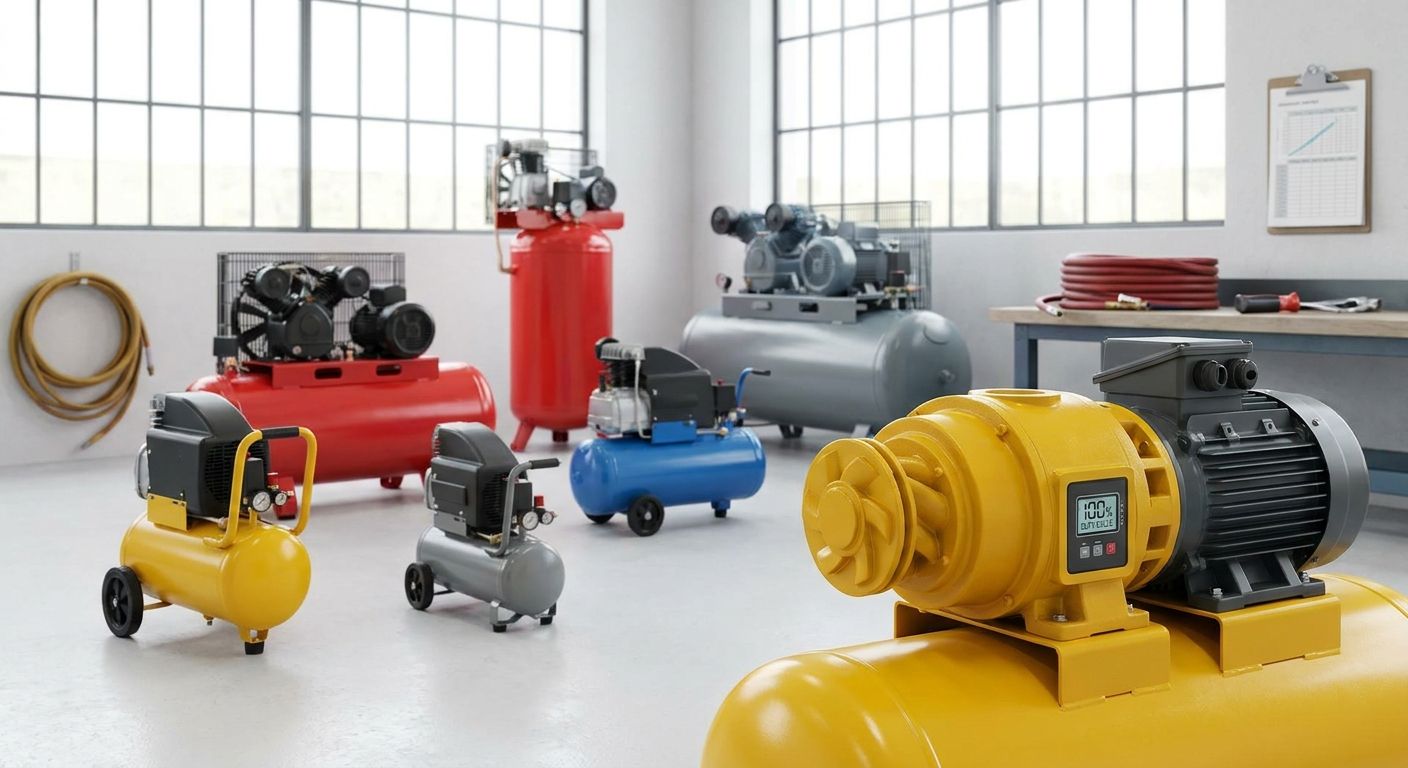
Duty cycle is the percentage of a given time period a compressor can run before it needs to rest and cool down. A compressor rated at a lower duty cycle will cut out or overheat if you ask it to run continuously — which matters if you're topping up load assist airbags on a loaded caravan tow, running an air locker on a rocky track, or keeping a full onboard air tank charged all day on a fleet ute.
Picking the wrong compressor for the job means either paying for capacity you never use, or finding out the unit shuts down mid-task when you actually need it. Working out the right duty cycle for onboard air before you buy avoids both problems.
This guide ranks compressor types by the duty cycle work they're actually built for in 2026, not by brand name alone.
What makes the best air compressor by duty cycle
A compressor earns a place in this ranking on practical points, not marketing copy:
- Duty cycle rating and cooldown time — how long it runs before it needs to rest
- Voltage match — 12V for utes, 4WDs and vans; 24V for trucks and heavy commercial platforms
- Oil-less vs oil-lubricated construction — affects maintenance and mounting orientation
- Airflow matched to tank size — a compressor that outpaces its tank cycles on and off more than it needs to
- Noise output — matters for overnight caravan and campsite use
- Mounting footprint — glovebox, underbonnet or chassis-mounted options suit different vehicles
Best air compressors by duty cycle: at a glance
| Compressor type | Best for | Standout feature | Key limitation |
|---|---|---|---|
| 100% duty cycle onboard compressor | Continuous air suspension and onboard air work | Runs without scheduled rest breaks | Higher current draw needs solid wiring |
| Twin compressor setup | High-volume onboard air (lockers plus tyre inflation) | Two units share the load | More complex install and mounting |
| 24V air compressor | Commercial fleet and truck platforms | Matches 24V truck electrical systems | Not usable on standard 12V utes and 4WDs |
| Low-noise 12V compressor | Overnight caravan use | Quieter running at camp | Lower continuous duty cycle than dedicated units |
| Compact 12V compressor | Glovebox storage in 4WDs | Small footprint, easy to stow | Slower fill times, lower continuous run capacity |
1. 100% Duty Cycle Onboard Compressor: best air compressor by duty cycle for continuous air suspension use
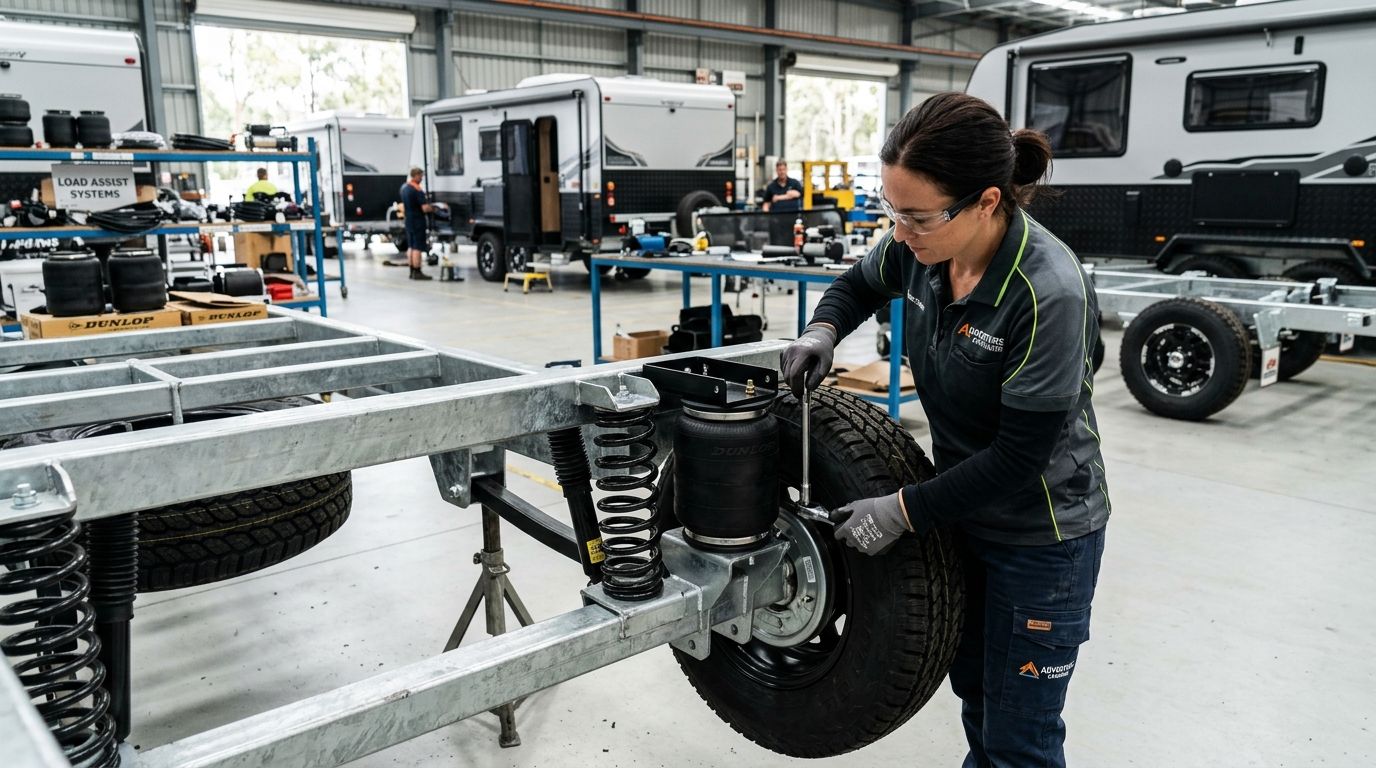
A 100% duty cycle compressor is built to run continuously without stopping to cool down. The Boss Air Suspension PX06 12V compressor carries a 100% duty cycle rating and oil-less construction, which suits onboard air suspension work where the compressor might be topping up load assist airbags several times on a single trip.
This is the compressor category most 4WD, ute and caravan owners running load assist airbags or a full onboard air system should start with. It's built for the repeat-use pattern suspension work creates, not the occasional five-minute top-up.
100% Duty Cycle Onboard Compressor pros:
- Runs continuously without cutting out mid-task
- Oil-less construction reduces maintenance
- Suits load assist airbags, tyre inflation and general onboard air in one unit
100% Duty Cycle Onboard Compressor cons:
- Higher current draw than compact intermittent-use compressors
- Needs a properly sized wiring and fuse setup to perform to rating
- Larger footprint than a glovebox-only unit
Best for: owners running air suspension, load assist airbags or a full onboard air system that gets used often.
Verdict: Buy — for anyone doing more than occasional tyre top-ups in 2026, a 100% duty cycle unit is the compressor category worth building an onboard air system around.


2. Twin Compressor Setup: best air compressor by duty cycle for high-volume onboard air systems
A twin compressor setup pairs two units so the workload splits between them instead of one compressor running flat out. Setting up a twin compressor system for high-volume onboard air is the usual route for vehicles running an air locker and a tyre inflation system off the same tank.
This setup suits vehicles where a single compressor, even a 100% duty cycle one, would still be working overtime — touring rigs running lockers, onboard air tools and load assist airbags together fall into this category.
Twin Compressor Setup pros:
- Splits load between two units instead of overworking one
- Keeps recovery time down when air demand is high
- Can combine 12V and 24V compressors on mixed-voltage builds
Twin Compressor Setup cons:
- More complex wiring and mounting than a single-compressor install
- Two units to service and maintain instead of one
- Higher total current draw on the vehicle's electrical system
Best for: touring 4WDs and work vehicles running air lockers, tyre inflation and load assist airbags off one onboard air system.
Verdict: Buy — worth the extra install complexity once a single compressor can't keep pace with demand.
3. 24V Air Compressor: best air compressor by duty cycle for commercial fleet vehicles
24V compressors are built for trucks and commercial platforms running a 24V electrical system rather than the 12V setup found in most utes, 4WDs and vans. Fleet-grade 24V air compressors are sized for the duty cycle demands of daily fleet use — tyre checks, onboard air tools and load assist airbags across a working day.
They're not a fit for a standard dual-cab ute or wagon. A 24V compressor needs a 24V supply to run properly, so voltage mismatch rules it out for most recreational vehicles.
24V Air Compressor pros:
- Matched to the electrical system on commercial trucks
- Built for daily, repeat-use fleet duty cycles
- Suits vehicles already running 24V accessories
24V Air Compressor cons:
- Not compatible with standard 12V utes, 4WDs or vans
- Limited to platforms with an existing 24V system
- Typically a fleet or commercial purchase, not a recreational one
Best for: commercial fleet operators and trucks running a 24V electrical system.
Verdict: Buy — for 24V fleet platforms. Skip if your vehicle runs a standard 12V system.
4. Low-Noise 12V Compressor: best air compressor by duty cycle for overnight caravan use
Low-noise 12V compressors trade some continuous duty cycle capacity for quieter running, which matters more at a caravan park at 6am than it does on a remote track. They're built for shorter, more occasional runs — topping up tyres or airbags — rather than hours of continuous operation.
Low-Noise 12V Compressor pros:
- Quieter operation suits caravan parks and shared camp sites
- Adequate for occasional tyre and airbag top-ups
- Compact enough for storage in a caravan or motorhome
Low-Noise 12V Compressor cons:
- Lower continuous duty cycle than dedicated onboard air units
- Not built for constant-use applications like air lockers
- Slower fill times than a higher-output compressor
Best for: caravan and motorhome owners doing occasional top-ups without waking the neighbours.
Verdict: Buy — for occasional caravan use. Skip if you need continuous onboard air for suspension or lockers.
5. Compact 12V Compressor: best air compressor by duty cycle for glovebox storage in 4WDs
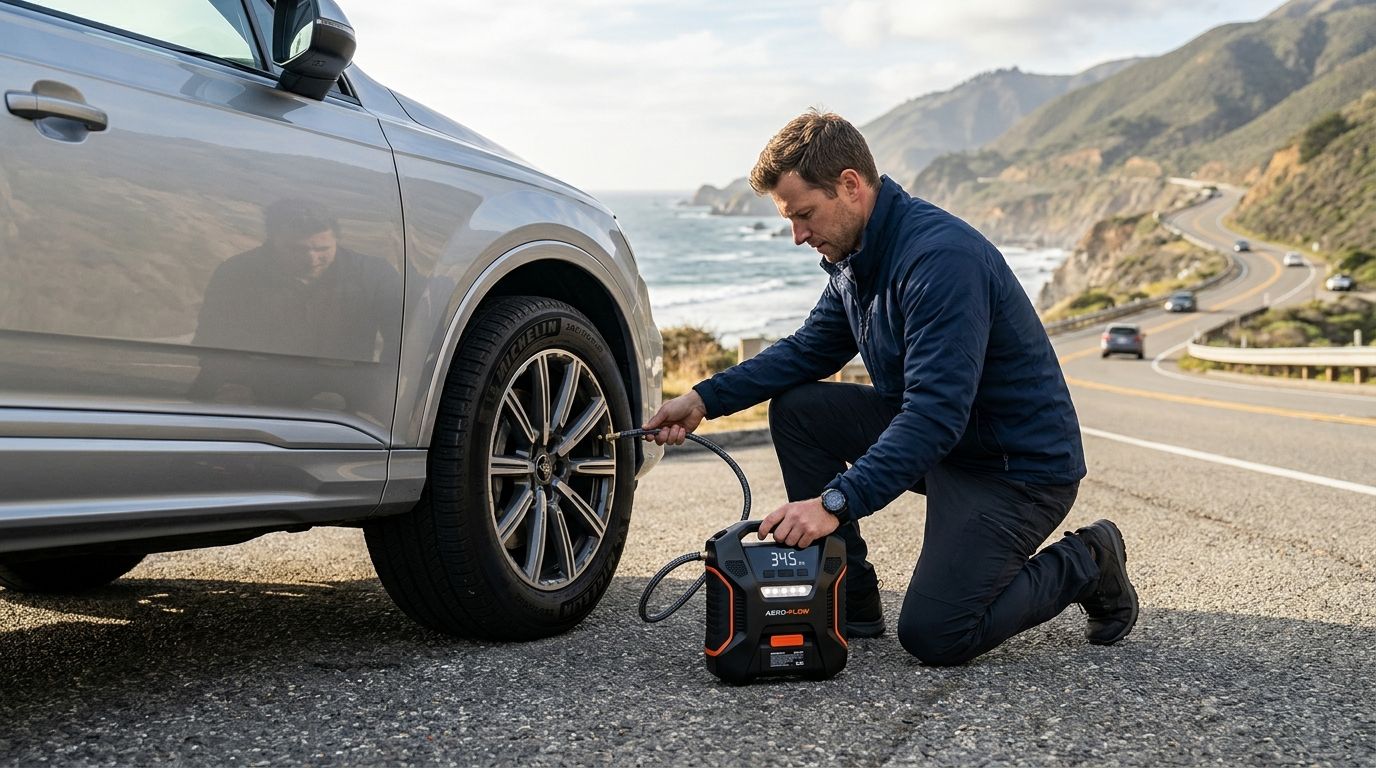
Compact 12V compressors are built around portability first — small enough to live in a glovebox or door pocket, ready for a flat tyre or a quick pressure adjustment. Duty cycle takes a back seat to size here, so this isn't the pick for repeat, continuous jobs.
Compact 12V Compressor pros:
- Small footprint fits glovebox or door storage
- Easy to move between vehicles
- Handles occasional single-tyre inflation without fuss
Compact 12V Compressor cons:
- Lower duty cycle than onboard-mounted units
- Slower to fill larger tyres or multiple airbags
- Not designed for continuous or repeat-use applications
Best for: owners who want a backup compressor for emergencies, not a primary onboard air system.
Verdict: Buy — as a backup. Skip as your only compressor if you run load assist airbags or an air locker.
How we ranked
Ranking here comes down to matching duty cycle rating, voltage and construction to the way each compressor type actually gets used in 2026 — continuous onboard air work, high-volume dual-task systems, fleet duty cycles, overnight noise tolerance, and glovebox backup. None of these categories is universally "best"; the right pick depends on how often the compressor runs and for how long.
Which air compressor should you choose?
If you're running load assist airbags, a full onboard air system or anything used more than a couple of times a trip, a 100% duty cycle onboard compressor is the default choice for 2026. Add a second compressor once you're running air lockers alongside tyre inflation and airbags on the same tank.
24V compressors only make sense on fleet trucks already running a 24V system. Low-noise 12V units suit caravanners doing occasional top-ups, and a compact 12V compressor is worth keeping as backup, not as the only compressor in the vehicle. Boss Air Suspension stocks onboard air components across these categories for owners fitting out a complete system.
FAQ
What is duty cycle on an air compressor?
Duty cycle is the percentage of a given time period a compressor can run before it needs to rest and cool down. A 100% duty cycle compressor can run continuously; a lower-rated compressor needs scheduled rest periods.
What's the best air compressor by duty cycle for onboard air suspension use?
A 100% duty cycle onboard compressor, such as the Boss Air Suspension PX06, suits continuous air suspension and load assist airbag use in 2026. It runs without needing to stop and cool down between top-ups.
Is a 100% duty cycle compressor better than a lower duty cycle unit?
For continuous or repeat-use jobs, yes, because a 100% duty cycle compressor won't cut out mid-task. For occasional single-tyre top-ups, a lower duty cycle compact compressor is often lighter and easier to store.
Can a 12V compressor run an air locker all day?
A single 12V compressor can struggle with continuous air locker use alongside tyre inflation. A twin compressor setup or a dedicated 100% duty cycle unit handles that combined demand better.
Do 24V air compressors work in a standard ute or 4WD?
No. Standard utes, 4WDs and vans run 12V electrical systems, and a 24V compressor needs a 24V supply to operate. 24V compressors are built for trucks and commercial platforms already running that voltage.
What's the quietest air compressor for caravan use?
Low-noise 12V compressors are built specifically to run quieter at camp sites, trading some continuous duty cycle capacity for lower noise output during overnight or occasional use.
How long can a 100% duty cycle compressor run continuously?
A 100% duty cycle rating means the compressor is designed to run continuously without a mandatory rest period, unlike compressors rated at lower duty cycles that need to cool down between runs.
One last thing
Duty cycle matters more than airflow speed for most onboard air setups. A compressor that fills a tyre fast but overheats after a few minutes won't keep up with an afternoon of airbag adjustments on a loaded tow — a 100% duty cycle unit will. Match the compressor to how often it actually needs to run in 2026, not just how quickly it fills one tyre.