Multi-bag air suspension setups need more than a compressor and a gauge. Once you're running two or more airbags, the way you distribute, monitor and adjust air pressure decides whether the system holds a level ride or leaves one side sagging. For most dual-bag Australian setups in 2026, a manifold-based dual-path system is the best air management system for multi-bag setups because it gives independent control without adding electronics that can fail on corrugated roads.
- Manifold-based dual-path systems are the best air management system for multi-bag setups on a standard 4WD, ute or van in 2026.
- Self-leveling valve systems suit owners who want automatic load compensation without checking a gauge.
- Digital air controllers work best for tow rigs that need fast, repeatable ride-height changes at the dash.
- A complete onboard air system with tank, compressor and manifold makes sense once air lockers or tyre inflation share the same air supply.
- Pressure switch tank setups suit tradie and fleet vehicles that need hands-free operation.
Why this matters
Running two airbags off one line without a manifold means both bags always sit at the same pressure. That's fine until one side of the vehicle carries more load than the other, which happens with uneven toolboxes, offset water tanks or a canopy loaded to one side.
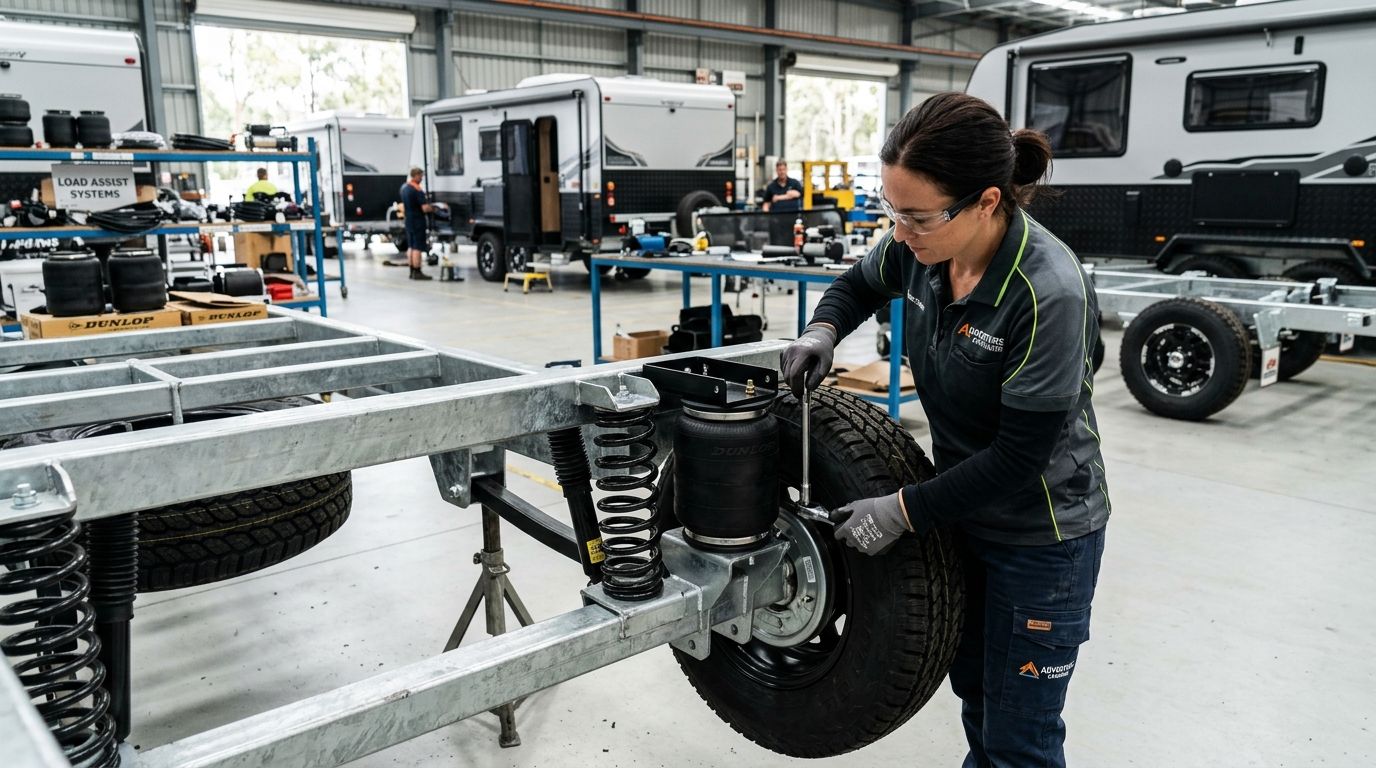
An air management system for load assist airbags lets you set each bag independently, monitor pressure at a glance and add air on the move rather than pulling over with a 12V inflator. Getting the setup right matters more as the number of connected accessories grows — tyre inflation, air lockers and load assist airbags all competing for the same tank capacity.
The products below are grouped by how they manage air across multiple bags, not by brand. Boss Air Suspension works with all of these configurations depending on the vehicle and the load.
What makes the best air management system for multi-bag setups
- Independent control of each airbag rather than one shared pressure across both sides
- Manifold port count that matches the number of bags plus a spare outlet for future accessories
- Tank capacity large enough to hold reserve air for both bags at working PSI without the compressor cycling constantly
- Fittings and airline rated for continuous suspension duty, not just occasional tyre inflation
- Ease of adjustment on the move, whether from the cab, a wireless remote or a digital controller
- Reliable pressure switches and gauges so you can read both sides without guessing
At a glance
| System | Best for | Standout feature | Key limitation |
|---|---|---|---|
| Manifold-based dual-path system | Straightforward dual-bag setups | Independent PSI on each bag with simple hardware | Manual adjustment only, no automation |
| Digital air controller system | Fast, repeatable ride-height changes | Preset pressure settings from the cab | Adds an electronic component to service |
| Self-leveling valve system | Automatic load compensation | Adjusts pressure without driver input | Less precise than manual gauge control |
| Complete onboard air system | Load assist plus lockers and tyre inflation | One tank and compressor feeds every accessory | Bigger install, more airline to run |
| Pressure switch tank system | Hands-free tradie and fleet use | Compressor cycles automatically on demand | Compressor duty cycle limits how often it can run |
1. Manifold-based dual-path system: best air management system for standard dual-bag setups
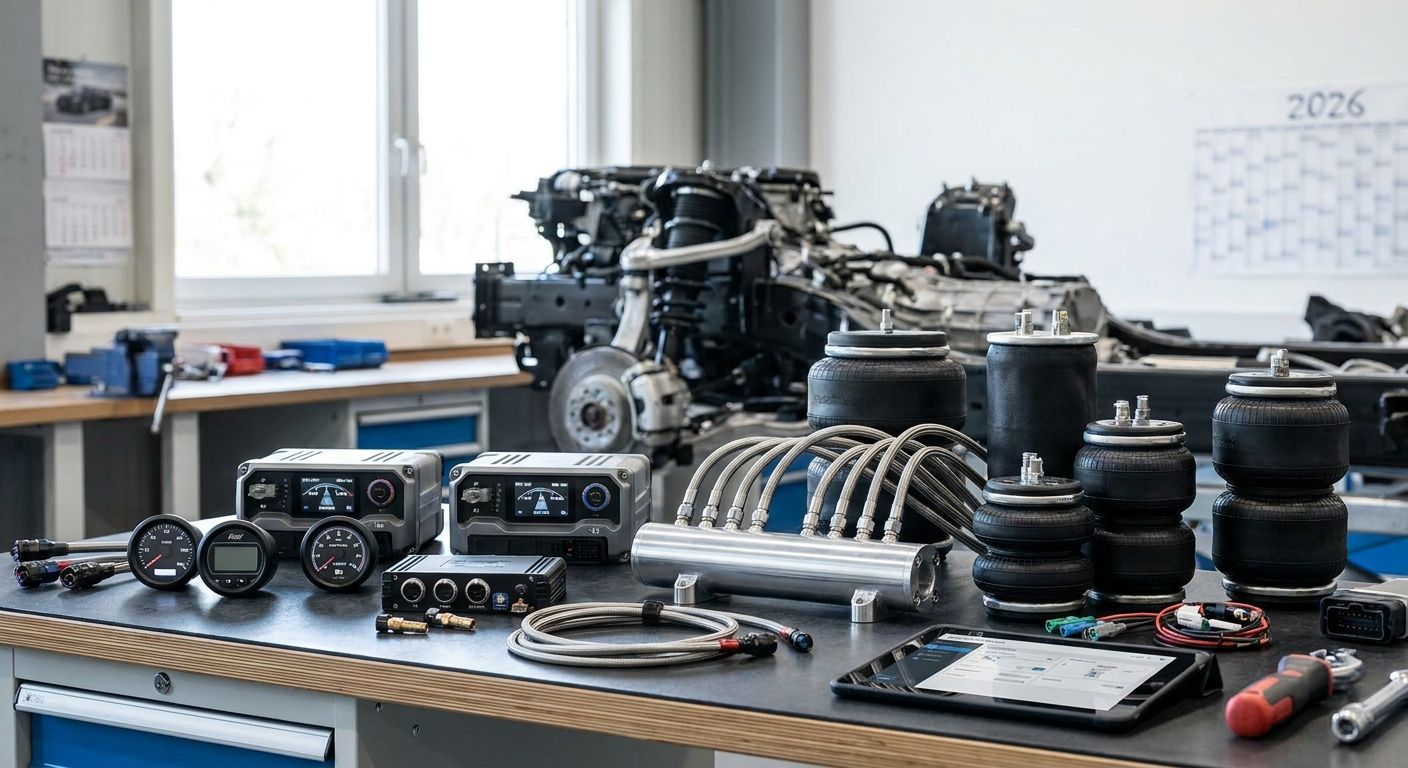
A manifold splits one air supply into two independent paths, each with its own line running to a bag. It's the simplest way to manage a two-bag load assist kit without adding electronics.
Manifold-based dual-path system pros:
- Independent pressure adjustment for each airbag
- No wiring or electronics to fail on remote tracks
- Straightforward to service and bleed down
- Works with any compressor or hand pump you're already running
Manifold-based dual-path system cons:
- Requires manual checking of each side's PSI
- No automatic compensation for shifting loads
A manifold block for multi-airbag setups is the right starting point for most owners fitting a load assist kit to a dual cab ute or van for the first time. Best for: owners running a basic two-bag setup who want independent control without added complexity. Verdict: Buy.
2. Digital air controller system: best for fast, repeatable ride-height changes
A digital controller lets you save preset pressures and switch between them from a dash-mounted unit, useful when you regularly swap between towing, unladen driving and heavy load carrying.
Digital air controller system pros:
- Preset pressures save time when switching between towing and unladen driving
- Digital readout removes the guesswork of reading an analogue gauge
- Suits vehicles that change load type often, like dealership demo vehicles or dual-purpose tow rigs
Digital air controller system cons:
- Adds an electronic component that needs power and a mounting location
- Higher install complexity than a manual manifold
Owners fitting one of these should check the guide on how to install a digital air controller before wiring it in, since correct earthing matters for reliable readings. Best for: drivers who switch between towing and unladen driving several times a week. Verdict: Buy.
3. Self-leveling valve system: best for automatic load compensation
A self-leveling valve reads ride height and adjusts airbag pressure automatically as load changes, without the driver checking a gauge or adding air manually.
Self-leveling valve system pros:
- Adjusts automatically as load is added or removed
- Reduces the chance of running underinflated or overinflated bags
- Suits motorhomes and caravans towed by the same vehicle regularly
Self-leveling valve system cons:
- Less precise than dialling in an exact PSI manually
- Valve calibration needs to be checked periodically
A self-leveling valve suits an owner who tows the same trailer or caravan on most trips and wants the system to manage itself. Best for: repeat towers who want set-and-forget load compensation. Verdict: Hold — confirm valve compatibility with your specific airbag kit before fitting.
4. Complete onboard air system: best for load assist plus lockers and tyre inflation
Once a vehicle is running air lockers, a tyre inflation kit and load assist airbags, a shared tank and compressor setup is more practical than three separate small systems competing for space.
Complete onboard air system pros:
- One tank and compressor feeds every air accessory on the vehicle
- Higher tank capacity means less frequent compressor cycling
- Central manifold keeps airline routing tidy
Complete onboard air system cons:
- Larger install with more airline to run through the chassis
- Requires correctly sizing the tank for combined demand across all accessories


Correctly sizing the tank for a combined system matters more than most owners expect — a tank too small for the accessory load leaves the compressor running almost continuously. Best for: vehicles running multiple air-powered accessories off one system. Verdict: Buy for multi-accessory builds; Skip if you're only running load assist airbags.
5. Pressure switch tank system: best for hands-free tradie and fleet use
A pressure switch automatically starts and stops the compressor to keep the tank within a set pressure range, so the driver never has to manually trigger a top-up.
Pressure switch tank system pros:
- Fully automatic — no manual switching required
- Keeps tank pressure within a consistent working range
- Suits fleet and tradie vehicles used by multiple drivers
Pressure switch tank system cons:
- Compressor duty cycle limits how frequently it can cycle before overheating
- Adds another electrical component that needs correct wiring and fusing
This setup suits vehicles where consistency matters more than fine manual control — fleet utes, mobile tyre-fitting vans and workshop vehicles fall into this category. Best for: multi-driver fleet vehicles that need consistent tank pressure without operator input. Verdict: Buy for fleet use.
How we ranked these
Each system was assessed against the criteria above — independent bag control, port count, tank capacity, fitting quality, ease of adjustment and switch or gauge reliability. Systems that require the fewest points of failure on remote Australian roads ranked ahead of those adding unnecessary complexity for a basic two-bag setup.
If you can't read each airbag's pressure independently, the manifold isn't matched to the job.
Which air management system should you choose?
For a standard dual-bag load assist kit on a ute, van or 4WD, a manifold-based dual-path system is the best air management system for a multi-bag setup in 2026 — it's simple, reliable and gives independent control without electronics to service. Step up to a digital controller if you switch between towing and unladen driving often, or a self-leveling valve if you tow the same trailer on repeat trips. Once air lockers or tyre inflation share the same vehicle, a complete onboard air system with a properly sized tank is worth the larger install.
Boss Air Suspension supplies the manifolds, tanks, fittings and controllers for all five configurations, with Australian technical support if you're unsure which setup suits your vehicle.
FAQ
What's the best air management system for a multi-bag setup?
A manifold-based dual-path system is the best air management system for most multi-bag setups in 2026 because it gives independent pressure control on each bag without added electronics. Owners needing automatic adjustment should look at a self-leveling valve instead.
Do I need a manifold if I'm running two airbags?
Yes, a manifold is the standard way to split one air supply into two independent lines. Without one, both airbags sit at the same pressure regardless of how the load is distributed.
Is a digital air controller better than a manual manifold?
A digital air controller suits drivers who switch between towing and unladen driving often, since it saves preset pressures at the dash. A manual manifold is simpler and has fewer components to service.
How much tank capacity do I need for a multi-bag system?
Tank capacity depends on how many air-powered accessories share the system, not just the number of airbags. A dedicated load assist setup can run on a smaller tank than one also feeding air lockers and tyre inflation.
Can I add a self-leveling valve to an existing load assist kit?
In most cases yes, but valve compatibility with your specific airbag kit should be confirmed before fitting. Check the vehicle application guide or contact Boss Air Suspension if you're unsure.
What's the difference between a pressure switch and a digital controller?
A pressure switch automatically cycles the compressor to maintain tank pressure, useful for fleet vehicles. A digital controller lets the driver manually select and save specific PSI settings for the airbags.
Does an air management system increase my vehicle's GVM or towing capacity?
No. An air management system improves how load assist airbags are controlled and monitored, but it does not change a vehicle's legal payload, GVM or towing capacity unless fitted as part of an approved GVM upgrade.
How often should I check pressure switches and gauges on a multi-bag setup?
Check gauges and switches at each service interval and before long tows or heavy load trips. A pressure switch that isn't cycling correctly usually shows up as inconsistent tank pressure well before it fails outright.
One last thing
The most common mistake with multi-bag setups isn't the manifold or the tank — it's running airline rated for light-duty tyre inflation on a system that's under constant suspension pressure. Check the airline spec matches continuous-duty use before wiring the rest of the system, because that's the component most likely to let go on a corrugated outback road.