Every load assist airbag kit lives or dies on its valve setup — the fitting or component you use to check pressure, top up air, or let the system adjust itself while towing. This guide ranks the six valve types used on load assist systems in Australia in 2026 and tells you which one suits a dual-cab ute towing a van, a motorhome carrying gear, or a tradie truck running an onboard air tank.
- Schrader valve fittings are the best air valves for load assist in most two-airbag setups — simple, reliable, and readable with any tyre gauge.
- A self-leveling valve suits vehicles that tow heavy trailers daily and need consistent ride height without manual checks.
- A manifold block is the right call for dual-bag or onboard air setups needing independent pressure control per airbag.
- Check valves and pressure switches are companion components for compressor-fed systems, not stand-alone airbag controls.
Why this matters
A load assist airbag kit only works as well as the valve you use to control it. Get the valve wrong and you end up with mismatched pressure side to side, a slow leak nobody notices, or a setup that's harder to service than it needs to be.
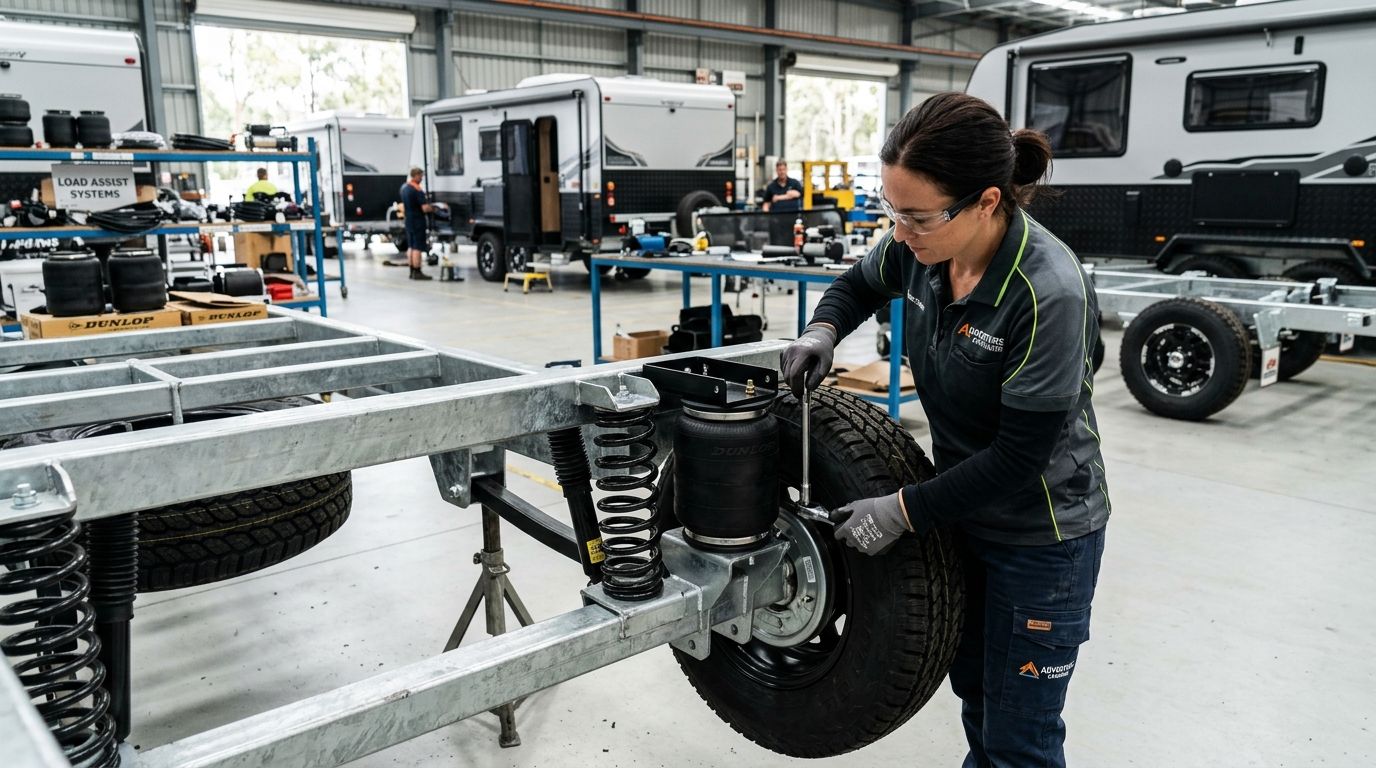
Most load assist kits ship with basic Schrader valve fittings because they're proven and easy to check with a standard gauge. But once you add a second airbag, an onboard air tank, or want hands-free ride height correction while towing, the right valve changes. Boss Air Suspension fits load assist kits across hundreds of vehicle applications, and the valve setup is the part most owners overlook until something leaks.
This guide breaks down the six valve types you'll come across, what each one actually does, and which one fits your towing or load-carrying use case.
Best overall for most two-airbag load assist kits: Schrader valve fittings. Best for hands-free ride height control while towing: a self-leveling valve. Best budget option: a single Schrader valve fitting per airbag, checked with a standard gauge.
What makes the best air valve for a load assist system
- Leak resistance — the valve has to hold pressure through corrugated roads, vibration and years of underbody exposure.
- Thread compatibility — most load assist airbag ports use a 1/4 inch NPT connection, so any valve you add needs to match.
- Ease of manual checks — you should be able to read pressure with a normal tyre gauge without special tools.
- Corrosion resistance — brass or plated fittings hold up better than bare steel in Australian conditions, especially near the coast.
- Independent control — dual-bag setups need a way to adjust each airbag separately, not just one shared line.
- Support for remote or automatic adjustment — only relevant if you're running a digital controller or self-leveling valve.
Air valves for load assist: at a glance
| Valve type | Best for | Standout feature | Key limitation |
|---|---|---|---|
| Schrader valve fittings | Standard two-airbag load assist kits | Reads with any tyre gauge | Manual checks only, no auto-adjust |
| Self-leveling valve | Daily heavy towing | Adjusts ride height on the move | Adds components, needs compatibility check |
| Digital air controller | Touring 4WDs and motorhomes | In-cab pressure read-out | Needs wiring, higher complexity |
| Manifold block | Dual-bag or onboard air setups | Independent control per port | Larger footprint, more air line runs |
| Check valve | Compressor-fed tank systems | Stops air flowing back into the line | Doesn't adjust airbag pressure |
| Pressure switch | Automated onboard air systems | Cycles compressor automatically | Not needed on basic Schrader setups |
1. Schrader valve fittings: best for standard two-airbag load assist kits
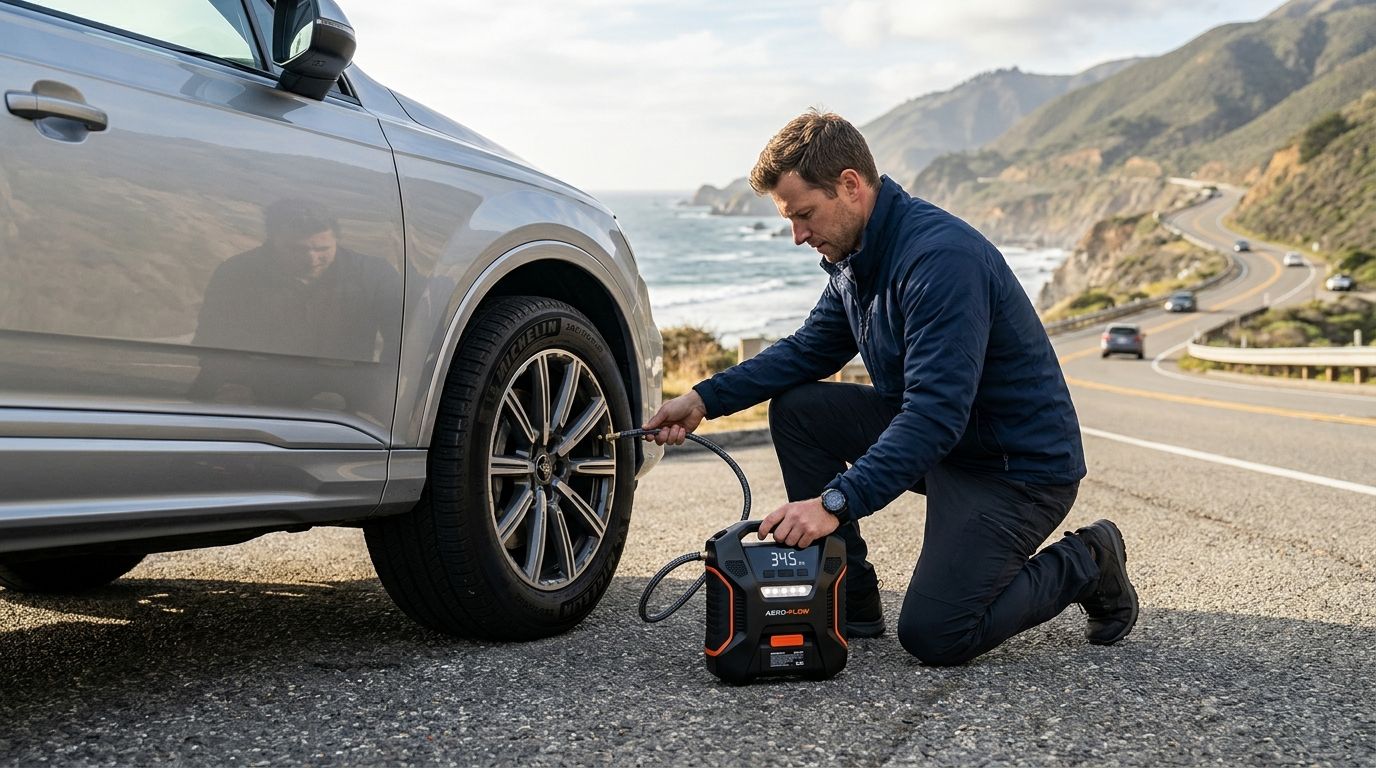
Schrader valve fittings are the standard air valve used on most load assist airbag kits sold in Australia. They're the same style of valve you'll find on a car tyre, which means you can check and adjust pressure with a gauge you already own.
Schrader valve fittings pros:
- Compatible with any standard tyre gauge or inflator
- Low cost and simple to replace if damaged
- No wiring or electrical components to fail
- Proven design used across most load assist applications
Schrader valve fittings cons:
- Manual checks only — no automatic adjustment for changing loads
- Each airbag has to be checked and adjusted individually
- A slow leak can go unnoticed between checks if you're not in the habit of testing pressure
Best for: owners running a standard two-airbag load assist kit who are comfortable checking pressure before and after a heavy load or a tow. Read the Schrader valve fittings guide for fitting-specific detail. Verdict: Buy.
2. Self-leveling valve: best for daily heavy towing
A self-leveling valve monitors ride height and adds or releases air automatically as the load changes, rather than waiting for you to check pressure manually. It's the closest thing to a hands-free load assist setup.
Self-leveling valve pros:
- Keeps ride height consistent while towing, without manual top-ups
- Compensates for load changes on the move — useful for varying trailer weights
- Reduces the routine of checking pressure before every trip
Self-leveling valve cons:
- Adds mechanical complexity and more components to maintain
- Not compatible with every load assist kit — confirm fitment before ordering
- Still needs periodic inspection to catch leaks early
Best for: vehicles that tow a caravan or heavy trailer most weeks and want consistent ride height without manual intervention. Full fitting notes are in the self-leveling valve installation guide. Verdict: Buy for regular heavy towing, Hold if you only tow occasionally.
3. Digital air controller: best for touring 4WDs and motorhomes
A digital air controller gives you a cab-mounted display and switch to read and adjust airbag pressure without crawling under the vehicle. Some units store multiple presets for different loads.
Digital air controller pros:
- In-cab pressure read-out saves time on the road
- Easier to fine-tune pressure to match a specific load
- Some models store presets for unladen versus towing setups
Digital air controller cons:
- Needs wiring and a mounting location in the cab
- Higher cost than a basic valve setup
- Adds an electrical component that can fail independently of the airbags
Best for: touring 4WDs, motorhomes and vehicles where the driver adjusts pressure often and wants to do it without stopping. Verdict: Buy for frequent touring use, Skip if budget is the main driver.
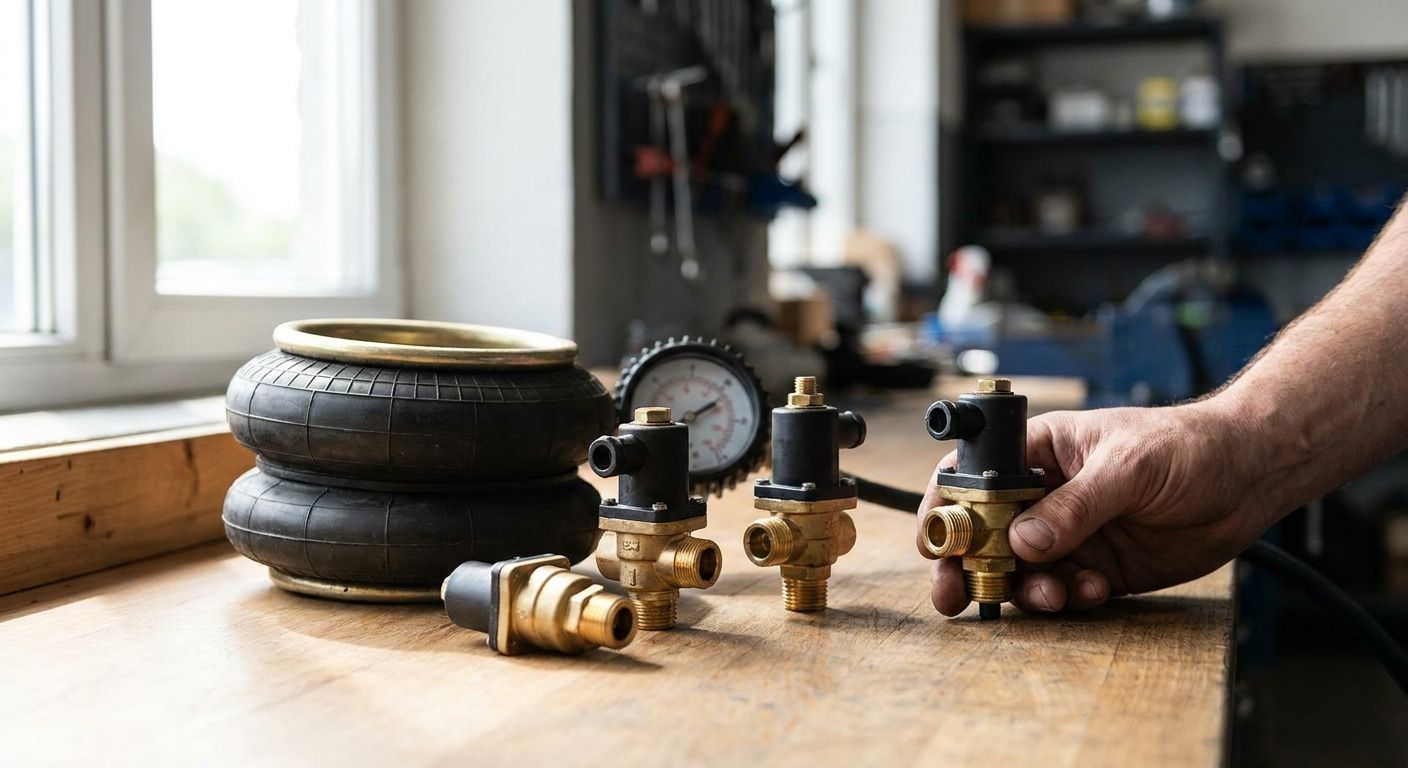
4. Manifold block: best for dual-bag and onboard air setups
A manifold block consolidates multiple valve ports into one fitting, letting you control each airbag independently from a single mounting point. It's the practical choice once a setup runs more than one air spring, or shares a tank with an air locker or tyre inflation system.
Manifold block pros:
- Independent valve on each port for precise side-to-side balance
- Tidier install than running separate valves scattered around the vehicle
- Works well on onboard air systems feeding airbags plus other pneumatic accessories
Manifold block cons:
- Requires more air line runs to reach the block
- Larger than a single valve, so it needs suitable mounting space
Best for: dual-bag load assist kits and onboard air systems where multiple components draw from one tank. Verdict: Buy for multi-bag or onboard air setups.
5. Check valve: best for protecting a compressor-fed air tank
A check valve stops air flowing backward through the line when the compressor isn't running, protecting tank pressure between cycles. It's not a control valve — it's a protective component that sits ahead of the airbag valves in a compressor-fed onboard air setup.
Check valve pros:
- Prevents air flowing back into the compressor or line when the system is idle
- Protects tank pressure between compressor cycles
- Low maintenance once fitted correctly
Check valve cons:
- Doesn't let you adjust airbag pressure directly
- Must be installed in the correct orientation or it won't function
Best for: anyone running an onboard air tank and compressor to feed load assist airbags, as a companion component rather than a stand-alone choice. Verdict: Buy as a supporting component.
6. Pressure switch: best for automated onboard air systems
A pressure switch cycles the compressor on and off to keep the tank within a set pressure range, so the tank stays charged without you monitoring it manually. It matters most when the same tank supplies load assist airbags alongside tyre inflation or an air locker.
Pressure switch pros:
- Automates the compressor cycle so the tank stays ready
- Useful when one tank supplies airbags plus other air-tools
- Adjustable cut-in and cut-out range on most units
Pressure switch cons:
- Adds another electrical component that needs correct wiring
- Unnecessary on a basic two-airbag Schrader setup with no compressor
Best for: compressor-fed onboard air systems running load assist airbags plus other accessories. Verdict: Buy for automated onboard air setups, Skip for basic load assist kits.


How we ranked these valve options
Each valve type was weighed against the criteria above: leak resistance, thread compatibility, ease of manual checks, corrosion resistance, independent control on multi-bag setups, and support for remote or automatic adjustment where it applies. Schrader valve fittings top the list because they satisfy the first four criteria for the widest range of vehicles without adding complexity. The other five items fill specific gaps — automatic leveling, in-cab control, multi-bag balance, and onboard air protection.
Which air valve should you choose for your load assist system?
If you're running a standard two-airbag load assist kit and don't mind checking pressure before a big tow, Schrader valve fittings remain the practical default in 2026. Step up to a self-leveling valve if you tow a heavy trailer most weeks and want consistent ride height without the manual routine.
Running a dual-bag kit or an onboard air tank feeding more than the airbags? A manifold block gives you independent control per port, and a check valve or pressure switch protects the tank if a compressor is part of the setup. Match the valve to how often you tow, how many airbags you're running, and whether you already have onboard air.
FAQ
What's the best air valve for a load assist airbag system in 2026?
Schrader valve fittings are the best air valves for load assist on standard two-airbag kits because they're readable with any tyre gauge and need no wiring. Setups with multiple airbags or onboard air tanks benefit from a manifold block or digital controller instead.
Is a self-leveling valve better than a manual Schrader valve?
A self-leveling valve is better for vehicles that tow heavy trailers daily because it adjusts pressure automatically as the load changes. A manual Schrader valve is simpler and cheaper for occasional towing where you're happy to check pressure yourself.
Do I need a digital air controller for load assist airbags?
A digital air controller isn't essential on a basic load assist kit but it's useful for touring 4WDs and motorhomes where you adjust pressure often. It gives you an in-cab read-out instead of checking valves under the vehicle.
What's the difference between a check valve and a pressure switch?
A check valve stops air flowing backward into the line when the compressor is off, protecting tank pressure. A pressure switch automatically cycles the compressor on and off to keep the tank within a set range — they work together on compressor-fed onboard air systems.
Can I run two airbags off one valve?
Two airbags can share a single valve, but you lose the ability to balance pressure independently side to side. A manifold block with individual ports is the better option if your load or vehicle sits uneven under weight.
How often should I check load assist airbag pressure?
Check pressure before and after any heavy load or tow, and periodically even when the vehicle is unladen. Slow leaks are the most common issue with airbag valves and are easy to miss without a routine check.
Do load assist valves increase my vehicle's GVM or towing capacity?
No. Load assist airbags and their valves improve ride height, stability and load-carrying comfort, but they don't change your vehicle's legal payload, GVM or towing capacity unless fitted as part of an approved GVM upgrade.
What size fitting do load assist airbag valves normally use?
Most load assist airbag kits use a 1/4 inch NPT valve connection, which is the standard thread size across the majority of Australian applications. Always confirm the fitting size against your specific kit before ordering replacement valves.
One last thing
Mismatched pressure side to side unsettles a load-carrying vehicle more than being a few PSI low overall — check both airbags individually, not just one and assume the other matches. For guidance on setting the right number for your load, see how to choose the right PSI for load assist airbags.