Constant heavy payload — tools, water, camper trays, fleet gear — sags rear suspension fast, and picking the wrong kit means either a ride that stays too soft under load or one that's harsh when the tray is empty. This guide ranks the Boss Air Suspension load assist kit types best suited to vehicles that carry weight almost every day in 2026, so you can match the kit to the job instead of guessing.
- Boss Air Suspension's Extreme Series heavy-duty kits are the best airbag kit for constant heavy payload in 2026.
- Single-cab tradie utes need different brackets and bellows than dual-cab canopy rigs — match the kit to the load pattern.
- GVM-upgraded 4WDs still need airbags rated to support the upgraded limit, not to create one.
- Coil assist kits suit steady daily loads; airbags suit loads that swing between empty and full.
- All Boss Air Suspension load assist kits are vehicle-specific and carry a five-year warranty.
Why this matters
Occasional towing and constant payload are different problems. A trailer trip once a fortnight lets the suspension recover between loads. A tradie ute carrying tools five days a week, or a fleet van doing multiple drop-offs a day, never really unloads — the rear end sits compressed for most of its working life.
That changes what "good" looks like in a load assist airbag kit. Bracket fatigue matters more than peak bellow pressure. Fitment accuracy matters more than adjustability range. And an airbag kit heavy payload guide that's written for weekend towing won't always answer the questions a daily-load vehicle owner actually has.
What makes the best airbag kit for constant payload carrying
- Double bellow airbag design built to hold ride height under sustained weight, not just occasional peaks
- Bracket and mounting hardware rated for continuous stress rather than intermittent towing
- Vehicle-specific fitment matched to your exact GVM, suspension type and ride height
- A workable PSI range wide enough to cover empty-to-fully-loaded without bottoming out or riding too firm
- Compatibility with an air management system for vehicles that need quick pressure changes between runs
- Warranty and local support suited to vehicles that use the suspension every working day
At a glance
| Kit type | Best for | Standout feature | Key limitation |
|---|---|---|---|
| Extreme Series heavy-duty load assist kit | Constant heavy payload, commercial towing | Double bellow airbags for sustained support | Needs PSI checked as load changes |
| Single-cab work ute kit | Tradies carrying tools daily | Bracket set matched to single-cab chassis | Not interchangeable with dual-cab kits |
| Dual-cab canopy/camper kit | Dual-cabs with canopy or camper trays | Handles constant static weight, not just towing | High static weight may need coil assist too |
| GVM-upgraded 4WD heavy-duty airbags | 4WDs already GVM-upgraded | Matched to upgraded spring rate | Requires an existing, documented GVM upgrade |
| Coil assist kit | Steady, repeatable daily loads | No daily PSI checks | Not adjustable on the fly |
| Air management system with digital controller | Fleet or multi-stop vehicles | Cabin-adjustable pressure | Add-on only — airbags must be fitted first |
1. Extreme Series heavy-duty load assist kit: best airbag kit for constant heavy payload
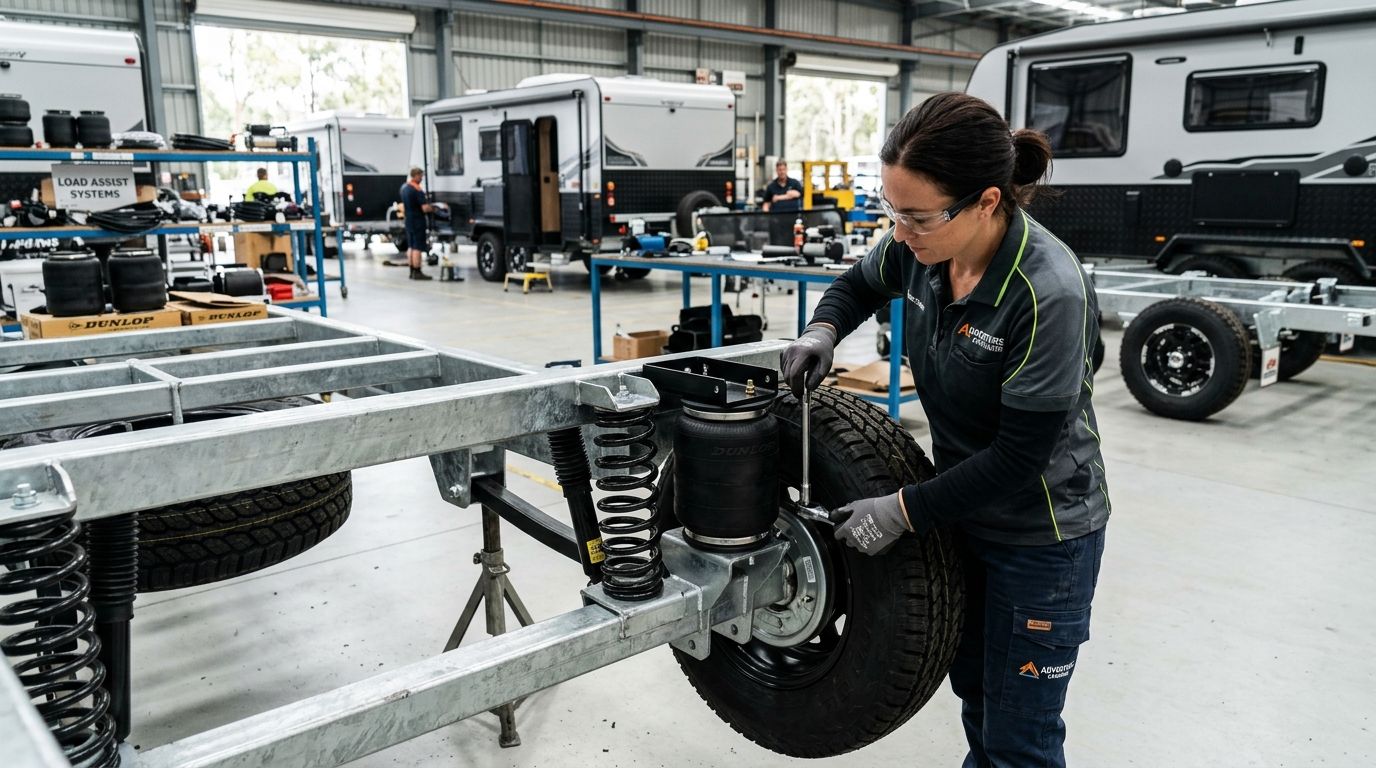
This is Boss Air Suspension's core kit for vehicles that carry weight most of the time rather than occasionally. It uses double bellow airbags that work with your existing rear suspension — coil or leaf — to reduce sag and hold ride height when the tray, tub or towbar is loaded.
Extreme Series pros:
- Double bellow bellows give more support at full load than a single bellow design
- Vehicle-specific bracket kits reduce fitment guesswork
- Backed by Boss Air Suspension's five-year warranty
- Suited to fleet and commercial towing applications
Extreme Series cons:
- More capacity than you need if your loads are light and occasional
- PSI still needs adjusting as the load changes trip to trip
- Bracket torque needs checking after the first drives, like any bolt-on kit
Best for: vehicles carrying near-constant heavy payload. Verdict: Buy. Full details are on the best heavy-duty airbag suspension kit for commercial towing page.
2. Single-cab work ute load assist kit: best for tradies carrying tools every day
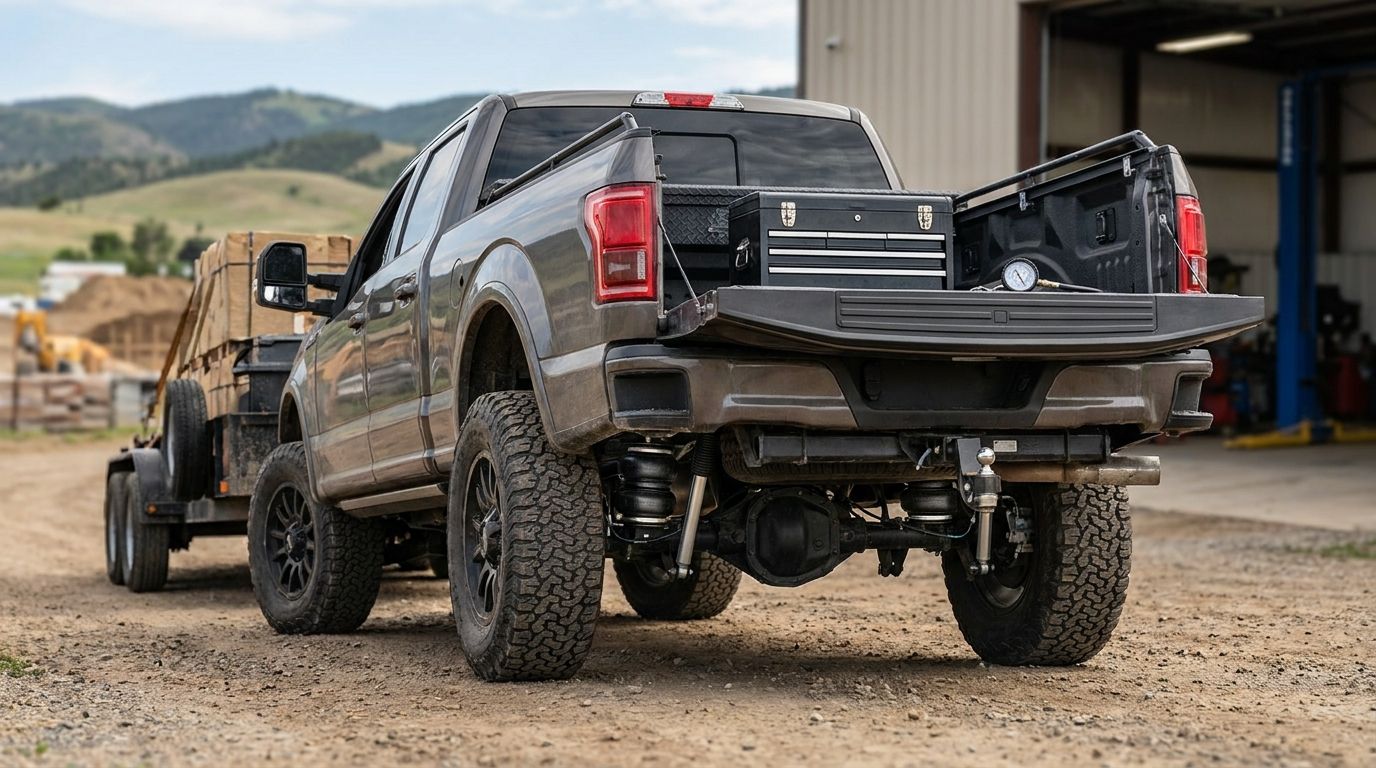
Single-cab utes running steel toolboxes, ladder racks or trade canopies carry the same weight in roughly the same spot every day. That's a different load pattern to a dual-cab hauling a camper, and the bracket geometry reflects it.
Single-cab kit pros:
- Keeps headlights level and steering light under toolbox weight
- Improves stability at highway speed with tools fully loaded
- Vehicle-specific brackets simplify a DIY bolt-on install
Single-cab kit cons:
- Brackets aren't interchangeable with dual-cab tray setups
- Still needs a PSI check if the load varies job to job
Best for: single-cab work utes with a consistent daily load. Verdict: Buy. See the best airbag kits for single-cab work utes.
3. Dual-cab canopy and camper load assist kit: best for constant static weight
A canopy fit-out or slide-on camper adds weight that never leaves the vehicle, even when you're not carrying anything else. That's a constant-payload problem even if the vehicle isn't towing.
Dual-cab canopy kit pros:
- Built for the extra static weight of canopy fit-outs and campers, not just occasional towing
- Pairs well with a digital controller for camp-to-road pressure changes
- Vehicle-specific fitment avoids clearance issues with canopy brackets
Dual-cab canopy kit cons:
- Very heavy campers may still need a coil assist kit alongside the airbags
- Requires an adjustment routine between full camper setup and an empty tray
Best for: dual-cab utes running a canopy or camper. Verdict: Buy.
4. Heavy-duty airbags for GVM-upgraded 4WDs: best for vehicles at their new limit constantly
A GVM upgrade changes what a 4WD is legally rated to carry, but it doesn't automatically fix ride height or stability once that new limit becomes the everyday load. Heavy-duty airbags matched to the upgraded suspension help support that weight — they don't create the upgrade themselves.
Airbags only belong in this setup when the GVM upgrade is already approved and documented for the vehicle. Fitting a heavier-rated airbag kit does not increase your vehicle's legal GVM, payload or towing capacity — only an approved GVM upgrade with the right compliance paperwork does that.
GVM-upgraded 4WD kit pros:
- Matched to the upgraded spring rate rather than the factory setup
- Keeps ride height level at the new, higher constant load
- Vehicle-specific fitment for common GVM-upgraded platforms
GVM-upgraded 4WD kit cons:
- Only suitable when a documented GVM upgrade is already in place
- Not a substitute for the upgrade itself
Best for: already GVM-upgraded 4WDs running close to the new limit daily. Verdict: Buy — confirm your GVM upgrade documentation first.
5. Coil assist kit: best for owners who don't want to manage air pressure daily
Coil assist kits add support to the factory coil spring rather than using airbags, so there's no PSI to check or top up. They suit owners whose load barely changes from one trip to the next.
Coil assist kit pros:
- No air pressure to check or maintain
- Simple option for a load that stays fairly consistent
- Still works with the existing suspension rather than replacing it
Coil assist kit cons:
- Not adjustable on the fly like an airbag kit
- Less suited to loads that swing between empty and fully loaded
Best for: steady, repeatable daily loads. Verdict: Hold if your load varies a lot; buy if it doesn't.
6. Air management system with digital controller: best add-on for fleet and multi-stop vehicles
This isn't a stand-alone fix — it's a compressor, manifold and digital controller added to an existing load assist airbag kit so pressure can be changed from the cabin instead of a hand pump at the roadside.
Air management system pros:
- Fast pressure adjustment between empty and loaded runs
- Useful for fleet vehicles making several drop-offs a day
- Works with any Boss Air Suspension load assist kit already fitted
Air management system cons:
- Adds cost and wiring on top of the airbag kit
- Doesn't help unless the airbags are already installed
Best for: vehicles whose load changes several times in a shift. Verdict: Buy as an add-on, not a starting point.


How we ranked these kits
Each kit was assessed against the criteria above: bellow design under sustained load, bracket durability, vehicle-specific fitment, workable PSI range and warranty support. The Extreme Series kit leads because it's built specifically for weight that doesn't come off the vehicle for long stretches — that's the definition of constant payload.
Which airbag kit should you choose for constant payload carrying?
If you're not sure where to start, Boss Air Suspension's Extreme Series heavy-duty load assist kit is the safest default for constant heavy payload in 2026 — it's built for exactly this use case and covers the widest range of vehicle-specific fitments.
Tradies running a fixed toolbox load should look at the single-cab kit. Dual-cab owners with a canopy or camper should look at the dual-cab kit. GVM-upgraded 4WD owners need to confirm their upgrade documentation before choosing airbags rated for the new limit. Everyone else with a steady, unchanging load has a genuine case for coil assist instead.
FAQ
What's the best airbag kit for constant heavy payload in 2026?
Boss Air Suspension's Extreme Series heavy-duty load assist kit is the best airbag kit for constant heavy payload in 2026 because it uses double bellow airbags built for sustained load rather than occasional towing.
Is an airbag kit better than a coil assist kit for daily heavy loads?
It depends on how much your load varies. Airbag kits suit loads that swing between empty and full, while coil assist kits suit a steady load that barely changes day to day.
Do load assist airbags increase my vehicle's GVM?
No. Load assist airbags support the vehicle's existing suspension and, where fitted, an already-approved GVM upgrade. They do not increase your vehicle's legal GVM, payload or towing capacity.
What PSI do I need for a fully loaded ute?
The right PSI depends on your vehicle and the exact load, so there's no single number that fits every setup. Boss Air Suspension's PSI guide explains how to set pressure for your specific kit and load.
Can I fit a load assist kit myself?
Most Boss Air Suspension load assist kits are a bolt-on install using vehicle-specific brackets and basic tools. Check the installation notes for your exact vehicle before starting.
Do I need an air compressor with a load assist kit?
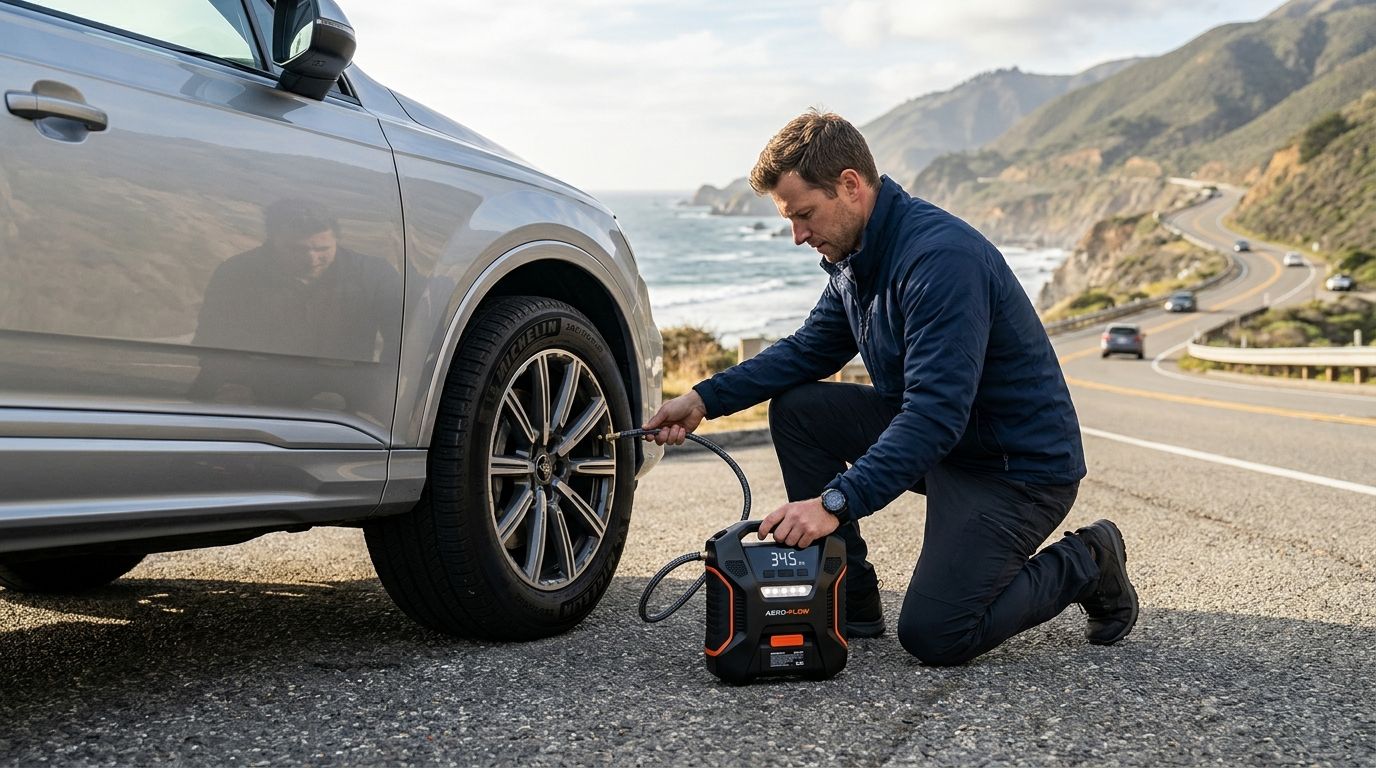
A compressor isn't required, but it makes adjusting PSI far easier if your load changes often, especially for fleet or multi-stop vehicles.
Will a heavy-duty airbag kit work with a GVM upgrade?
Yes, when the airbag kit is matched to a vehicle with an existing, documented GVM upgrade. The airbags support the upgraded rating; they don't create it on their own.
How long is a Boss Air Suspension load assist kit covered for?
Boss Air Suspension backs its load assist kits with a five-year warranty, which reflects kits designed for continuous, everyday use rather than occasional towing.
One last thing
Manual PSI checks get skipped on vehicles doing five stops a day — that's exactly where an air management system with a digital controller earns its keep, because pressure gets adjusted from the cabin instead of at the roadside with a hand pump. If your 2026 fleet or work ute changes load several times a shift, budget for the controller alongside the airbag kit, not as an afterthought.