A complete onboard air system kit pairs a 12V or 24V compressor with an aluminium air tank, manifold, pressure switch and fittings so you can run load assist airbags, air lockers and tyre inflation from one setup. The right combination in 2026 depends on how hard the vehicle works, not just how big it is.
- Best overall onboard air system kit in 2026: a caravan and camper trailer setup pairing a 12V compressor with an aluminium tank for load assist and tyre reinflation.
- Best for commercial fleets: a 24V air compressor system built for continuous duty cycle across a working shift.
- Best for 4WDs running air lockers: a system sized so tank capacity matches locker air draw, not just tyre inflation.
- Best compact option: a 12V glovebox compressor for occasional touring with no permanent tank plumbing.
- A pressure switch and correctly rated fittings matter as much as the compressor itself for reliable onboard air.
Why this matters
Most onboard air problems in 2026 are not compressor problems. They are sizing problems — a tank too small for the job, a compressor wired without a relay, or fittings rated for the wrong pressure.
A complete kit solves this because the compressor, tank, manifold and switch are matched to work together. Buying components piecemeal without checking they suit your application is where most onboard air setups fall short.
The first decision is what the system needs to do: top up load assist airbags, run an air locker, reinflate tyres after a beach or track run, or all three. That decision drives every other choice below.
Best overall: the caravan and camper trailer onboard air system. It's the configuration that covers load assist top-ups and tyre reinflation without needing continuous-duty industrial specs. Best for fleets: a 24V compressor system built around longer duty cycles. Best compact option: a 12V glovebox compressor for owners who don't want a permanent tank installed.
What makes the best onboard air system kit
- Duty cycle rating — matched to how often and how long the compressor runs per session, not just peak PSI
- Tank capacity and material — aluminium tanks resist corrosion better than steel in coastal and outback conditions
- Pressure switch accuracy — cheap switches drift over time and either short-cycle the compressor or let pressure fall too far
- Fitting and airline quality — push-fit and NPT-threaded fittings rated for the system's working pressure, not just "universal"
- Application match — a system built for tyre inflation alone is undersized for airbag load assist or air lockers
- Installation complexity — bolt-on brackets and clear wiring instructions matter more than raw compressor output for a DIY fit
At a glance
| System | Best for | Standout feature | Key limitation |
|---|---|---|---|
| Caravan and camper trailer onboard air system | Touring with load assist airbags and tyre inflation | One 12V compressor and tank covers airbag top-ups and tyre reinflation | Not built for continuous industrial duty cycles |
| 24V fleet onboard air system | Commercial and fleet vehicles on 24V electrics | Compressor rated for longer duty cycles across a shift | Needs 24V electrical architecture, not a fit for standard utes |
| Air locker onboard air system | 4WDs running front or rear air lockers | Faster air delivery matched to locker draw | Tank must be sized to the locker or engagement lags |
| Compact glovebox compressor setup | Occasional touring and tyre reinflation | Small footprint, no permanent tank plumbing | Slower refill on larger tyres, no reserve air supply |
| High-volume twin compressor system | Workshops and mobile tyre fitting vans | Two compressors run in parallel for faster tank recovery | More complex wiring and higher current draw |
| DIY component build | Owners assembling a custom setup | Every part chosen and sized individually | Needs more planning and correct fitting selection upfront |
1. Caravan and camper trailer onboard air system: best overall for towing and touring
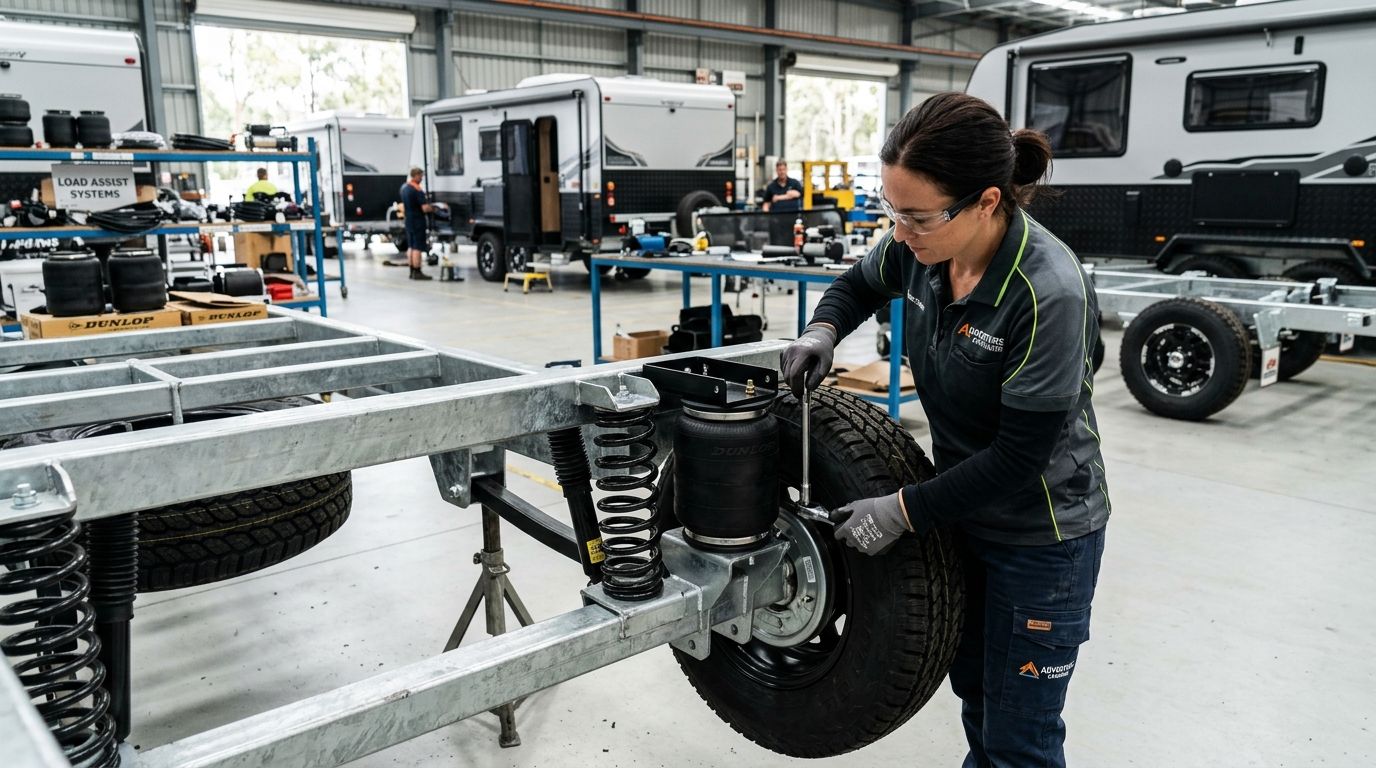
This configuration pairs a 12V compressor with an aluminium air tank so the same system tops up rear load assist airbags before a tow and reinflates tyres after a dirt road or beach run. It's built around how most caravan and camper trailer owners actually use their vehicle in 2026 — load one day, touring the next.
Caravan onboard air system pros:
- Covers load assist top-ups and tyre inflation from one setup
- Aluminium tank resists corrosion on coastal touring routes
- Bolt-on installation suited to DIY fitment
Caravan onboard air system cons:
- Not sized for continuous commercial duty cycles
- Compressor run time still depends on tank size chosen
Read the full breakdown in the onboard air system for caravan and camper trailer owners guide. Verdict: Buy if towing and touring is the primary use case.
2. 24V fleet onboard air system: best for commercial and fleet vehicles
Fleet vehicles running 24V electrics need a compressor rated for repeated cycles across a working shift, not occasional weekend use. This system is built around that duty cycle, with a tank and manifold sized to keep up with multiple tyre checks or airbag adjustments in a day.
24V fleet system pros:
- Compressor rated for longer, more frequent duty cycles
- Suits mining, tilt tray and delivery fleet applications
- Reduces downtime from compressor overheating on 24V platforms
24V fleet system cons:
- Only suits vehicles already running 24V electrical architecture
- Higher current draw needs correctly rated wiring and relays
More detail is in the 24V air compressor for commercial fleet vehicles guide. Verdict: Buy for fleet operators running 24V vehicles daily.
3. Air locker onboard air system: best for 4WDs running front or rear lockers
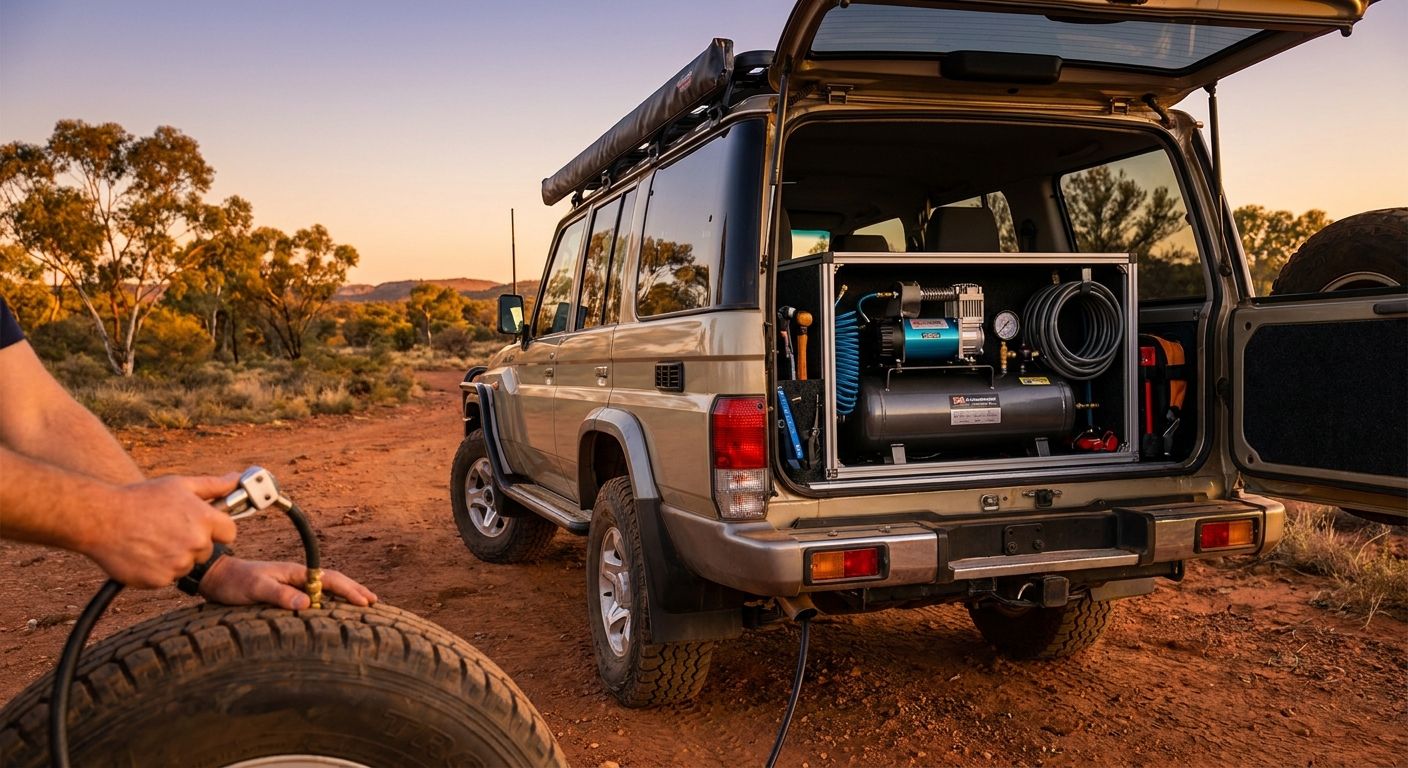
Air lockers draw air fast when they engage, and an undersized tank means a lag before the locker actually locks. This system matches tank capacity and compressor output to that draw, so the locker engages promptly on the track.
Air locker system pros:
- Sized to match locker air draw, not just tyre inflation
- Same tank can still handle tyre reinflation after the track
- Works alongside load assist airbags on the same manifold
Air locker system cons:
- Tank sizing has to be checked against the specific locker's air requirement
- Adds plumbing complexity compared with a tyre-inflation-only setup
See the onboard air system for air lockers guide for sizing notes. Verdict: Buy if the vehicle already runs, or will run, an air locker.
4. Compact glovebox compressor setup: best for occasional touring
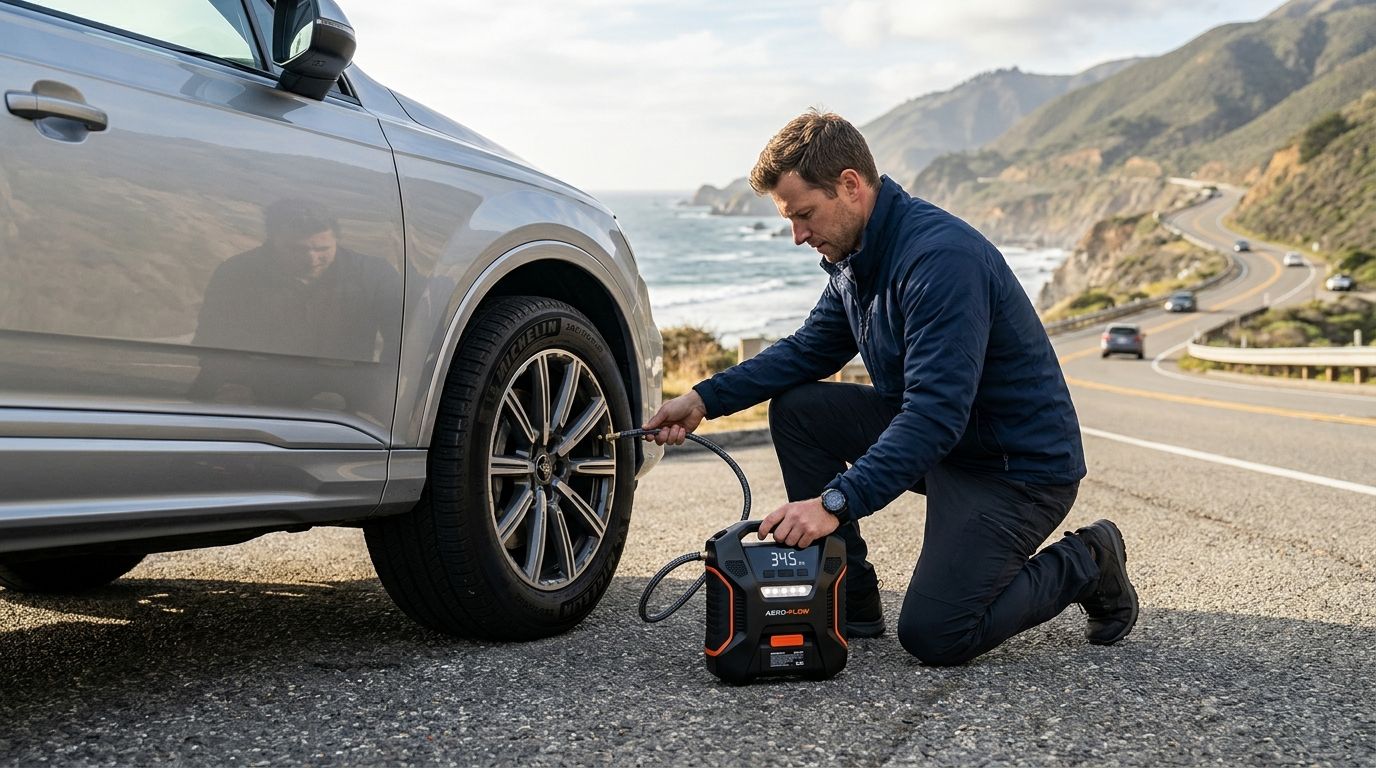
A compact 12V compressor with no permanent tank suits owners who tour occasionally and don't want to plumb a tank into the vehicle. It's smaller, simpler to install, and doesn't take up canopy or under-tray space.
Compact compressor pros:
- Small footprint with no permanent tank plumbing
- Easiest of the six options to install and remove
- Suits daily drivers that only tour a handful of times a year
Compact compressor cons:
- Slower refill on larger 4WD or caravan tyres
- No reserve air supply for load assist or locker use
Verdict: Hold unless occasional tyre reinflation is genuinely the only use case.
5. High-volume twin compressor system: best for workshops and mobile tyre fitting
Workshops and mobile tyre fitting vans cycle through far more inflation events per day than a touring vehicle. Running two compressors in parallel recovers tank pressure faster between jobs, which matters when the vehicle is earning money while parked.
Twin compressor system pros:
- Faster tank recovery between consecutive jobs
- Reduces wait time for staff or customers
- Suits high-frequency commercial use
Twin compressor system cons:
- More complex wiring than a single-compressor setup
- Higher current draw needs a properly sized battery and charging system
Verdict: Buy for workshop or mobile fitting use; Skip for a standard weekend tourer.
6. DIY component build: best for owners assembling their own setup
Some owners prefer to choose the tank, manifold, pressure switch and fittings individually rather than buying a pre-matched kit. This suits builders who already know their target pressure and airflow requirements and want to size each part themselves.
DIY component build pros:
- Full control over tank size, manifold layout and fitting choice
- Can be built up over time rather than in one purchase
- Suits vehicle builders and suspension specialist workshops
DIY component build cons:
- Requires more planning to avoid mismatched components
- No single point of fitment advice unless individual products are checked against the application
Verdict: Hold unless you're confident matching compressor, tank and fitting specs yourself.


How we ranked these systems
Each configuration was assessed against the six criteria above: duty cycle rating, tank capacity and material, pressure switch accuracy, fitting quality, application match and installation complexity. Systems built for a single narrow use case, like tyre inflation only, were marked down against systems that cover two or three related jobs from the same tank.
Which onboard air system should you choose?
If you're towing a caravan or camper trailer and running load assist airbags, the caravan and camper trailer onboard air system is the practical default in 2026. It covers the two jobs most touring owners actually need — airbag top-ups and tyre reinflation — without paying for commercial-grade duty cycle you won't use.
Fleet operators should size around duty cycle first, not compressor price, which points toward the 24V fleet system. 4WD owners running air lockers need the tank matched to the locker's draw, not just tyre inflation figures.
FAQ
What's the best onboard air system kit for towing a caravan in Australia?
A 12V compressor paired with an aluminium air tank is the best onboard air system for most caravan and camper trailer owners in 2026, since it covers load assist airbag top-ups and tyre reinflation from one setup.
Is a 12V or 24V air compressor better for onboard air?
A 12V compressor suits most touring vehicles and utes. A 24V compressor is better for fleet and commercial vehicles already running 24V electrics that need longer, more frequent duty cycles.
How big should the aluminium air tank be for an onboard air system?
Tank size should match the job: tyre inflation alone needs less capacity than a system also running load assist airbags or an air locker, which draw more air per cycle.
Can an onboard air system run air lockers and load assist airbags together?
Yes, provided the tank and manifold are sized for the combined air draw of both. A locker-only tank size may lag when also asked to top up airbags.
How much does a complete onboard air system cost in 2026?
Pricing depends on the compressor, tank size and fittings chosen, so check current listings on the Boss Air Suspension store for exact figures rather than relying on a fixed number.
Do I need a pressure switch for an onboard air system?
Yes, a pressure switch controls when the compressor cycles on and off to maintain tank pressure. A poorly rated switch causes short-cycling or pressure drops that look like a compressor fault.
Can I install an onboard air system myself?
Many onboard air kits use bolt-on brackets and standard fittings suited to DIY installation, though wiring a compressor correctly with a relay and fused circuit is worth getting right the first time.
What's the difference between a portable air compressor and a complete onboard air system?
A portable compressor plugs in when needed and has no tank, while a complete onboard air system is permanently mounted with a tank, manifold and switch ready for immediate use.
One last thing
The compressor gets blamed for slow air delivery more often than it deserves. In most cases raised during technical enquiries, the actual cause is an undersized tank or a fitting rated below the system's working pressure, not the compressor itself. Match the tank to the heaviest job the system will do — load assist or air locker use, not just tyre inflation — and the compressor will keep up.