Choosing the right air line for a vehicle install comes down to one question: what standard does the tube need to meet, and does it suit the temperature and vibration it will see? Best overall: SAE J844 nylon push-connect air line — the same specification fitted as standard in Boss Air Suspension load assist kits. Best for engine bay heat: PTFE-lined stainless braided air line. Best budget option: reinforced rubber air brake hose. Best for tray and canopy fitouts: polyurethane recoil air line.
- SAE J844 nylon push-connect line is the best dot approved air line for most load assist airbag installs in 2026.
- Stainless braided line with a PTFE core handles engine bay heat better than plain nylon tube.
- Reinforced rubber hose flexes well but perishes faster in UV-exposed exterior runs.
- Polyurethane recoil line suits tray and canopy air tool points, not primary suspension plumbing.
Why this matters
Searches for "DOT approved air line" usually come from builders comparing US air brake tubing rules to what's actually fitted here. Australia doesn't run a direct DOT equivalent, but the tubing spec most air line is built to — SAE J844 — is the same specification the US DOT/FMVSS 106 air brake rules reference. That's why the two terms get used interchangeably in searches.
For vehicle air suspension and onboard air installs in 2026, the practical question isn't certification paperwork. It's whether the line can handle the pressure, heat and vibration your setup throws at it. Get that wrong and you're chasing a slow leak six months after fitting a Boss Air Suspension load assist kit, not fixing a compliance issue.
Most installs across Boss Air Suspension load assist kits, onboard air tanks and compressor plumbing use one of four line types. Each suits a different part of the vehicle.
What makes the best DOT-approved air line
- Pressure rating with margin — line needs headroom above your system's working pressure, not just the minimum to hold air
- Heat tolerance — nylon tube built to SAE J844 is rated for sustained heat close to 93°C, which matters near engine bays and exhaust runs
- Fitting compatibility — push-to-connect fittings save tools; NPT-threaded fittings need sealant and a spanner
- Abrasion and UV resistance — exterior runs need protection from chafing on chassis rails and sun exposure over years of use
- Kink resistance — tight bends around chassis members shouldn't collapse the bore
- Ease of install — a line that a competent DIYer can route and connect without specialist crimping gear
At a glance
| Air line type | Best for | Standout feature | Key limitation |
|---|---|---|---|
| SAE J844 nylon push-connect | Load assist airbag installs | Push-connect fittings, no tools needed | Less abrasion-resistant against bare metal edges |
| PTFE-lined stainless braided | Engine bay / high-heat routing | Handles sustained heat and chafing | Slower to fit, costs more than nylon |
| Reinforced rubber air hose | Flexible short connections | Bends tight without kinking | Perishes faster in UV-exposed exterior runs |
| Polyurethane recoil line | Tray and canopy air tool points | Self-retracts, no loose line | Not suited to permanent airbag plumbing |
1. SAE J844 nylon push-connect air line: best for load assist airbag installs
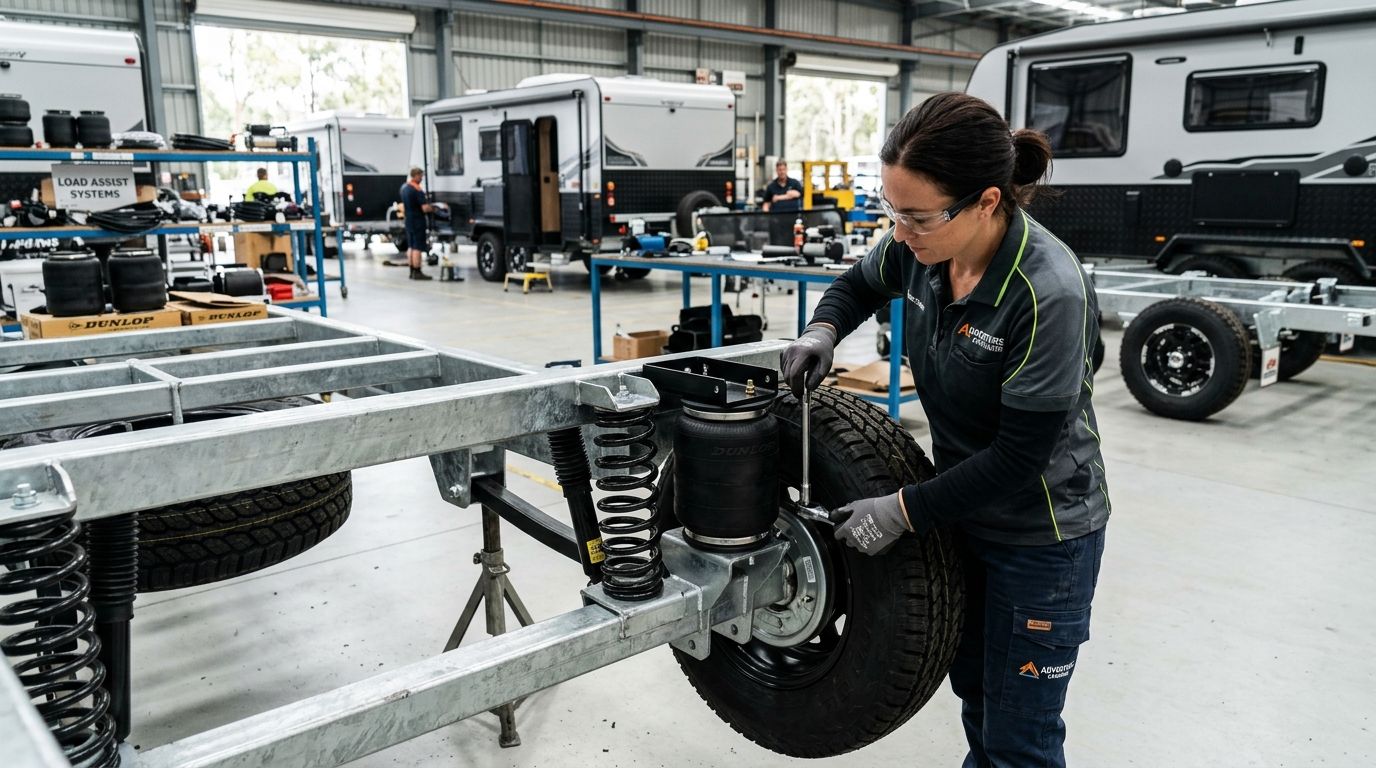
This is the line type fitted as standard in Boss Air Suspension load assist kits, connecting the airbag to the inflation valve or air management system. It's nylon tube — commonly 3/8" or 1/4" outside diameter — built to the SAE J844 specification, the same tubing standard referenced in US DOT air brake regulations.
SAE J844 nylon air line pros:
- Push-to-connect fittings mean no flaring, crimping or specialist tools
- Rated for sustained heat near engine bays and chassis runs
- Works with widely available 1/4" NPT fittings across onboard air components
- Lightweight and easy to route through chassis rails
SAE J844 nylon air line cons:
- Less abrasion-resistant than braided line where it clamps against a sharp metal edge without a grommet
- Stiffens noticeably in very cold conditions compared with rubber hose
Best for: load assist airbag kits and general onboard air plumbing. Verdict: Buy.


2. PTFE-lined stainless braided air line: best for engine bay and high-heat routing
Braided line wraps a PTFE or nylon inner core in a stainless steel outer braid. It's built to handle sustained heat and resist chafing where a line sits near an exhaust manifold or turbo heat shield.
Stainless braided air line pros:
- Handles sustained heat better than plain nylon tube
- Resists abrasion when routed near moving parts or sharp edges
- Gives a tidier, more finished look in an exposed engine bay
Stainless braided air line cons:
- Costs more and takes longer to fit than push-connect nylon line
- The braided outer can chew through bare fingers during install — gloves help
Best for: engine bay runs on turbo diesel utes and motorhomes where line sits close to heat sources. Verdict: Buy for heat-exposed runs; skip it for a straightforward chassis-rail run where nylon line is faster to fit. For a closer look at when this line type earns its place, see the guide on stainless braided air line for onboard air systems.
3. Reinforced rubber air brake hose: best budget and flexible option
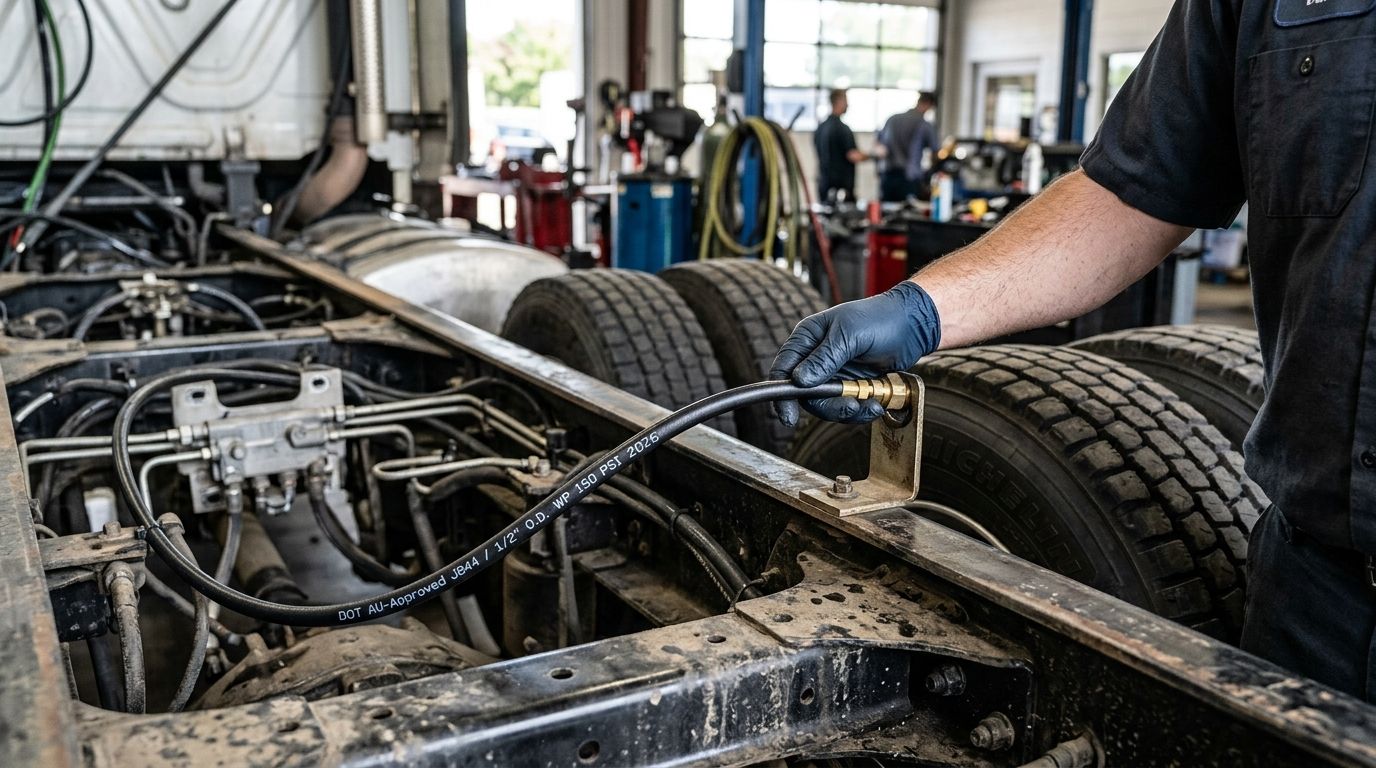
Rubber-reinforced hose has been used in air brake and pneumatic systems for decades. It's more flexible than nylon tube, which makes it easier to route around tight bends without kinking.
Rubber air hose pros:
- Flexes freely around tight bends
- Tolerates vibration well on corrugated or rough-road driving
- Cheaper to buy in longer lengths
Rubber air hose cons:
- Larger outer diameter makes routing through tight spaces harder
- Perishes faster in UV-exposed, exterior-mounted runs than nylon or braided line
Best for: short flexible connections in rough-road touring setups where vibration matters more than a compact fit. Verdict: Hold — fine as an internal engine bay run, but check UV exposure before running it exterior long-term.
4. Polyurethane recoil air line: best for tray and canopy fitouts
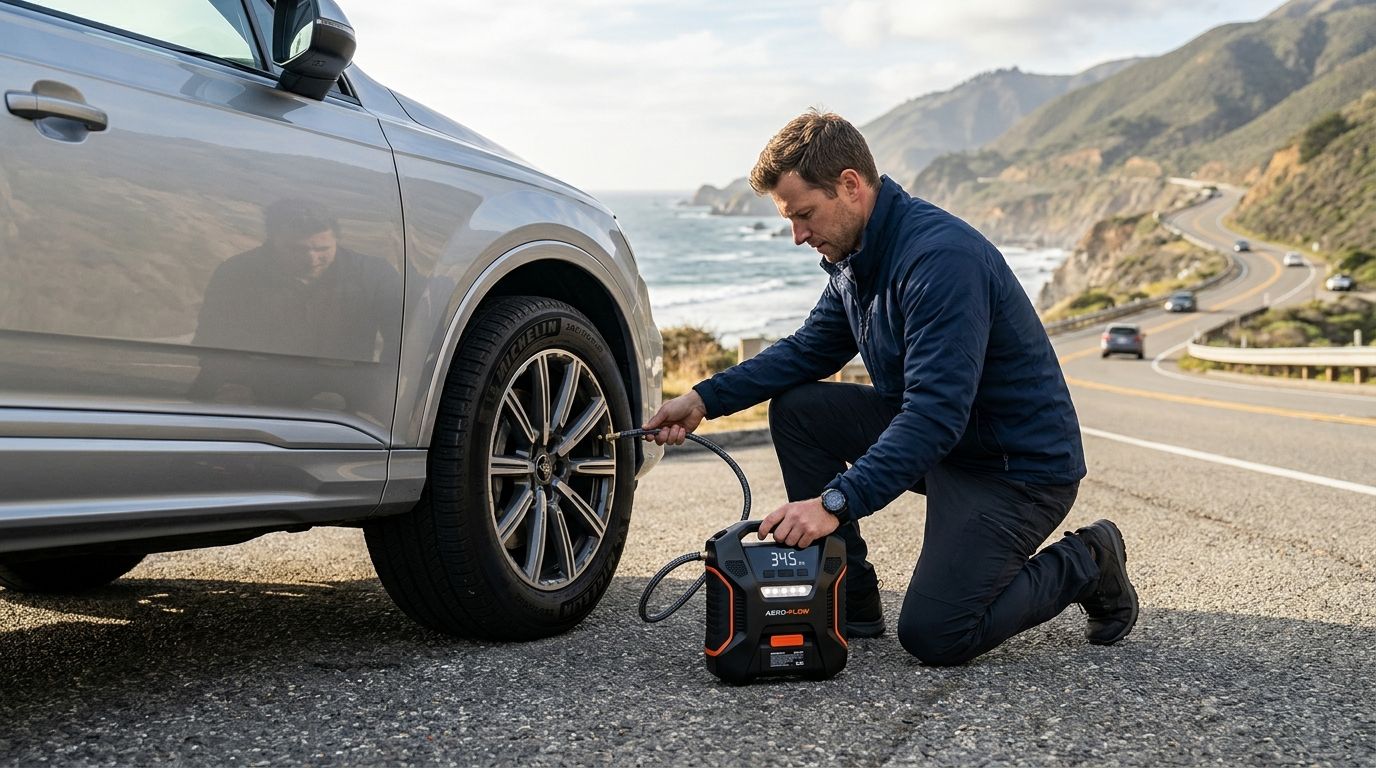
Coiled PU tube stretches and self-retracts, which suits tray, canopy and toolbox air points where a fixed line direction isn't practical. It's common on tray builds running air tools or a portable inflation point off an onboard air tank.
PU recoil air line pros:
- Stretches to reach without loose line hanging around
- Useful for air tools and pneumatic accessories fitted to trays and canopies
- Uses the same push-connect fittings as nylon tube
PU recoil air line cons:
- Recoil tension can pull at fittings over time if the line isn't supported
- Not designed for permanent load assist airbag plumbing
Best for: tray and canopy fitout builders running air tools or a spare inflation point. Verdict: Buy for accessory air points; skip it for primary load assist plumbing.
How we ranked these
Each line type was assessed against the criteria above: pressure margin, heat tolerance, fitting compatibility, abrasion and UV resistance, kink resistance and ease of install. SAE J844 nylon line wins on the combination that matters most for airbag suspension work — heat tolerance and tool-free fitting — which is why it's the standard line supplied in Boss Air Suspension load assist kits.
Which air line should you choose?
For most load assist airbag installs in 2026, SAE J844 nylon push-connect line is the right default — it's what ships in Boss Air Suspension kits and doesn't need specialist tools to fit correctly. Step up to stainless braided line only where a run genuinely sits near sustained heat. Rubber hose suits a short flexible connection on a budget. PU recoil line belongs on accessory air points, not the primary airbag circuit. If you're unsure which fitting or line size a specific kit needs, check the vehicle-specific fitment details on the air suspension fittings and air line install guide before ordering.
FAQ
What does DOT approved mean for air line?
DOT approved refers to US air brake tubing rules under FMVSS 106. Australia doesn't run a direct equivalent, but most air line sold here is built to the same SAE J844 specification those rules reference.
Is SAE J844 air line the same as DOT approved air line?
SAE J844 is the tubing specification the US DOT air brake regulation references, so line built to SAE J844 meets the material standard behind the DOT term. It's the closest equivalent available in the Australian market.
What size air line is used in load assist airbag kits?
Boss Air Suspension load assist kits commonly use 3/8 inch nylon tube with 1/4 inch NPT fittings at the connection points. Check the specific kit's fitment details, since sizing can vary by vehicle application.
Can I run stainless braided air line for a load assist kit?
Yes, stainless braided line works with the same push-connect or NPT fittings used on standard load assist kits. It's worth the extra cost mainly where the run sits close to engine bay heat.
How much heat can nylon air line handle in an engine bay?
Nylon tube built to SAE J844 is rated for sustained temperatures up to around 93 degrees Celsius. For runs closer to exhaust or turbo heat, stainless braided line handles the extra margin better.
What fittings work with 3/8 inch push-connect air line?
3/8 inch push-connect line typically pairs with metal or nylon push fittings terminating in 1/4 inch NPT thread, common across load assist kits and onboard air components.
Do I need special tools to install air line for airbag suspension?
No. Push-connect nylon line just needs a clean, square cut and a push into the fitting. Braided line and NPT threads need thread sealant and a spanner, which adds a step most DIY installers can still manage.
Is rubber air hose okay for exterior runs?
Rubber air hose handles vibration and tight bends well, but it perishes faster than nylon or braided line when left exposed to UV outdoors. It's better suited to internal, protected runs.
One last thing
The most common air line failure on a vehicle install isn't the tube material at all — it's an unsupported grommet where the line passes through a chassis rail or firewall. Whatever line type you pick for your 2026 install, a proper grommet or clamp at every pass-through point matters more than the tube spec itself.