Picking the right NPT fittings kit for air suspension plumbing comes down to matching thread type, port count and routing to your specific load assist setup, not grabbing the first bundle on the shelf. This guide ranks six kit types by use case so you can build a leak-free system the first time in 2026.
- Boss Air Suspension's NPT fitting and manifold range wins for vehicle-specific load assist installs in 2026.
- A multi-port manifold block kit is the best NPT fittings kit air suspension owners need for dual-bag or twin-bellow setups.
- DIY airline and fitting kits suit a first onboard air tank install but need thread sizes double-checked before cutting tube.
- Bulkhead fitting kits protect airline wherever it passes through a firewall, tray or canopy wall.
- Mixing NPT and BSP threads without checking is the most common cause of slow leaks in plumbed air suspension systems.
Why this matters
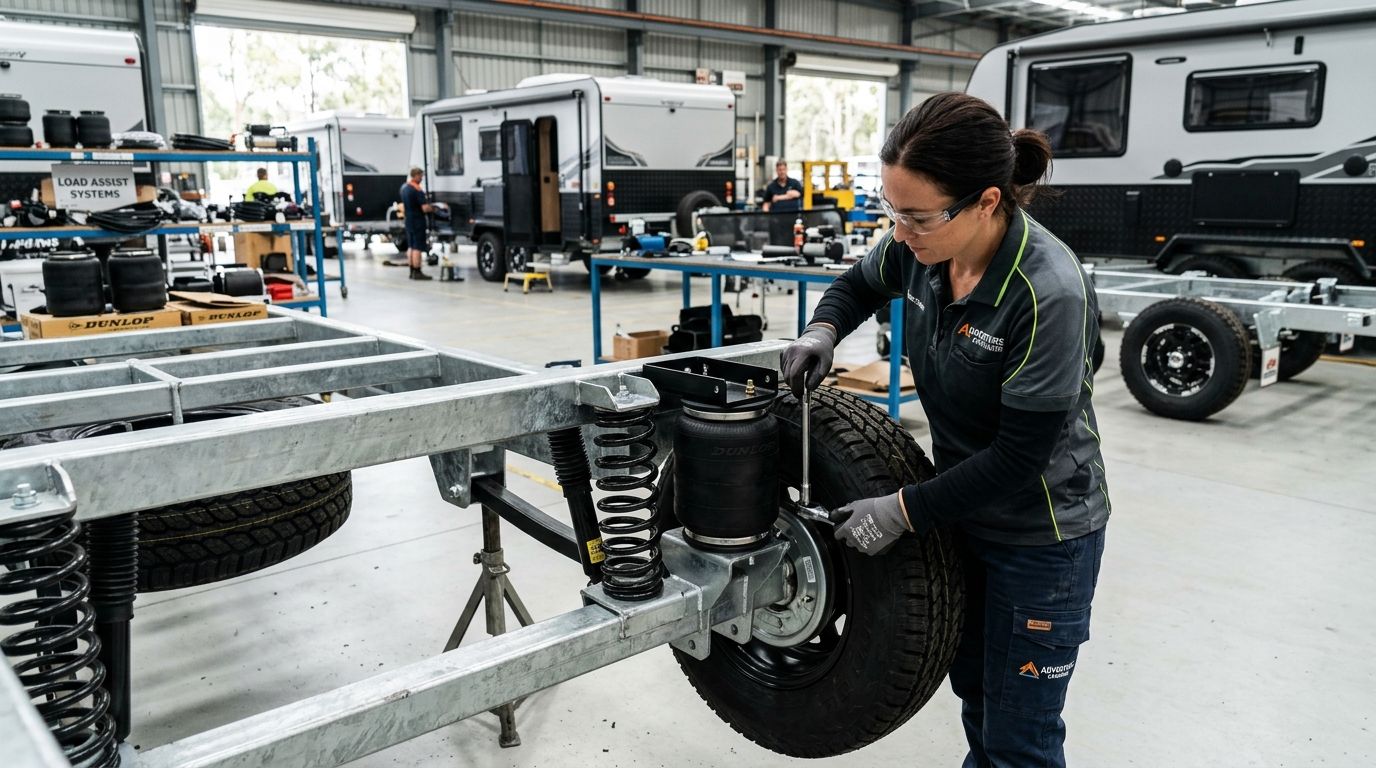
An airbag load assist kit is only as reliable as the fittings holding it together. Most leaks reported on plumbed systems trace back to a mismatched thread or a joint that was never meant to carry vibration.
NPT (National Pipe Thread) fittings are tapered and seal on the thread itself, which is different from the straight-thread BSP fittings some compressors and tanks use. Get that wrong and you'll get a slow leak that only shows up after a few hundred kilometres of corrugated road.
Getting fitting air suspension fittings and airlines correctly right the first time saves a re-plumb later, and it's the difference between a system that holds pressure and one that needs topping up every week.
What makes the best NPT fittings kit for air suspension plumbing
- Thread compatibility – matches the NPT ports on your airbags, tank and compressor without needing extra adapters that add leak points
- Push-to-connect quality – tube-to-NPT connections that hold pressure through vibration on corrugated outback roads
- Material and corrosion resistance – brass or plated metal fittings suited to Australian coastal air, dust and heat
- Layout flexibility – enough ports, usually via a manifold, to run dual bags, a tank and a gauge from one supply point
- Installation difficulty – sized and threaded to suit a typical fitout without a full re-plumb of the vehicle
- Local support – fitment advice and technical backup based in Australia, not a generic overseas part number
Best NPT fittings kits for air suspension plumbing at a glance
| Kit type | Best for | Standout feature | Key limitation |
|---|---|---|---|
| Boss Air Suspension NPT fitting and manifold range | Vehicle-specific load assist installs | Fitment advice matched to your airbag kit | Not sold as one boxed kit |
| Multi-port manifold block kit | Dual-airbag or twin-bellow setups | Feeds bags, gauge and tank from one point | Needs solid bracket mounting |
| DIY airline and fitting kit | First DIY onboard air tank install | Bundled tube and fittings in one box | Generic tube length may fall short |
| Bulkhead fitting kit | Tank-through-panel or tray/canopy fitouts | Protects airline where it passes through metal | Adds a joint to check during servicing |
| NPT elbow adapter kit | Tight routing in trays, canopies, engine bays | 90-degree exit solves clearance problems | Adds a joint that needs a leak check |
| Schrader valve fitting kit | Manual inflation without a compressor | Works with a standard tyre pump or gauge | Manual top-ups, no automatic adjustment |
1. Boss Air Suspension NPT fitting and manifold range: best NPT fittings kit for vehicle-specific installs
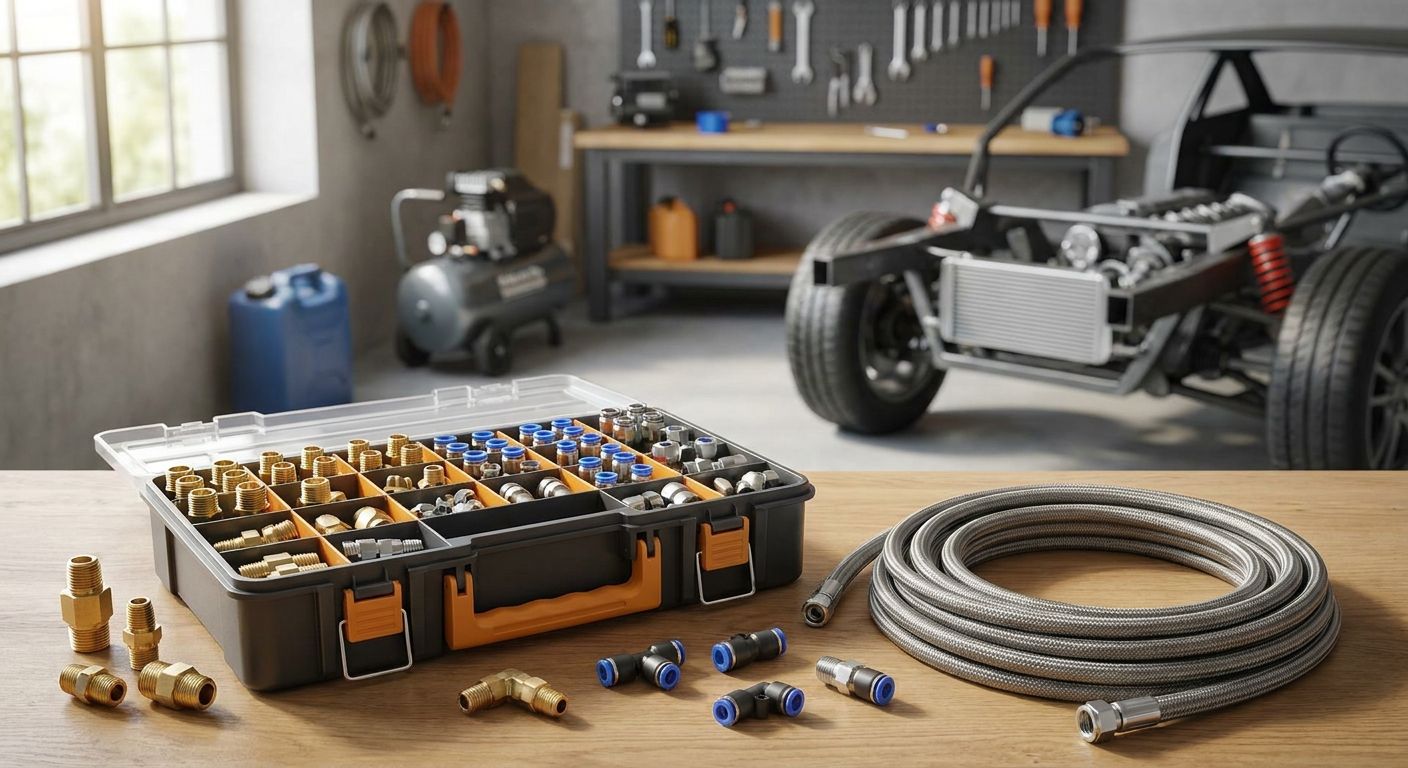
Boss Air Suspension stocks individual 1/4" NPT and 3/8" push-to-connect metal fittings alongside 2-way manifold blocks, so a fitment layout can be built around your specific airbag kit rather than a generic bundle. That matters because a Toyota Hilux twin-bag setup and a caravan tow vehicle running a single bag on each side don't need the same number of ports.
Boss Air Suspension pros:
- Fitment advice matched to your vehicle and load assist kit, not a one-size-fits-all bundle
- Metal push-to-connect fittings built to handle vibration on corrugated roads
- Buy only the ports and elbows your layout actually needs
Boss Air Suspension cons:
- Not sold as a single boxed kit, so you need to identify each fitting or ask for guidance
- Ordering one extra elbow later means a second shipping wait
Best for: owners with a specific vehicle and load assist kit who want fitment help rather than a generic bundle.
Verdict: Buy.
2. Multi-port manifold block kit: best for dual-airbag and twin-bellow setups
A manifold block for multi-airbag onboard air setups with three or more ports lets one supply line feed both airbags, a gauge and a tank, cutting down on the number of T-fittings in the system. Fewer joints means fewer places to check when something starts losing pressure.
Multi-port manifold pros:
- Fewer joints in the system, which means fewer potential leak points
- Keeps twin-bellow or dual-bag setups symmetrical and easy to bleed evenly
- Leaves room to add a gauge or valve later without re-plumbing the whole system
Multi-port manifold cons:
- A manifold mounted without solid brackets can work loose over corrugations
- More ports than the setup needs just adds bulk under the tray for no benefit
Best for: dual-airbag or twin-bellow load assist setups running a shared air supply.
Verdict: Buy.
3. DIY airline and fitting kit: best for a first onboard air tank install
A bundled kit of push-to-connect fittings, airline tube and basic hardware is aimed at owners fitting an onboard air tank themselves for the first time. It's a lower-effort starting point than sourcing every elbow, tee and length of tube separately.
DIY kit pros:
- Usually includes enough fittings and tube for a straightforward single-tank layout
- Lower cost of entry than buying every component individually
- Reduces the guesswork for a first-time onboard air fitout
DIY kit cons:
- Bundled tube length can fall short on longer chassis runs, especially dual cab utes with a rear-mounted tank
- Generic kits aren't matched to one vehicle, so thread sizes need checking before anything gets cut
Best for: first-time DIY installers adding one onboard air tank to an existing load assist system.
Verdict: Buy for straightforward layouts, but confirm thread sizes before you start cutting tube.
4. Bulkhead fitting kit: best for tank-through-panel and canopy fitouts
Bulkhead fittings and airline hardware are built to pass an airline through a firewall, chassis rail or canopy wall without pinching the tube or leaving it exposed to chafe against sharp metal edges. That's the difference between a tidy install and a slow leak six months down the track.
Bulkhead kit pros:
- Protects airline from rubbing against sharp metal edges over time
- Keeps plumbing tidy and out of sight in tray, canopy and slide-on camper builds
- Suits setups where the tank sits in a separate cavity to the airbags
Bulkhead kit cons:
- Adds one more connection point that needs checking during routine servicing
- Not needed if the tank and bags already share the same cavity
Best for: installs where the tank sits behind a firewall, tray wall or canopy panel from the airbags.
Verdict: Buy for through-panel runs; skip it if your tank and bags share one space.
5. NPT elbow adapter kit: best for tight routing in trays and engine bays
A 90-degree metal elbow fitting, such as a 3/8" tube to 1/4" NPT elbow, lets the airline exit at an angle instead of running straight out. That solves clearance problems where space under a tray or behind a bumper is tight.
NPT elbow kit pros:
- Solves clearance issues in tight engine bays or under-tray mounts
- Metal construction holds up better than plastic near heat sources like exhaust runs
- One elbow often replaces an awkward loop of tube that would otherwise kink
NPT elbow kit cons:
- Adds a joint that has to be leak-checked after fitting
- Choosing the wrong angle can still leave a kink if the run isn't measured properly first
Best for: tight routing in tray-backs, canopies and engine bays where a straight fitting won't clear.
Verdict: Buy where clearance is genuinely tight; skip it if a straight fitting already clears everything.
6. Schrader valve fitting kit: best for manual inflation without a compressor
A Schrader valve fitting terminates the airline in a standard tyre-style valve, so bags can be topped up with a regular tyre pump or gauge instead of a wired 12V or 24V compressor system. It's the simplest entry point into load assist adjustment.
Schrader valve kit pros:
- Works without a compressor fitted to the vehicle
- Uses a valve type most servos and workshops already carry gear for
- Simple, low-cost way to get manual pressure adjustment
Schrader valve kit cons:
- Manual adjustment means checking and topping up pressure yourself rather than an automatic system
- Slower to inflate than a dedicated onboard compressor setup
Best for: owners who want manual load assist adjustment without fitting an onboard compressor.
Verdict: Buy for manual setups; upgrade to a compressor-fed system if pressure needs adjusting often.


How we ranked these NPT fittings kits
Each kit type was weighed against the criteria above: thread compatibility, port count for the intended layout, corrosion resistance for Australian conditions, install difficulty and the availability of fitment support. The vehicle-specific range ranks first because thread mismatches are the single most common cause of plumbing leaks reported on load assist systems, and getting fitment advice up front avoids that outcome.
Which NPT fittings kit should you choose in 2026?
If your setup is straightforward, single bag, single tank, a basic push-to-connect and NPT elbow combination is enough. If you're running dual bags, a tank and a gauge, start with a multi-port manifold block kit to keep the layout simple and the joints to a minimum.
Still not sure which fittings match your airbag kit? Boss Air Suspension's NPT fitting and manifold range remains the safest default for 2026 because it comes with fitment advice for your specific vehicle rather than a guess.
FAQ
What is NPT thread and why does it matter for air suspension plumbing?
NPT stands for National Pipe Thread, a tapered thread that seals on the thread itself rather than with a separate O-ring. It matters because most airbag ports, compressors and tanks use NPT, and pairing it with the wrong thread type causes slow leaks.
Is NPT the same as BSP thread?
No. NPT is tapered and BSP (British Standard Pipe) is typically a straight thread with a sealing washer. Forcing the two together with extra tape can hold air for a while but tends to fail on rough roads.
What size NPT fitting do most airbag suspension kits use?
1/4" NPT is the common port size on airbag suspension components, paired with 3/8" push-to-connect tube on many Australian setups. Always confirm the port size on your specific kit before ordering fittings.
Do I need a manifold block for a single airbag load assist kit?
A manifold isn't essential for a single-bag setup with a basic inflation point, but it becomes useful once you add a gauge, a second bag or a tank. A multi-port manifold keeps those extra connections tidy from one supply line.
Can I mix push-to-connect and NPT fittings in one system?
Yes, this is standard practice. Push-to-connect fittings usually terminate in an NPT male thread that screws into the airbag, compressor or manifold port, so the two work together by design.
How many fittings does a dual-bag setup with a tank need?
It depends on the layout, but a dual-bag system with a shared tank typically needs a multi-port manifold, NPT elbows at each bag connection and a bulkhead fitting if the tank sits behind a panel. Confirm the exact count against your vehicle's install guide.
Does Boss Air Suspension sell replacement fittings individually?
Yes, individual NPT and push-to-connect fittings, along with manifold blocks, are available separately rather than only as part of a bundled kit. This lets you replace a single damaged fitting instead of buying a full kit again.
What's the best NPT fittings kit for a DIY onboard air tank install?
A DIY airline and fitting kit with bundled tube and push-to-connect fittings is the easiest entry point for a first onboard air tank install. Check the included tube length against your chassis run before starting.
One last thing
The most common failure point in a plumbed load assist system isn't the airbag, it's a mismatched NPT and BSP thread forced together and wrapped in extra tape. It'll usually hold air for weeks before letting go on a corrugated road, so if a system is losing pressure slowly, check the threads before assuming the bag itself has failed.