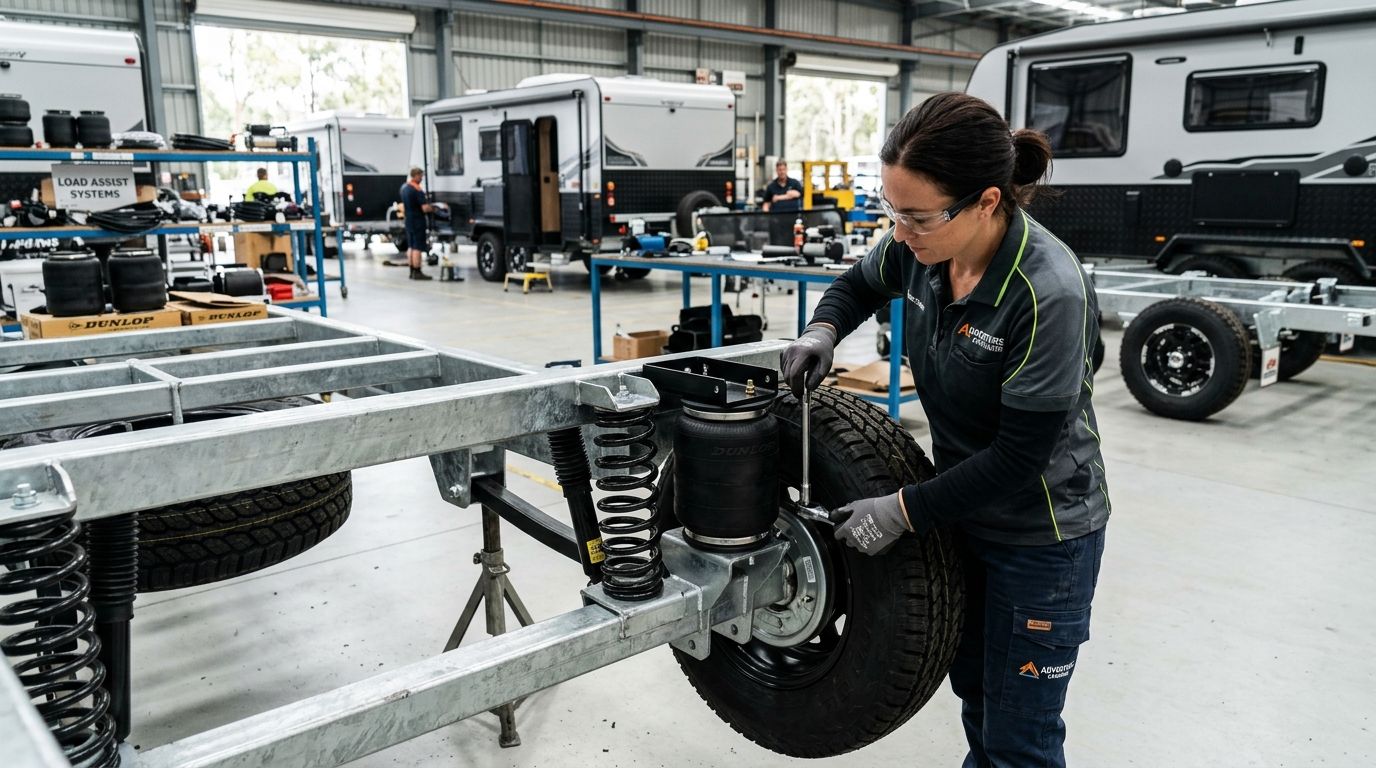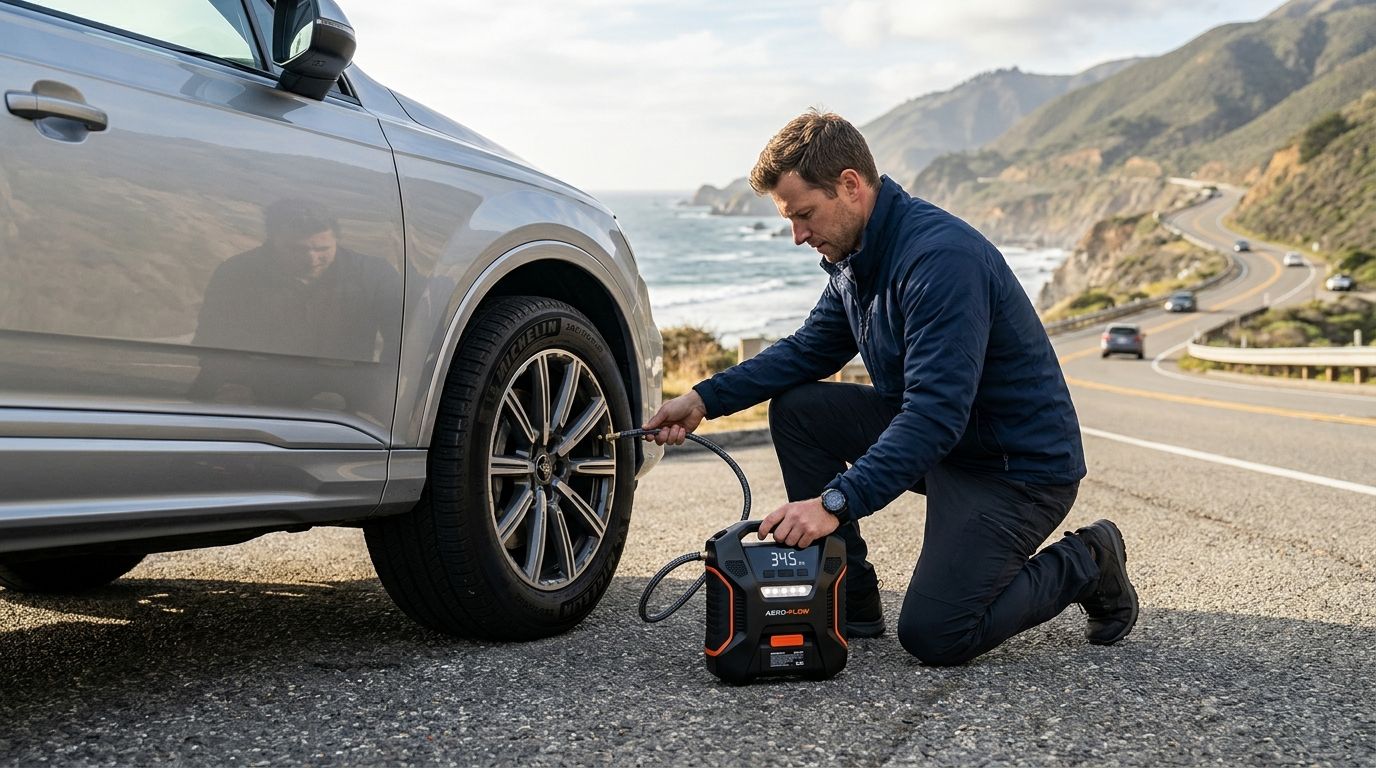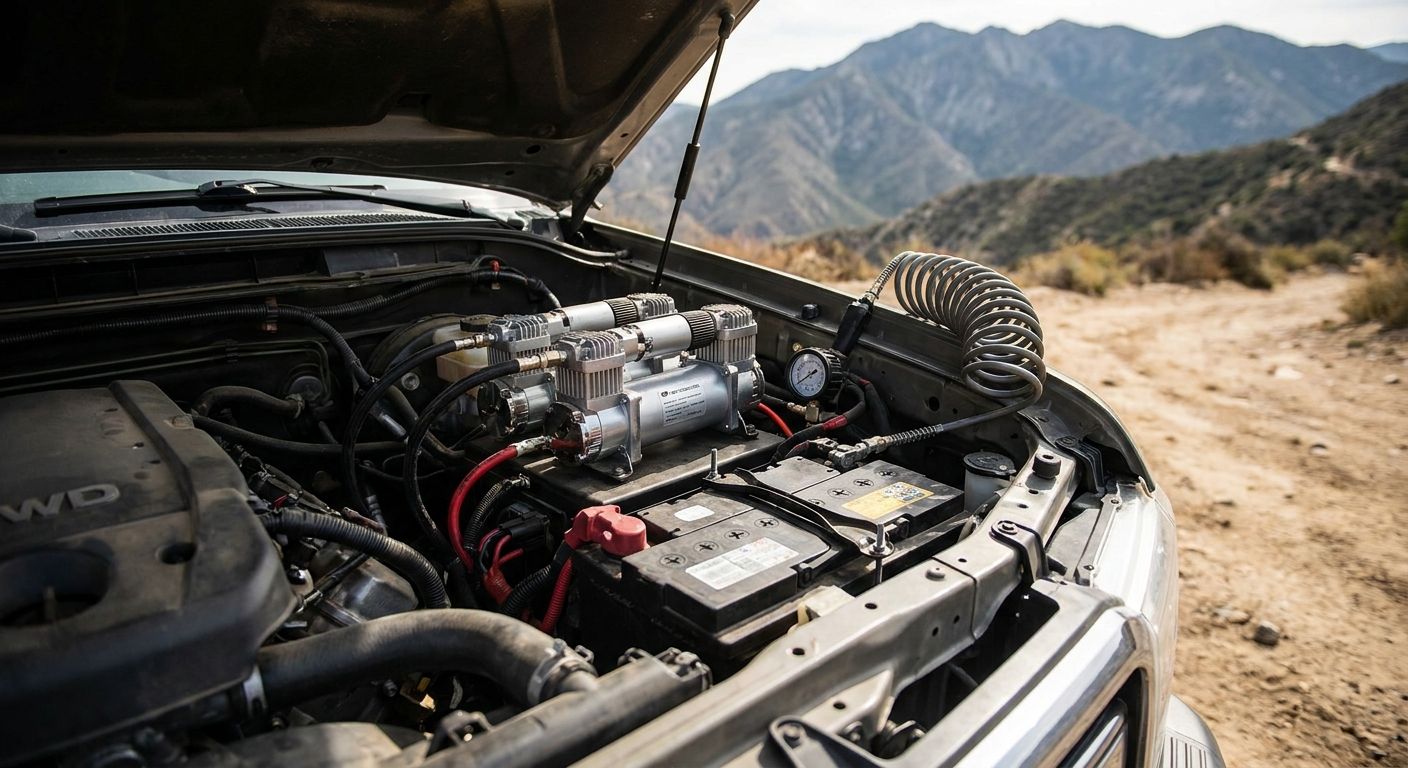
Fitting onboard air to a dual-battery 4WD is as much about matching duty cycle and current draw to your second battery as it is about picking a strong compressor. Best overall: a complete onboard air system with a matched compressor and aluminium tank. Best for air lockers: a high duty-cycle compressor rated for continuous running. Best for occasional use: a compact glovebox-mount compressor. Best for convoy trips: a twin-compressor setup. Best for quiet camp mornings: a low-noise 12V compressor.
- The best onboard air dual battery 4wd setup wires a 12V compressor to the second battery, never the starter.
- A complete onboard air system with an aluminium tank suits most 2026 touring 4WDs running air lockers.
- High duty-cycle compressors handle air lockers; compact glovebox units suit occasional tyre top-ups only.
- Twin-compressor setups fill multiple tyres fast for convoys; low-noise compressors suit quiet overnight camping.
- Wiring the compressor into the dual-battery system correctly protects the starter battery from voltage drop.
Why this matters
A dual-battery system exists to run gear without flattening the vehicle's starter battery, and an onboard air compressor is one of the biggest single loads you'll wire into that setup. Most systems use a battery isolator or a DC-DC charger to keep the second battery topped up from the alternator without pulling from the crank battery, and the compressor should draw from that second battery, not the starter. Getting the wiring right matters as much as picking the right compressor.
Most 4WD owners buying onboard air in 2026 want it for one of three jobs: topping up tyres after a beach run, running an air locker, or reinflating after airing down for corrugated tracks. Each job asks for a different duty cycle and a different draw on the second battery, and picking a compressor before checking the battery's capacity is the most common mistake.
Boss Air Suspension supplies 12V and 24V air compressors, aluminium tanks and complete onboard air systems built for these three jobs, alongside the deep-cycle batteries that run them.
What makes the best onboard air kit for a dual-battery 4WD
- Duty cycle – whether the compressor can run continuously for an air locker or needs rest cycles between uses
- Amp draw – how much current it pulls from the second battery under load
- Tank size – whether a stubby or standard aluminium tank fits the available mounting space
- Fill speed – how many tyres it can air up in one stop, which matters more on convoy trips
- Noise level – irrelevant for a quick tyre top-up, but important for early-morning camp use
- Install complexity – a plug-in glovebox unit versus a hardwired tank-and-relay system
Onboard air kits at a glance
| Kit type | Best for | Standout feature | Key limitation |
|---|---|---|---|
| Complete onboard air system | All-round touring with tyre inflation and air lockers | Compressor, tank and fittings matched as one package | More involved install than a plug-in unit |
| High duty-cycle compressor | Running air lockers without overheating | Rated for continuous or near-continuous operation | Draws more current, needs a properly sized second battery |
| Compact glovebox compressor | Occasional tyre top-ups on weekend trips | Small footprint, minimal wiring | Slower fill, not built for constant running |
| Twin-compressor setup | Airing up multiple tyres fast on convoy trips | Two compressors running in parallel into one tank | Higher combined current draw and more parts to maintain |
| Low-noise compressor | Overnight camp use near sleeping quarters | Quieter running than standard compressors | Usually a lower duty cycle than high-output units |
1. Complete onboard air system for dual-battery 4WD touring
A complete onboard air system pairs a 12V compressor with a dedicated aluminium tank, pressure switch and fittings, so the tank holds pressure and the compressor only cycles in when it drops. It's the setup most 4WD owners land on once they're running an air locker or airing tyres up and down every trip through 2026.
Complete onboard air system pros:
- One matched package instead of sourcing compressor, tank and fittings separately
- Tank pressure gives faster, on-demand air at the tyre without waiting for the compressor to spin up
- Covers tyre inflation, air lockers and pneumatic accessories from one setup
Complete onboard air system cons:
- Takes up more mounting space than a plug-in compressor
- Needs a proper wiring and relay install, not a plug-and-go job
Best for: 4WD owners running air lockers or airing up regularly who want one system covering tyre inflation and accessories. Verdict: Buy.
2. High duty-cycle compressor for dual-battery 4WD air lockers
A high duty-cycle compressor is built to run for extended periods, or continuously, rather than needing rest breaks between cycles. That matters when an air locker calls for air on demand, especially on technical tracks where you're locking and unlocking repeatedly.
High duty-cycle compressor pros:
- Keeps up with an air locker without overheating or cutting out mid-track
- Handles back-to-back tyre inflation cycles without a cool-down wait
High duty-cycle compressor cons:
- Draws more current than a light-duty unit, so the second battery needs to be sized to suit
- Typically noisier under sustained load
Best for: 4WD owners running an air locker, or anyone who airs up often enough that a light-duty compressor keeps stalling. Verdict: Buy.
3. Compact glovebox compressor for occasional onboard air use
A compact compressor mounts inside the glovebox or under a seat and runs off a 12V outlet or a direct wire to the second battery. It suits owners who air down for sand or tracks a few times a year and just need tyres back up to highway pressure afterward.
Compact glovebox compressor pros:
- Minimal wiring and mounting, some plug straight into a 12V socket
- Low current draw, easy on a smaller second battery
- The cheapest way into onboard air for occasional touring
Compact glovebox compressor cons:
- Slower to fill larger 4WD tyres than a hardwired tank system
- Not built for continuous running, so air lockers are out
Best for: Weekend and occasional touring where onboard air is a nice-to-have, not a daily tool. Verdict: Buy for light use, Skip if you're running an air locker.
4. Twin-compressor setup for high-volume onboard air demand
Running two compressors into one tank or manifold roughly doubles fill rate, which matters when a group is airing up four to six vehicles at a track head and nobody wants to stand around for twenty minutes per tyre.
Twin-compressor setup pros:
- Fills tyres noticeably faster than a single compressor
- Suits fleet or multi-vehicle touring groups
- One compressor can keep working while the other is serviced
Twin-compressor setup cons:
- Combined current draw is higher, so battery and wiring need to be sized for both units
- More components means more to maintain and more that can fail
Best for: Convoy touring, fleet vehicles or anyone airing up multiple tyres or vehicles at once. Verdict: Buy for high-volume use, Hold if you're touring solo.
5. Low-noise compressor for overnight camp use
A low-noise compressor earns its place when you're running it near a rooftop tent or camper at 6am and don't want to wake the whole camp. Fill speed and duty cycle usually sit below the high-output options, since quieter running tends to trade off against raw output.
Low-noise compressor pros:
- Noticeably quieter running, useful for early morning or late-night top-ups
- Still handles standard tyre inflation duties
Low-noise compressor cons:
- Lower duty cycle than high-output compressors, so air lockers aren't the target use
- Slower fill time than louder, higher-output units
Best for: Caravan and camper owners who need occasional air near the campsite without disturbing anyone nearby. Verdict: Buy for camp use, Skip if you need an air locker feed.
Componentry that goes into the kits above
The compressor, tank and battery you pair together decide how well any of the five setups above actually performs. The PX06 compressor below is rated for a 100% duty cycle, meaning it can run continuously rather than needing rest breaks a lighter unit would require, and a stubby aluminium tank suits rigs where mounting space is tight.


How we ranked
The ranking above weighs duty cycle, amp draw on the second battery, fill speed and noise level against the job each kit actually needs to do, not raw output alone. A compressor that's technically more powerful isn't the best onboard air dual battery 4wd pick if it draws more current than your second battery can spare or runs louder than your camp setup can tolerate.
Which onboard air kit should you choose?
Match the compressor's duty cycle to how you actually use the vehicle, then size the second battery to that draw, not the other way around. Most touring 4WD owners in 2026 land on a complete onboard air system with a high duty-cycle compressor and aluminium tank, since it covers tyre inflation, air lockers and accessories from one properly wired install. Occasional off-roaders do fine with a compact glovebox unit. Convoy leaders and fleet operators lean toward twin-compressor setups. Anyone camping near the rig most nights should weigh a low-noise compressor over raw fill speed. Boss Air Suspension stocks the compressors, tanks and batteries behind each of these five configurations.
FAQ
What's the best onboard air kit for a dual-battery 4WD?
A complete onboard air system with a high duty-cycle compressor and aluminium tank suits most touring 4WDs, since it covers tyre inflation, air lockers and accessories from one install. Lighter users do fine with a compact glovebox compressor instead.
Is a 12V or 24V compressor better for a dual-battery 4WD?
Most passenger 4WDs and utes run 12V systems, so a 12V compressor is the standard fit. 24V compressors suit commercial and fleet vehicles built on a 24V electrical system.
How much current does an onboard air compressor draw from a second battery?
Draw varies by compressor model and duty cycle rating, so check the specific compressor's rated current draw before wiring it in. Size the second battery to that figure rather than guessing from general amp numbers.
Can I run an onboard air compressor off the starter battery instead?
Wiring it to the starter battery risks a flat crank battery after a long airing-up session. A dual-battery system with an isolator or DC-DC charger keeps the compressor load off the starter battery entirely.
Is a compact glovebox compressor enough for tyre inflation on tracks?
A compact compressor handles occasional tyre top-ups after airing down, but it's not built for continuous running. If you're running an air locker, a high duty-cycle compressor is the better fit.
Do I need an aluminium air tank with my compressor?
A tank isn't compulsory, but it gives faster, on-demand air pressure without waiting for the compressor to cycle in. Most complete onboard air systems pair a compressor with a tank for this reason.
What size deep-cycle battery suits a 12V air compressor?
Fullriver's DC series deep-cycle batteries range from 85Ah up to 120Ah, and the right size depends on what else is drawing from the second battery besides the compressor. Check the compressor's rated draw against the battery's amp-hour capacity before wiring it in.
Is a twin-compressor setup worth it for a single vehicle?
A twin-compressor setup mainly pays off for convoy touring or fleet use where multiple vehicles or tyres need airing up quickly. A single high duty-cycle compressor is usually enough for one vehicle.
One last thing
Most people spec the compressor first and the battery second. Flip that order for 2026 builds: confirm the second battery's amp-hour rating and mounting space before picking a compressor, because a high duty-cycle unit sized for an air locker is wasted if the battery can't sustain it through a full airing-up session.