Choosing the best portable air compressor in Australia comes down to matching duty cycle, airflow and noise level to what you actually do with your vehicle — towing, touring, everyday driving or running onboard air for load assist airbags. This guide ranks six compressor types by use case, not by brand, so you can pick the one that suits your Ranger, Hilux, Prado or caravan tow rig instead of paying for more compressor than you need in 2026.
- Twin-cylinder 12V/24V compressors win for 4WD touring; glovebox units suit everyday cars and SUVs.
- The Boss Air Suspension 12V Air Compressor (PX06) covers onboard load-assist air at $230 in clearance stock.
- Duty cycle matters more than price — a 100% duty cycle motor keeps working through four tyres in a row.
- Low-noise 12V units suit overnight caravan use; marine-rated compressors handle boat and tender inflatables.
- No single portable air compressor wins every job in 2026 — match the type to the use case.
Why this matters
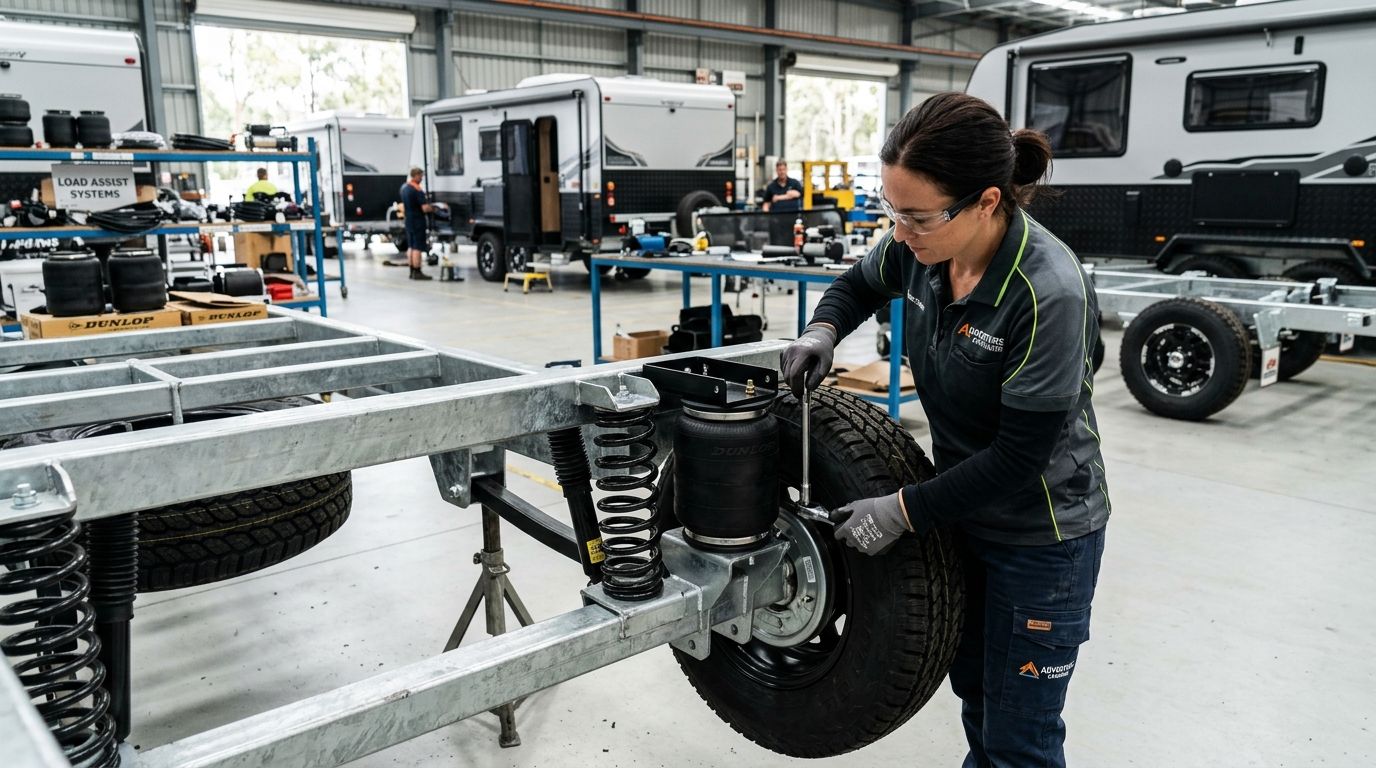
A portable air compressor earns its keep when you air down for sand or a rocky track and then need to air back up before hitting the highway. It also does quiet, unglamorous work every day if it's plumbed into an onboard air system running load assist airbags, an air locker or a tyre inflation kit — the kind of setup Boss Air Suspension builds onboard air components for.
Buying the wrong type wastes money two ways. An underpowered glovebox unit stalls trying to fill a big off-road tyre, and an oversized twin-cylinder rig is overkill wired into a car that only ever needs an occasional top-up. The right pick in 2026 depends on how you actually use your vehicle, not the biggest number printed on the box.
What makes the best portable air compressor
- Duty cycle — how long the motor runs before it needs a cooldown break. A 100% duty cycle rating means it keeps working continuously.
- Airflow (CFM) — higher airflow refills bigger, off-road tyres faster; lower airflow is fine for occasional road-tyre top-ups.
- Noise level — matters most around a caravan park or campsite at odd hours.
- Power source and wiring — 12V vs 24V, alligator clips vs hardwired into an onboard air system.
- Build quality and sealing — dust and water resistance for beach, outback and marine use.
- Portability and storage size — glovebox-sized units trade airflow for space.
Portable air compressors compared at a glance
Here's how the six main types stack up before the detail below.
| Type | Best for | Standout feature | Starting price | Key limitation |
|---|---|---|---|---|
| Twin-cylinder 12V/24V compressor | 4WD touring and tyre re-inflation | High airflow for big off-road tyres | Varies by brand | Bulkier, higher current draw |
| Boss Air Suspension 12V Air Compressor (PX06) | Onboard load-assist air systems | 100% duty cycle, oil-less | $230 (clearance stock) | Limited stock, cosmetic marks only |
| Compact glovebox compressor | Everyday cars and SUVs | Small enough to store in the glovebox | Varies by brand | Lower airflow, slower refill |
| Low-noise 12V compressor | Overnight caravan use | Quieter running | Varies by brand | Usually lower CFM output |
| Marine-rated portable compressor | Boat and tender inflatables | Corrosion-resistant housing | Varies by brand | Not built for large 4WD tyres |
| Handheld tyre inflator | Quick daily tyre checks | Pocket-sized, 12V or USB powered | Varies by brand | Not for repeated full re-inflation |


1. Twin-cylinder 12V/24V compressor: best portable air compressor for 4WD touring
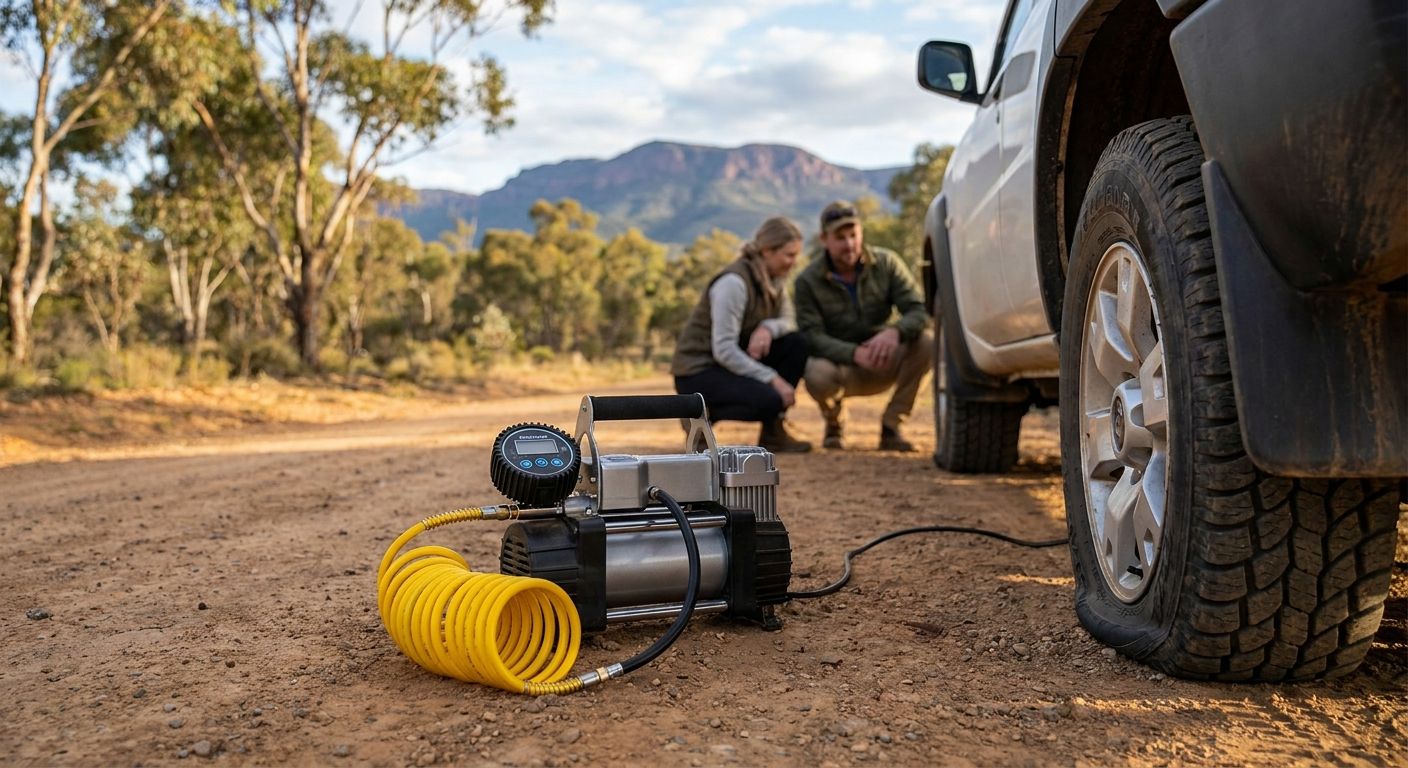
Twin-cylinder compressors run two pistons instead of one, pushing more air per minute than a single-cylinder unit. That extra airflow matters when you're re-inflating large off-road tyres after airing down for a sand or rock track, especially across four tyres back to back.
Twin-cylinder pros:
- Higher airflow than single-cylinder units, so tyres fill faster
- Suits larger off-road tyre sizes without labouring the motor
- Usually rated for longer continuous run time
Twin-cylinder cons:
- Bulkier and heavier than a glovebox unit
- Draws more current, so wiring and battery capacity need checking first
- Costs more upfront than a basic single-cylinder compressor
Twin-cylinder pricing: varies by brand and CFM rating — check current retail listings before buying.
Best for: 4WD owners regularly airing down and back up on touring tracks.
Verdict: Buy if you run bigger off-road tyres and air down often; Skip it if you only ever top up road tyres.
2. Boss Air Suspension 12V Air Compressor (PX06): best portable air compressor for onboard load-assist air
The Boss Air Suspension 12V Air Compressor PX06 is an oil-less unit built for onboard air duty, including running load assist airbags and topping up tyre pressure. It carries a 100% duty cycle rating, so it keeps working without a forced cooldown break between jobs.
Current stock is clearance condition — shop-used with slight cosmetic scratches on the body, but tested and covered by full warranty.
PX06 pros:
- 100% duty cycle rating, no cooldown break needed
- Oil-less design, less maintenance than oiled compressors
- Backed by full warranty even as clearance stock
PX06 cons:
- Current stock is clearance — limited quantity
- Cosmetic scratches from shop handling, not new-in-box condition
- Single-cylinder output, not suited to constant large-tyre re-inflation
PX06 pricing: $230, clearance stock with full warranty.
Best for: 4WD and ute owners running Boss Air Suspension load assist airbags who want a compact onboard compressor for pressure adjustments and tyre top-ups.
Verdict: Buy while clearance stock lasts if your onboard air needs are limited to load-assist and occasional tyre work; Wait for standard stock if you want unmarked condition.
3. Compact glovebox 12V compressor: best portable air compressor for everyday cars and SUVs
Glovebox compressors are built small enough to live in the vehicle permanently without taking up boot space. They're aimed at drivers who need an occasional top-up, not repeated full tyre inflation.
Compact compressor pros:
- Small enough to store in the glovebox or centre console
- Handy for slow leaks and seasonal pressure checks
- Lower price point than dedicated onboard air setups
Compact compressor cons:
- Lower airflow, so a full re-inflation from flat takes longer
- Not built for continuous cycles across four large tyres
- Often lacks a mounting bracket for permanent installation
Compact compressor pricing: varies by brand — most sit at the budget end of the category.
Best for: everyday car and SUV owners who need occasional top-ups, not touring-grade air.
Verdict: Buy for a daily driver; Skip if you're fitting out a touring 4WD with onboard air.
4. Low-noise 12V compressor: best portable air compressor for overnight caravan use
Low-noise 12V compressors use insulated housings and slower-running motors to cut noise at the campsite. They trade some airflow for a quieter cycle, which matters if you're topping up tyres near a caravan park early in the morning.
Low-noise compressor pros:
- Quieter running than standard compressors
- Suits early morning or late-night tyre checks without disturbing neighbours
- Compact enough for a caravan tool locker
Low-noise compressor cons:
- Lower CFM output than performance-focused units
- Takes longer to fill a fully deflated tyre
- Usually a premium over a standard unit for the noise reduction
Low-noise compressor pricing: varies by brand.
Best for: caravan and camper trailer owners doing tyre checks around other campers.
Verdict: Buy if noise at the campsite is a real issue; Hold if airflow speed matters more to you than quiet running.
5. Marine-rated portable compressor: best portable air compressor for boat and tender inflatables
Marine-rated compressors use corrosion-resistant housings and sealed electrics to handle salt air and spray. They're built for inflating tenders, kayaks and other marine inflatables, not high-pressure vehicle tyres.
Marine compressor pros:
- Corrosion-resistant housing suited to marine environments
- Often includes low-pressure, high-volume settings for inflatables
- Compact enough to store on a boat or in a tow vehicle
Marine compressor cons:
- Not rated for high vehicle tyre pressures
- Limited use outside marine and inflatable applications
- Smaller motors than 4WD-focused twin-cylinder units
Marine compressor pricing: varies by brand.
Best for: boat, tender and inflatable kayak owners who need low-pressure, high-volume air.
Verdict: Buy if marine inflatables are your main use; Skip if you need vehicle tyre pressure capability.
6. Handheld tyre inflator: best portable air compressor for quick daily checks
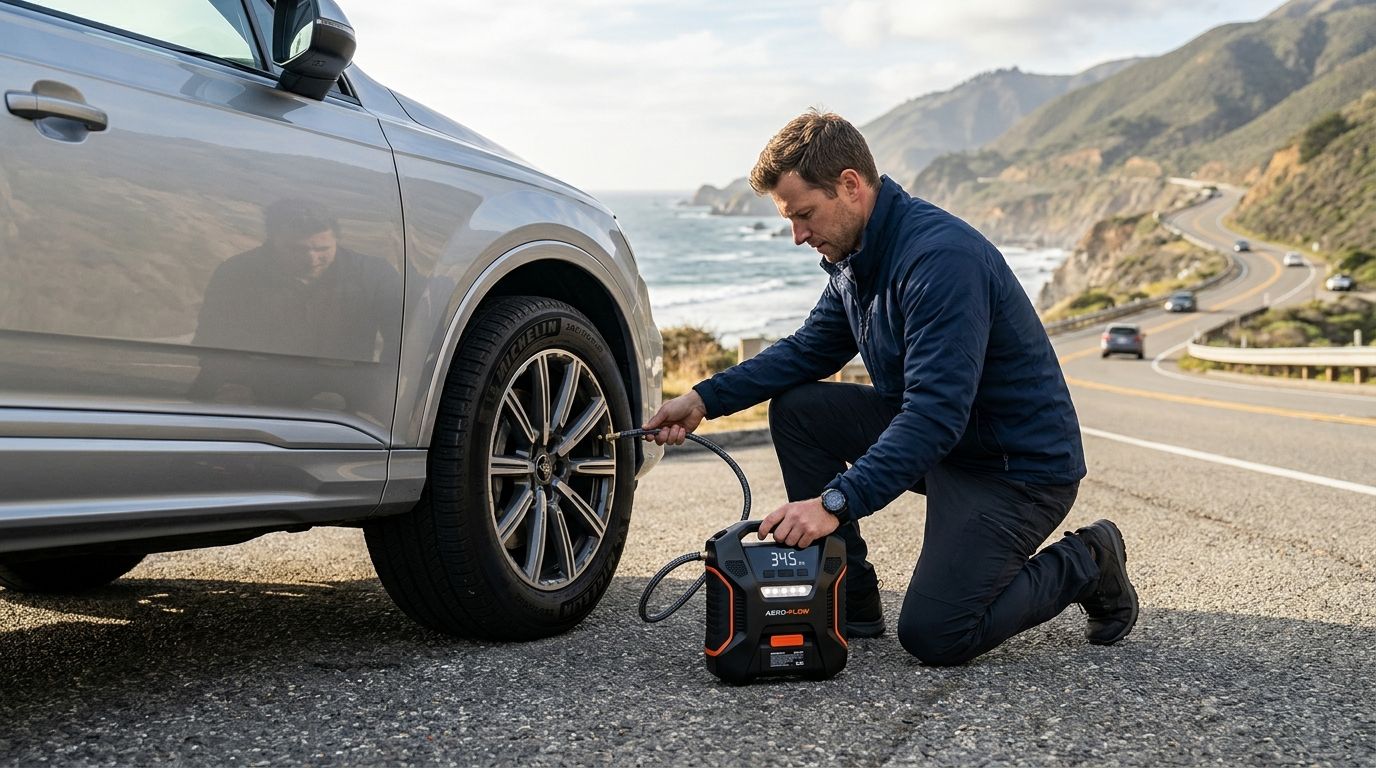
Handheld inflators are the smallest category here — pocket-sized units powered by a 12V socket or a USB battery pack. They're built for quick pressure checks and small top-ups, not full re-inflation.
Handheld inflator pros:
- Smallest and lightest option in this guide
- Easy to keep in a glovebox or centre console
- Useful for quick pressure checks before a trip
Handheld inflator cons:
- Slow for a full re-inflation from flat
- Limited duty cycle compared with larger units
- Not suited to touring or off-road tyre work
Handheld inflator pricing: varies by brand, generally the cheapest category here.
Best for: drivers who just need quick top-ups between services.
Verdict: Hold as a backup tool; Skip as your only compressor if you tour or tow regularly.
“If a compressor needs a cooldown break after two tyres, it's built for occasional use, not touring.”
How we ranked these portable air compressors
Each type is measured against the six criteria above: duty cycle, airflow, noise, power source, build quality and portability. No single compressor wins every category — a twin-cylinder unit beats a glovebox compressor on airflow but loses on portability, and a low-noise unit trades CFM for a quieter campsite. The ranking reflects which criteria matter most for each use case, not one best-overall score.
Which portable air compressor should you choose in 2026?
If you tour with bigger tyres and air down regularly, a twin-cylinder 12V/24V compressor is the safer buy in 2026 — the extra airflow pays off every time you re-inflate four tyres after a beach or outback track.
If your onboard air need is narrower — running load assist airbags, adjusting ride height or the occasional tyre top-up — the Boss Air Suspension 12V Air Compressor (PX06) at $230 covers that job without paying for airflow you won't use, while clearance stock lasts.
Everyday car and SUV owners are better served by a compact glovebox unit, caravan owners should weigh noise over raw airflow, and boat owners need a marine-rated compressor rather than a vehicle-focused one. Match the compressor to the job, not the biggest number on the box.
FAQ
What is the best portable air compressor for Australian 4WDs in 2026?
A twin-cylinder 12V or 24V compressor is the best portable air compressor for Australian 4WDs in 2026 if you regularly air down and back up on touring tracks. It delivers higher airflow than single-cylinder or glovebox units, which matters most when refilling larger off-road tyres.
Is a 12V or 24V air compressor better for onboard air systems?
A 12V compressor suits most passenger 4WDs and utes, while 24V units are built for vehicles and commercial platforms wired on a 24V electrical system. Check your vehicle's electrical system before buying, since the two are not interchangeable.
How long can a portable air compressor run before it overheats?
That depends on the duty cycle rating — a 100% duty cycle motor is designed to run continuously without a forced cooldown break. Lower duty cycle units need rest periods between tyres, which slows down a full re-inflation job.
Is a twin-cylinder air compressor worth the extra cost?
Yes, if you regularly air down for sand, rock or outback tracks and need to refill larger tyres quickly. It's not worth it if you only ever top up road tyres occasionally, where a compact or glovebox unit does the job.
What's the best portable air compressor for caravan owners?
A low-noise 12V compressor is the best fit for caravan owners doing tyre checks around a campsite or caravan park. It trades some airflow for quieter running, which matters more than raw speed in that setting.
Do I need an air tank as well as a compressor?
An aluminium air tank isn't essential but it speeds things up, since stored air empties faster than a motor can pump it fresh. It's most useful for onboard air setups running load assist airbags, air lockers or multiple outlets.
Can a small glovebox compressor keep up with 4WD tyres?
A glovebox compressor can top up 4WD tyres but struggles with a full re-inflation from flat on larger off-road tyres. It's better suited to everyday cars and SUVs doing occasional pressure checks.
How much does a decent 12V air compressor cost in Australia?
Pricing varies by brand, airflow rating and duty cycle, with the Boss Air Suspension 12V Air Compressor (PX06) currently at $230 in clearance stock. Twin-cylinder and marine-rated units generally sit higher, and pricing should be checked against current retail listings.
One last thing
The Boss Air Suspension 12V Air Compressor PX06 is in clearance stock at $230 in 2026 — full warranty, tested, with only cosmetic scratches from shop handling. Once that batch clears, pricing reverts to standard. If you're already running a load assist airbag kit and just need a compact compressor to adjust pressure on the road, that clearance window is worth checking before it closes. Pairing any 12V compressor with an aluminium air tank also cuts wait time between tyres, since the tank supplies a quick burst of stored air instead of relying on the motor alone.