Picking the best portable air pump for car and SUV tyres in 2026 comes down to matching airflow and duty cycle to how you actually drive, not chasing the biggest number on the box.
- A 12V plug-in compressor is the best portable air pump for car and SUV tyres for most Australian driveways in 2026.
- Compact glovebox compressors suit small SUVs with tight boot space and light top-ups.
- Dual-outlet high-flow compressors cut inflation time on 4WDs and tow vehicles with bigger tyres.
- Handheld mini inflators are fine as a backup but struggle with fully flat or oversized tyres.
- Airflow and duty cycle matter more than box size when comparing portable air pumps.
Why this matters
Most drivers buy a portable air pump after a low-pressure warning light or a flat, then grab whatever's cheapest at the servo. That works once. It doesn't work if you're topping up SUV tyres every fortnight or airing up a full set after a tow.
The gap between a basic pump and a properly rated compressor shows up in two places: how long it takes to fill a tyre from flat, and how long the pump can run before it needs a rest. A portable tyre inflator for everyday cars and SUVs covers routine top-ups fine. Towing or touring changes the brief entirely.
This guide ranks portable air pumps by real use case rather than treating every model as a straight swap for another.
What makes the best portable air pump for car and SUV tyres
- Airflow rating — litres per minute, not just "12V" on the box
- Duty cycle — how long it runs before it needs to cool down
- Power draw — amps pulled from the 12V socket or battery
- Portability — where it actually lives in the vehicle day to day
- Gauge accuracy — digital or analogue, and how close it reads to a workshop gauge
- Noise level — matters more than people expect at a camp site
Portable air pumps at a glance
| Type | Best for | Standout feature | Key limitation |
|---|---|---|---|
| 12V plug-in compressor | Everyday cars and SUVs | Balanced airflow and duty cycle | Bulkier than glovebox units |
| Compact glovebox compressor | Tight storage space | Small footprint | Slower fill on bigger tyres |
| Dual-outlet high-flow compressor | Towing and 4WD touring | Two lines running at once | Higher amp draw |
| Handheld mini inflator | Occasional budget top-ups | Cheap and pocket-sized | Low duty cycle |
| Low-noise 12V compressor | Caravan and camping | Quieter operation | Costs more for the noise reduction |
1. 12V plug-in compressor: best portable air pump for everyday cars and SUVs
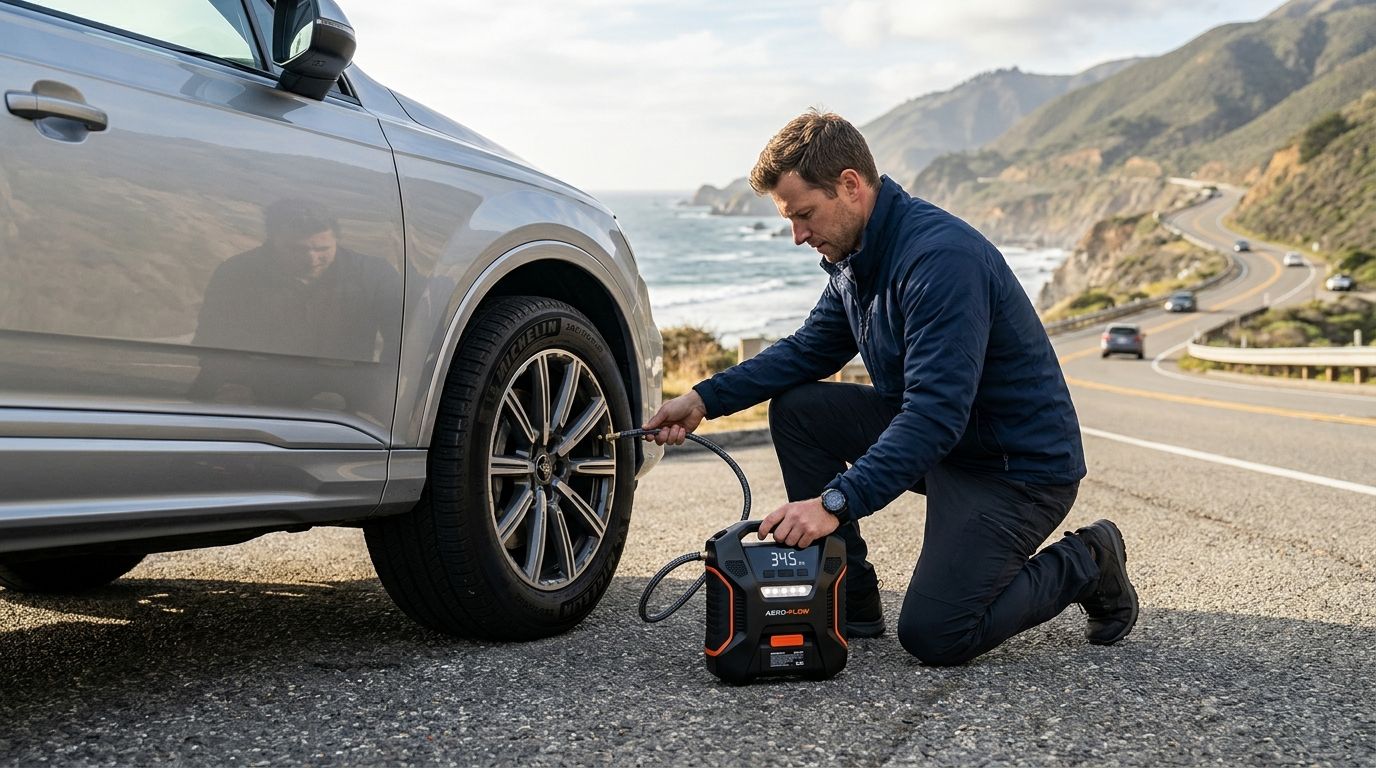
A 12V plug-in compressor is the standard tool for keeping road-going car and SUV tyres at the right pressure between services. It plugs straight into the vehicle's 12V socket and runs a hose direct to the valve.
This is the category Boss Air Suspension's 12V air compressors for tyre inflation sit in — built for repeated use rather than a one-off emergency top-up.
12V plug-in compressor pros:
- Balanced airflow for full-size car and SUV tyres
- Higher duty cycle than budget handheld units
- Digital gauges are generally accurate enough for daily use
12V plug-in compressor cons:
- Bulkier than a glovebox-only unit
- Needs a healthy battery if the engine's off
- Overkill if you only ever top up a few PSI a month
Best for: everyday drivers doing weekly pressure checks and the occasional flat tyre recovery.
Verdict: Buy. This is the sensible default for most car and SUV owners in 2026.
2. Compact glovebox compressor: best portable air pump for minimal storage space
A compact glovebox compressor trades some airflow for a footprint small enough to leave in the car permanently. Boss Air Suspension's compact air compressor for glovebox storage is built around exactly this trade-off.
Compact glovebox compressor pros:
- Small enough to store without thinking about it
- Fine for quick pressure checks before a drive
- Lighter than full-size units
Compact glovebox compressor cons:
- Slower to fill a fully flat tyre
- Shorter duty cycle window before it needs a break
- Not built for 4WD-sized tyres under load
Best for: small SUVs and hatchbacks with limited storage that mostly need routine pressure checks.
Verdict: Buy if boot space is the priority over raw fill speed.
3. Dual-outlet high-flow compressor: best portable air pump for towing and 4WD touring
A dual-outlet high-flow compressor runs two air lines at once, cutting the time it takes to air up a full set of tyres after towing or off-road touring. This matters when you're adjusting four to six tyres in one stop, not just one SUV tyre.
Dual-outlet compressor pros:
- Airs up multiple tyres faster than a single-outlet unit
- Suits caravans and dual-axle trailers as well as the tow vehicle
- Higher sustained airflow for larger tyre volumes
Dual-outlet compressor cons:
- Bulkier and heavier to store
- Draws more amps, so it needs a healthy battery or dual-battery setup
- More than most weekend drivers need
Best for: 4WD owners and tow vehicle drivers regularly adjusting pressure across on-road and off-road settings.
Verdict: Buy if you tow, tour, or run more than one vehicle's tyres from the same kit.
4. Handheld mini inflator: best portable air pump for occasional budget top-ups
A handheld mini inflator is the cheapest, smallest option on this list. It's built for slow leaks and light top-ups, not a fully deflated tyre on the side of the road.
Handheld mini inflator pros:
- Cheapest entry point into portable inflation
- Small enough for a door pocket or glovebox
- Fine for a slow-leak top-up before a short drive
Handheld mini inflator cons:
- Very low duty cycle before it needs to cool down
- Struggles with a fully flat tyre
- Not suited to 4WD or SUV tyres carrying load
Best for: drivers who just need an occasional pressure nudge between servicing.
Verdict: Hold. Useful as a backup in the glovebox, not a primary tool if you tow or drive off-road.
5. Low-noise 12V compressor: best portable air pump for caravan and camping use
A low-noise 12V compressor uses vibration dampening and a quieter motor to reduce the racket a standard compressor makes, without giving up much airflow. Anyone who's aired up tyres at 6am in a caravan park knows why this matters.
Low-noise compressor pros:
- Noticeably quieter running than a standard compressor
- Still delivers usable airflow for tyre and towing pressure checks
- Works well alongside an onboard air setup for caravans
Low-noise compressor cons:
- Costs more for the noise reduction
- Still needs a healthy 12V source to perform
- Marginal benefit if you're not camping near other people
Best for: caravan and camper trailer owners adjusting tyre pressure at camp sites.
Verdict: Buy for regular caravan and camping trips.
How we ranked these
Each type was assessed against airflow, duty cycle, power draw, portability, gauge accuracy and noise — the same criteria listed above, not brand reputation. For a closer look at fill speed specifically, the portable tyre inflators ranked by fill speed breakdown goes deeper into how airflow numbers translate to real-world minutes per tyre.
Which portable air pump should you choose?
For most car and SUV owners in 2026, a 12V plug-in compressor is the right default — enough airflow for full-size tyres, a duty cycle that won't cut out mid-fill, and a size that still fits under a seat.
If boot space is genuinely tight, drop to a compact glovebox unit and accept the slower fill time. If you tow or tour off-road, the dual-outlet high-flow option earns its extra bulk. Caravan owners get the most day-to-day benefit from a low-noise compressor, and a handheld mini inflator only belongs in the kit as a backup, not the main tool.
FAQ
What's the best portable air pump for car and SUV tyres in 2026?
A 12V plug-in compressor is the best all-round choice for car and SUV tyres in 2026, balancing airflow and duty cycle for regular top-ups. Compact units suit tight storage, and dual-outlet high-flow compressors suit towing and touring.
Is a 12V compressor better than a handheld inflator for SUV tyres?
Yes, a 12V compressor generally has a higher duty cycle and stronger airflow than a handheld mini inflator. Handheld units are fine for slow-leak top-ups but struggle to fill a fully flat SUV tyre without overheating.
How fast should a portable air pump fill a flat tyre?
Fill speed depends on the pump's airflow rating in litres per minute and the tyre's volume, so times vary by unit. Higher-flow compressors, including dual-outlet models, fill full-size tyres noticeably faster than compact or handheld units.
Do I need a dual-outlet compressor for towing a caravan?
Not strictly, but a dual-outlet compressor cuts the time it takes to air up multiple tyres across a tow vehicle and caravan. If you're regularly adjusting four or more tyres per stop, the extra airflow is worth the bulkier size.
What PSI should I run in my car or SUV tyres?
Most car and SUV tyres sit around 30-35 PSI cold, but the correct figure is always the one on the vehicle's door jamb placard. Check that placard rather than relying on a general figure, especially when carrying extra load.
Can a portable air pump run off a cigarette lighter socket?
Most 12V plug-in compressors and glovebox units are designed to run from a standard 12V accessory socket. Higher-flow dual-outlet compressors sometimes need a direct battery connection for full performance, so check the unit's power requirements first.
How much duty cycle do I need for topping up SUV tyres?
For routine top-ups, a moderate duty cycle is enough since you're only adding a few PSI. If you're regularly filling a tyre from flat or airing up several tyres in one session, a higher duty cycle compressor avoids overheating mid-job.
Is a low-noise compressor worth it for caravan trips?
If you're airing up tyres early morning or late at night in a caravan park, a low-noise compressor is worth the extra cost for the reduced disturbance. Airflow is usually comparable to a standard 12V compressor in the same class.
One last thing
Duty cycle gets less attention than airflow, but it's the number that actually stops a job halfway through. Many low-cost portable pumps need a cool-down break after a short stretch of continuous running, which is exactly when you notice it — halfway through airing up four tyres after a tow. A compressor built around a higher duty cycle simply keeps running until the job's done, which is the real difference between a pump you keep and one that ends up in a drawer.