Fill speed comes down to airflow and duty cycle, not marketing claims — and the setup that airs up fastest depends entirely on how many tyres you're resetting and how often you're doing it. This guide ranks the main types of portable tyre inflator setups by real-world fill speed for 2026, from dual-outlet compressors to glovebox-sized backups.
- Dual-outlet air compressor setups win on best portable tyre inflator fill speed for convoys and twin-vehicle airing in 2026.
- A single-outlet 12V compressor with a continuous duty cycle rating is the practical pick for solo 4WD touring.
- Glovebox-sized compressors are a genuine backup, not a full tyre-set solution — Skip them as your only inflator.
- Pairing any compressor with an aluminium air tank cuts repeat-fill time because the tank stores pressurised air ready to use.
Why this matters
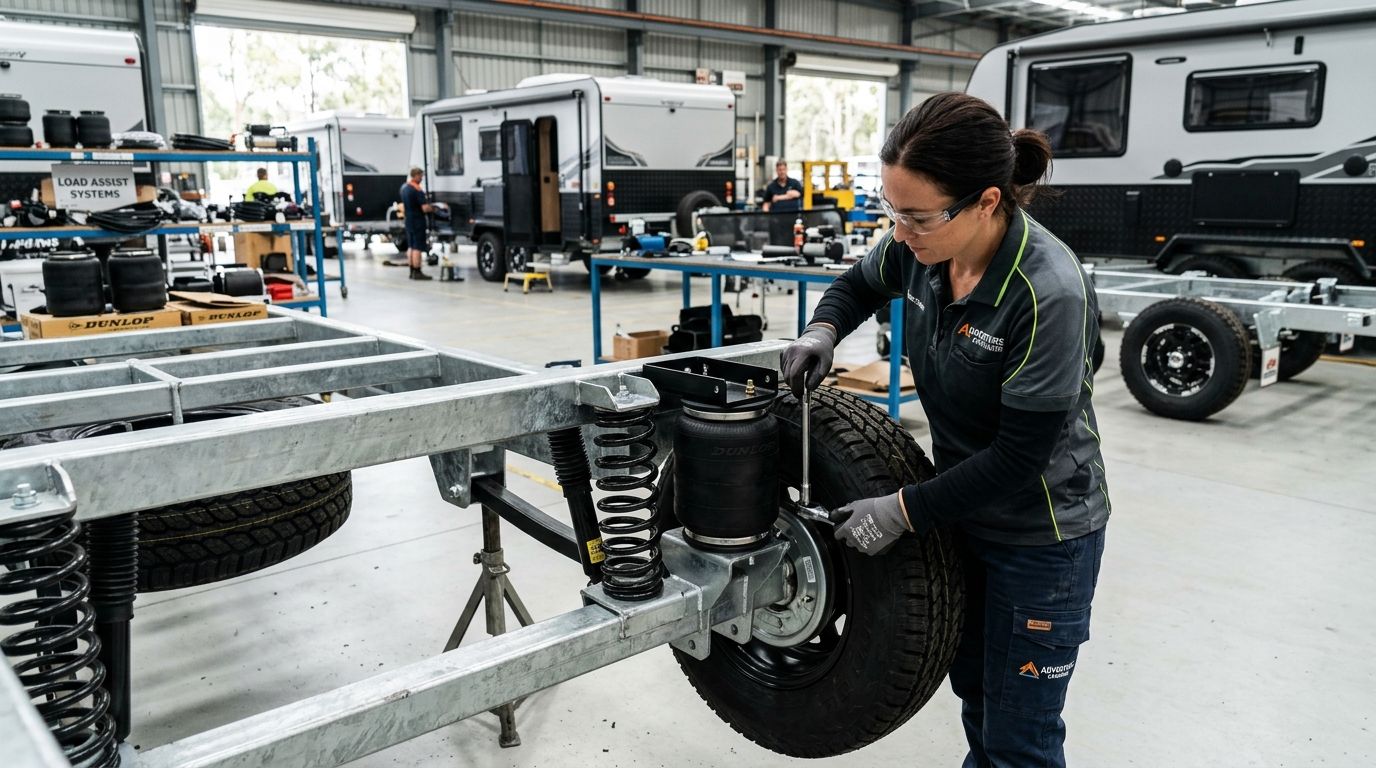
Air suspension and onboard air setups only work as intended when tyre pressures are right for the load and the terrain, and getting pressures right quickly matters when you're standing at a boat ramp or a beach access track with a queue behind you. A slow inflator turns a two-minute pressure change into a fifteen-minute one.
The products in Boss Air Suspension's onboard air and load assist range are built around this exact problem — moving air fast enough that pressure changes don't become the bottleneck on a touring day. Fill speed is a function of airflow output, duty cycle rating and whether you're running one outlet or two, not brand name.
What makes the best portable tyre inflator
- Airflow delivered under load — output drops once tyre pressure climbs, so a compressor rated for high flow at low pressure can still slow down near 40 psi.
- Duty cycle rating — continuous-duty units keep working through a full four-tyre reset; intermittent-duty units need rest periods.
- Single vs dual outlet — twin outlets air two tyres, or two vehicles, at once and roughly halve total convoy fill time.
- Power draw and wiring — higher-flow compressors pull more current, so battery capacity and wiring gauge affect real-world speed.
- Portability and storage — a unit that's easy to store gets used every trip; one buried under gear gets left behind.
- Pressure control accuracy — a compressor with a reliable gauge or cut-off avoids over-pumping and repeat adjustments.
At a glance
| Setup | Best for | Standout feature | Key limitation |
|---|---|---|---|
| Dual-outlet air compressor | Convoy and twin-vehicle airing | Airs two tyres simultaneously | Higher current draw, needs solid wiring |
| 12V air compressor for 4WD touring | Solo remote touring | Continuous duty cycle for full resets | Single outlet means tyres done one at a time |
| Portable inflator for everyday cars/SUVs | Daily drivers and lower-volume tyres | Compact size suits smaller tyres | Not built for repeated full 4WD resets |
| Compact glovebox compressor | Lightweight backup unit | Stores out of the way | Limited airflow for larger touring tyres |
| Twin compressor onboard air system | High-volume users running lockers | Sustained high-flow output | More involved install than a plug-in unit |
| Handheld tyre inflator | Caravan and camper top-ups | Simple, lightweight operation | Too slow for full pressure resets |
1. Dual-outlet air compressor: best portable tyre inflator for convoys and twin-vehicle airing
A dual-outlet air compressor runs two air lines from one unit, so both rear tyres — or a tow vehicle and a trailer — get aired up at the same time instead of in sequence.
Dual-outlet compressor pros:
- Cuts total fill time roughly in half compared with airing tyres one at a time
- Useful for touring groups resetting pressure at the same stop
- Works for both pressure-up after sand and pressure-down checks before a highway leg
Dual-outlet compressor cons:
- Draws more current than a single-outlet unit, so wiring and battery health matter more
- Bulkier to store than a compact single-outlet compressor
Best for: touring pairs, convoys and anyone towing who needs both ends done fast. Verdict: Buy if you regularly reset pressure for more than one vehicle or axle set.
2. 12V air compressor for 4WD touring: best portable tyre inflator for solo remote trips
A 12V air compressor built for 4WD tyre inflation is the workhorse pick for owners airing up after corrugations, sand or rock. Boss Air Suspension's own PX06 unit runs a 100% duty cycle, which means it keeps working through a full four-tyre reset without needing to cool down.
12V touring compressor pros:
- Continuous duty cycle handles a full set of tyres in one session
- Single outlet keeps the unit compact and easier to wire in
- Suits the 16-20 psi sand to 38-42 psi highway range most touring guides recommend
12V touring compressor cons:
- One tyre at a time is still slower than a dual-outlet setup for groups
- Larger 33-inch-plus tyres take noticeably longer at higher target pressures
Best for: solo or two-vehicle 4WD touring where reliability matters more than absolute speed. Verdict: Buy as the default touring inflator for 2026.
3. Portable inflator for everyday cars and SUVs: best for daily driving and lower-volume tyres
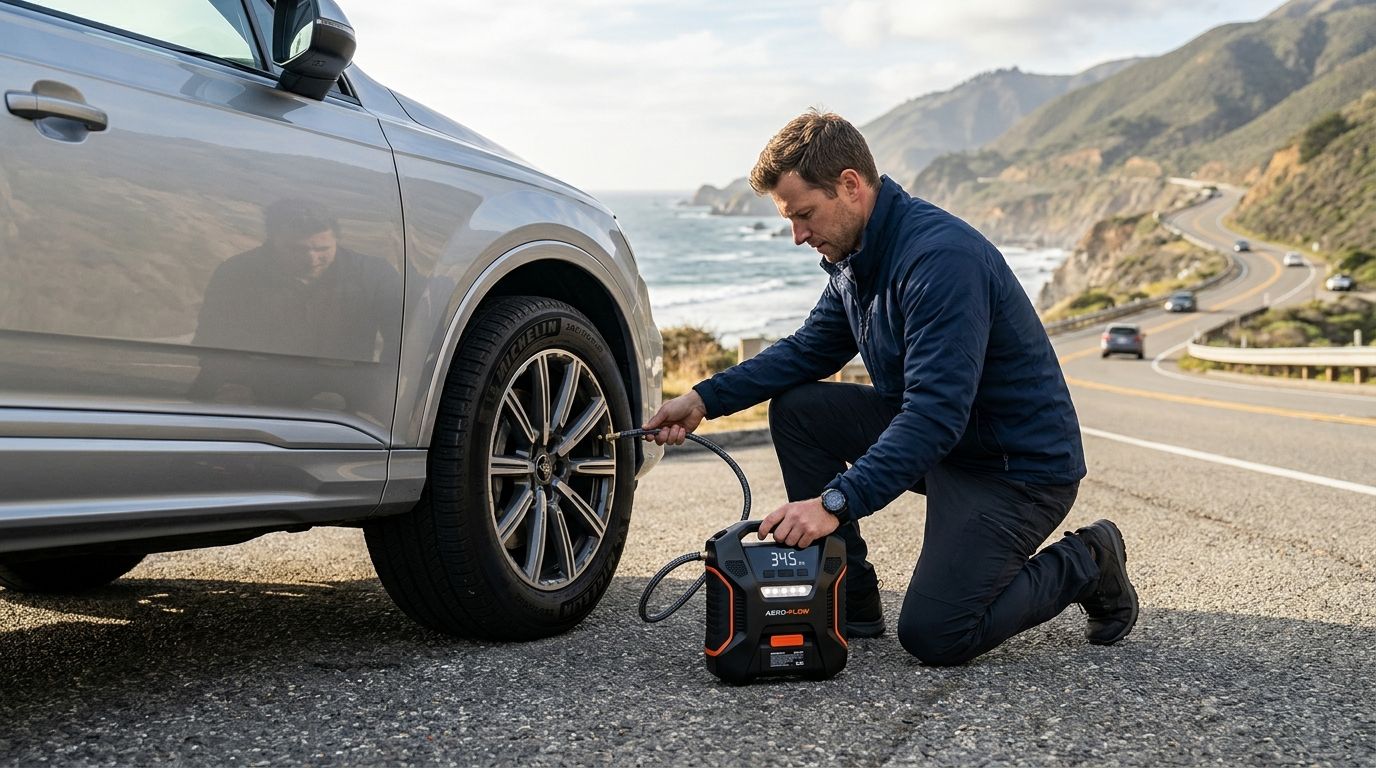
A portable tyre inflator built for everyday cars and SUVs is sized for smaller tyre volumes and lighter use — think seasonal pressure checks rather than daily off-road resets.
Everyday inflator pros:
- Compact enough to keep in the boot permanently
- Fast enough for the smaller tyre volumes on passenger cars and mid-size SUVs
- Simple to operate for anyone not familiar with onboard air systems
Everyday inflator cons:
- Airflow isn't matched to larger 4WD or light-truck tyres
- Not built for repeated resets across multiple tyres in one session
Best for: commuters and SUV owners who need occasional pressure top-ups, not touring-grade output. Verdict: Buy for city and highway use; Skip if you're regularly airing down for sand or tracks.
4. Compact glovebox compressor: best portable tyre inflator for lightweight backup
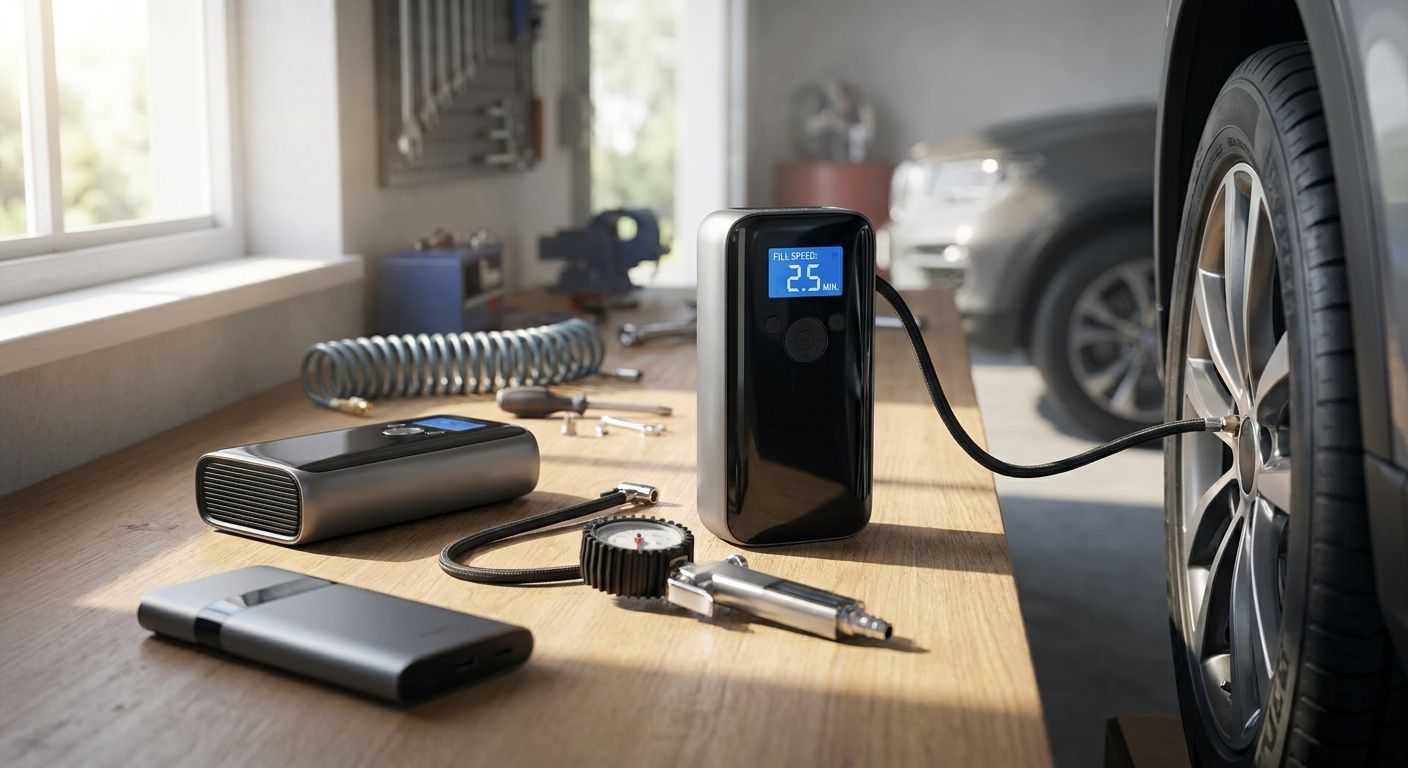
A compact air compressor sized for glovebox storage trades airflow for size, which makes it a genuine backup unit rather than a primary inflator.
Glovebox compressor pros:
- Small enough to carry as a permanent spare in the cabin
- Handy for a single tyre top-up when the main compressor is packed away
Glovebox compressor cons:
- Limited airflow makes full resets on 4WD-sized tyres slow
- Not designed for continuous duty across four tyres
Best for: a lightweight backup rather than your main tyre inflation tool. Verdict: Hold as a secondary unit, not your only inflator.
5. Twin compressor onboard air system: best for high-volume users running lockers
A twin compressor onboard air setup pairs two compressors to deliver sustained high-flow output, which suits vehicles also running air lockers or other pneumatic accessories alongside tyre inflation.
Twin compressor system pros:
- Sustained high airflow even under continuous demand
- Supports tyre inflation and accessory air use from the same system
Twin compressor system cons:
- More involved to install than a plug-in single unit
- Overkill for anyone only doing occasional tyre pressure changes
Best for: builds already running onboard air for lockers or other accessories. Verdict: Buy if you're building a full onboard air system; Skip if tyre inflation is your only need.
6. Handheld tyre inflator: best portable tyre inflator for caravan and camper top-ups
A handheld tyre inflator suits quick top-ups on a caravan or camper trailer where you're adjusting pressure by a few psi, not resetting from a fully deflated sand pressure.
Handheld inflator pros:
- Lightweight and simple to store in a caravan cupboard
- Fine for small, occasional pressure adjustments
Handheld inflator cons:
- Too slow for airing up from low sand pressures back to highway pressure
- Not suited to larger tyre volumes on tow vehicles
Best for: caravan and camper owners doing minor top-ups between trips. Verdict: Buy for towing setups; Skip if you need a full tyre-set reset tool.
How we ranked
The order above follows the criteria set out earlier: airflow under load, duty cycle rating, single versus dual outlet, power draw, portability and pressure control. Dual-outlet setups rank first because they're the only category that genuinely halves total fill time for more than one tyre at once, while handheld and glovebox units rank last because their airflow is built for convenience, not speed.
Which portable tyre inflator should you choose?
If you're touring solo or as a pair and want one reliable unit, the 12V air compressor built for 4WD touring is the safest default for 2026 — it's rated for continuous duty and handles a full tyre-set reset without stopping. If you're running a convoy or towing a second vehicle, step up to a dual-outlet compressor. Everyday car and SUV owners don't need touring-grade output — the smaller portable inflator covers seasonal top-ups without excess bulk. Keep a glovebox or handheld unit as backup, never as your only tool.
FAQ
What's the best portable tyre inflator for fill speed in 2026?
A dual-outlet air compressor delivers the fastest fill speed in 2026 because it airs two tyres at once instead of one after another. For solo touring, a single-outlet 12V compressor with a continuous duty cycle rating is the more practical everyday choice.
Is a 12V air compressor fast enough for 4WD touring?
Yes, provided it carries a continuous duty cycle rating so it can complete a full four-tyre reset without needing to cool down. Intermittent-duty units can stall part-way through a full pressure reset on larger tyres.
What tyre pressure should you run for sand versus highway driving?
Touring guides commonly recommend around 16-20 psi for sand and 38-42 psi for highway driving, adjusted for vehicle weight and tyre size. Check your vehicle's load and the tyre manufacturer's recommendations before setting a final pressure.
What's the difference between a handheld inflator and an onboard air compressor?
A handheld inflator suits small, occasional top-ups, while an onboard air compressor is built for full tyre-set resets and repeated use. Caravan owners often carry a handheld unit for minor adjustments and rely on the tow vehicle's compressor for full resets.
Do dual-outlet compressors need a bigger battery?
Dual-outlet compressors draw more current than single-outlet units because they're moving air through two lines at once. Wiring gauge and battery condition matter more here, so check a dual-battery setup guide before installing one.
How long does it take to air up a tyre with a 12V compressor?
Fill time depends on tyre size, target pressure and the compressor's duty cycle rather than one fixed number. A continuous-duty unit airing a smaller tyre from a low sand pressure will always be faster than an intermittent-duty unit airing a larger tyre.
Is a glovebox-sized compressor good enough for a full tyre reset?
A glovebox-sized compressor is fine for occasional single-tyre top-ups but isn't built for a full four-tyre reset on 4WD-sized tyres. Pair it with a larger touring compressor rather than relying on it alone.
Should a tyre inflation system be paired with an air tank?
Pairing a compressor with an aluminium air tank speeds up repeat or simultaneous airing because the tank stores pressurised air ready to use instead of waiting on the compressor alone. This setup suits vehicles that inflate tyres often, such as regular sand or track touring rigs.
One last thing
Duty cycle matters more than the headline airflow number on the box. A compressor rated for high output but only intermittent duty will still stop mid-reset on a full set of 33-inch-plus touring tyres in 2026, while a lower-output continuous-duty unit finishes the job without a break — that's the spec worth checking before fill speed alone.