A wireless remote airbag inflation kit lets you add or release air in your load assist bags from the driver's seat, instead of crawling under the tray with a gauge. This guide ranks the five main configurations sold for towing, load carrying and touring in 2026, and tells you which one actually matches your vehicle and trailer.
- The best wireless remote airbag inflation kit for towing in 2026 is a dual-zone wireless remote air management system with independent left and right control.
- Single-zone wireless remote kits suit single-bag or leaf-spring assist setups and need less wiring than dual-zone systems.
- App-based digital air controllers add phone monitoring and ride-height presets but depend on stable Bluetooth range.
- Boss Air Suspension backs its load assist airbag kits with a five-year warranty; the wireless controller sits on top of that base kit, not instead of it.
Why this matters
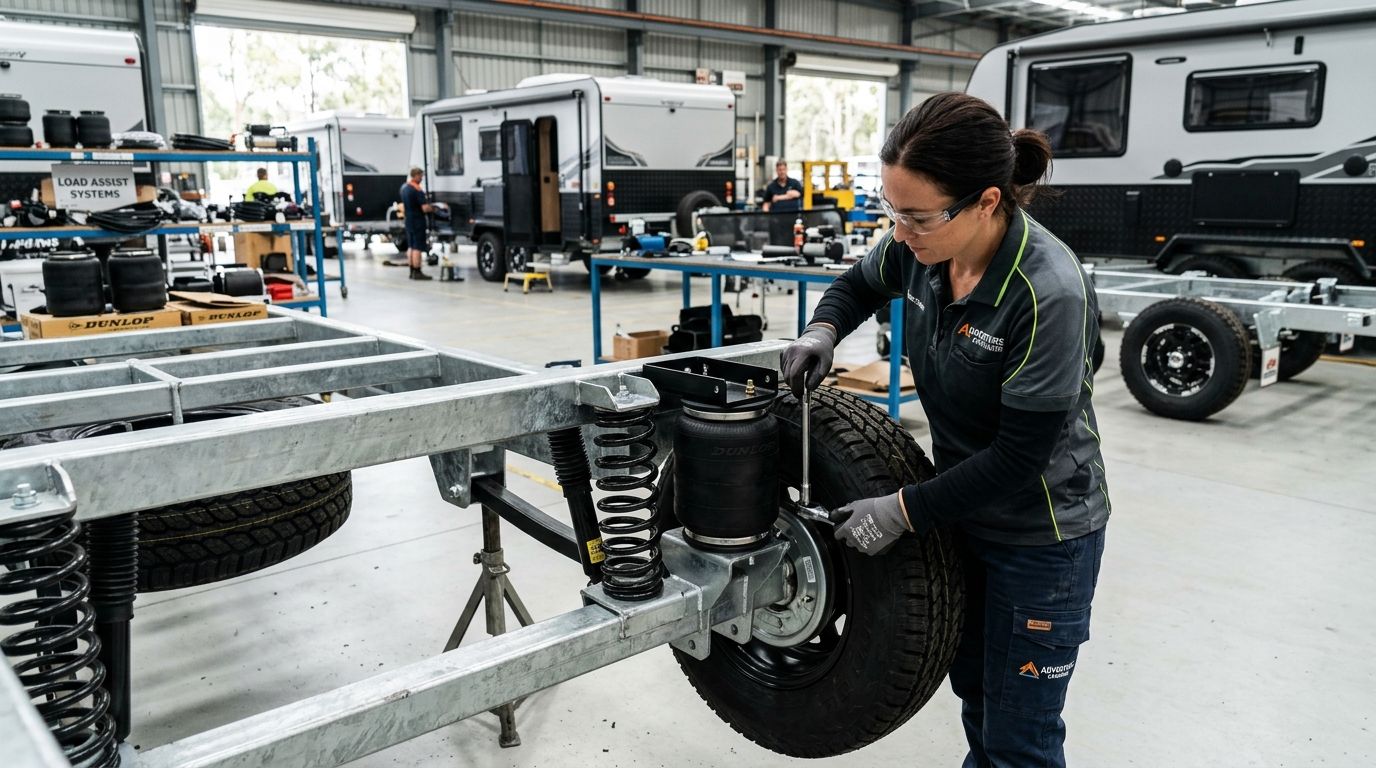
Rear-end sag under load is the problem a load assist airbag kit solves. Add a heavy trailer, a full canopy or a tray load of tools and the back of the vehicle drops, headlights point up, and steering gets light at the front axle.
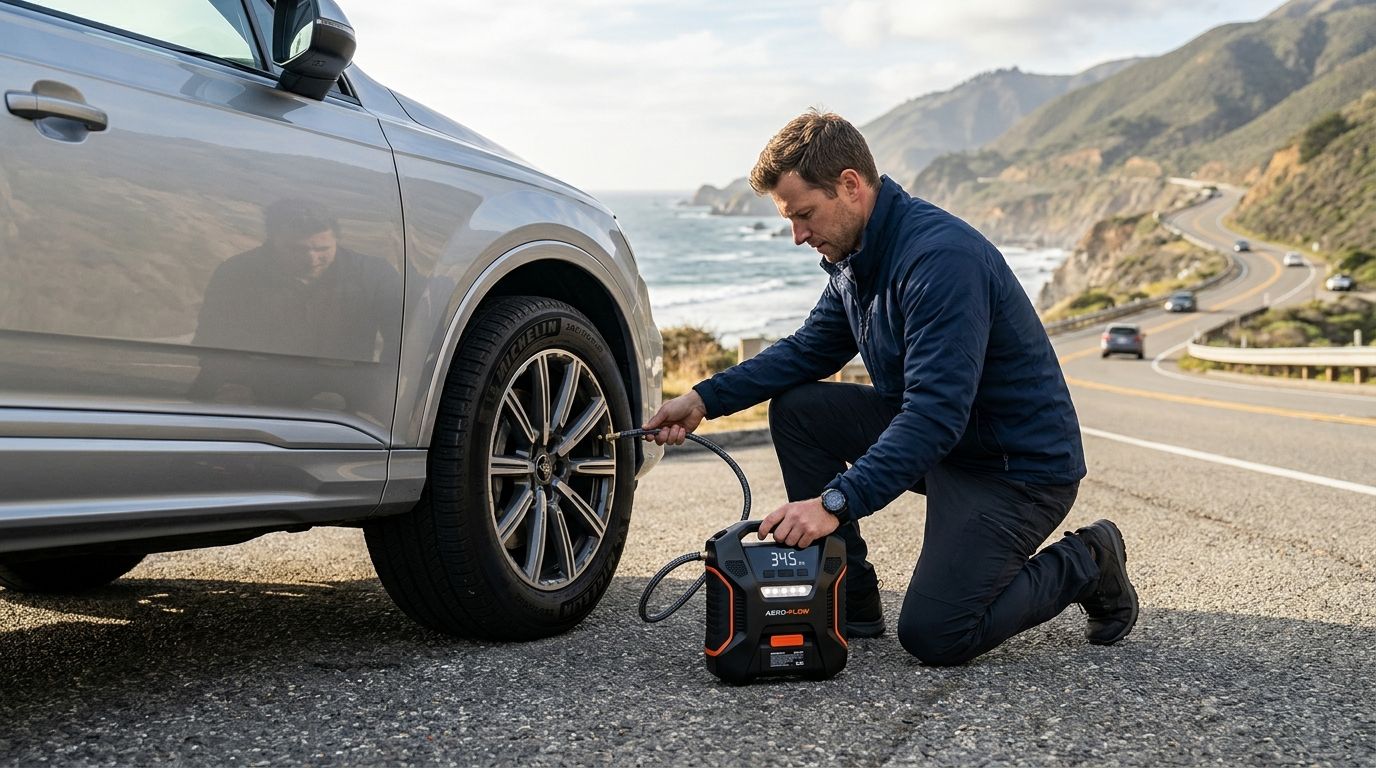
A basic load assist kit fixes that with airbags you inflate by hand at a valve near the bumper or tailgate. A wireless remote airbag inflation kit removes that step: press a button in the cab and the compressor sends air to the bags while you're still hitched up or parked.
The real decision isn't whether to fit airbags — most towing and load-carrying vehicles already have room for a load assist kit. It's which remote control layer matches how you actually use the vehicle. A weekend tow behind a ute doesn't need the same setup as a fleet vehicle carrying a load five days a week. If you haven't picked your base airbags yet, start with choosing the right load assist airbag kit before adding a remote on top.
The short answer
Best overall: a dual-zone wireless remote air management system — pick this if you're towing a caravan, box trailer or boat and need independent control of both rear airbags. Best for single-bag setups: a single-zone wireless remote controller kit — simpler wiring, one inflate/deflate button. Best budget option: a basic single-gauge wireless paddle kit without ride-height presets or app pairing.
What makes the best wireless remote airbag inflation kit
- Independent zone control — left and right bags adjust separately, not as one shared circuit
- Wireless range and signal reliability — the remote has to work from inside the cab, even hitched to a caravan
- Compatibility with your existing load assist kit — the remote is an add-on to airbags already fitted, not a stand-alone product
- Pressure readout accuracy — a gauge or app reading you can trust when loading close to a bag's rated limit
- Install complexity — how much extra wiring and air line the kit adds over a manual valve setup
- Warranty and local support — parts and back-up if a solenoid or remote fob fails
Wireless remote airbag inflation kits at a glance
| Configuration | Best for | Standout feature | Key limitation |
|---|---|---|---|
| Dual-zone wireless remote air management system | Towing caravans and trailers with twin rear airbags | Independent pressure control per side | More air line and wiring to install |
| Single-zone wireless remote controller kit | Single-bag or leaf-spring assist setups | One-touch inflate and deflate | No side-to-side adjustment |
| Basic single-gauge wireless paddle kit | Budget-conscious buyers moving off a manual valve | Fewest parts, simplest wiring | No stored pressure presets |
| App-based digital air controller | Ride-height monitoring and precision | Bluetooth pressure readout on a phone | Depends on phone-to-controller pairing range |
| Complete onboard air system with wireless remote add-on | Full onboard air integration | One tank and compressor feeds load assist and tyre inflation | Bigger footprint under the tray |
1. Dual-zone wireless remote air management system: best wireless remote airbag inflation kit for towing
A dual-zone system runs two separate solenoid circuits from one compressor and tank, so the left and right airbags inflate or deflate on their own line. That matters when a trailer sits slightly off-centre, or a canopy and toolboxes load one side of the tray more than the other.
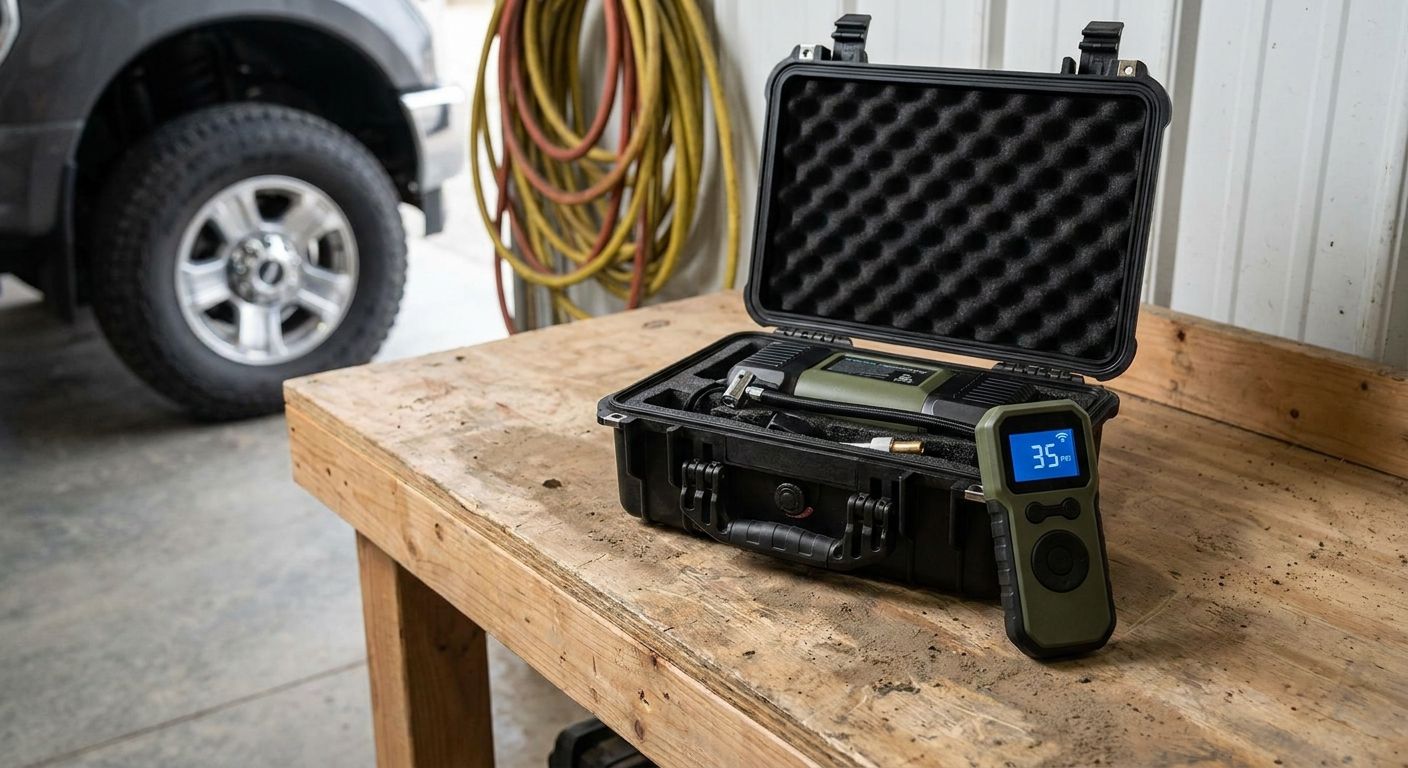
The remote itself is a small handheld fob or a dash-mounted switch panel wired into the vehicle's 12V system. Press one side, watch the gauge, stop when you hit the pressure right for that load.
Boss Air Suspension supplies the air management components — solenoids, manifolds and gauges — used to build a dual-zone setup around an existing load assist airbag kit. The guide on air management systems for load assist airbags is worth reading before you buy parts.
Dual-zone wireless remote air management system pros:
- Independent left and right pressure control for uneven loads
- Adjustable from the driver's seat while hitched to a trailer
- Works with most existing double-bellow load assist airbag kits
Dual-zone wireless remote air management system cons:
- More wiring and air line than a single-zone setup
- Two solenoids mean two more points that can fail over time
- More parts than a basic paddle kit
Best for: towing setups where the trailer or tray load sits unevenly side to side. Verdict: Buy if you tow regularly and want independent control in 2026.
2. Single-zone wireless remote controller kit: best wireless remote airbag inflation kit for single-bag setups
A single-zone kit treats both airbags as one circuit. One button adds air to both bags together, another button releases it — the simplest wireless step up from a manual valve.
This suits vehicles running a single load assist airbag per side that's already reasonably balanced, or utes carrying a fairly even load like a canopy and toolboxes rather than a lopsided trailer.
Installation follows the same wiring principles as a dual-zone kit, just with one solenoid instead of two. The steps most installers follow are covered in the guide on wiring a wireless remote airbag inflation kit.
Single-zone wireless remote controller kit pros:
- Simpler wiring than a dual-zone system
- One-button operation, easy for anyone in the family to use
- Fewer parts means fewer failure points
Single-zone wireless remote controller kit cons:
- No way to correct a side-to-side imbalance
- Not ideal for trailers that load unevenly
Best for: single-bag setups and evenly loaded utes. Verdict: Buy if your load is usually balanced side to side.
3. Basic single-gauge wireless paddle kit: best budget wireless remote airbag inflation kit
A basic paddle kit strips the setup back to one gauge, one wireless paddle remote and a single solenoid. No ride-height memory, no app, no dual zones — just add air, release air, read the gauge.
It's the entry point into wireless control for owners currently running a manual valve who want to stop pulling over to check pressure by hand.
Fewer components also make it the easiest of the five configurations to wire and the easiest to diagnose if something stops working down the track.
Basic single-gauge wireless paddle kit pros:
- Fewest components, simplest install
- Easiest to troubleshoot if a fault turns up
- A genuine upgrade from a manual valve without the cost of a full system
Basic single-gauge wireless paddle kit cons:
- No independent zone control
- No stored presets for different loads
Best for: owners moving off a manual valve for the first time. Verdict: Buy if you want wireless control without the full system cost in 2026.
4. App-based digital air controller: best wireless remote airbag inflation kit for ride-height monitoring
A digital air controller pairs with a phone app over Bluetooth, showing live pressure for each bag and letting you save presets for towing, unladen and heavy-load settings.
It's the most information-rich option on this list — useful if you're chasing a level ride height every trip and don't want to guess. The trade-off is that it depends on the phone staying paired and in range, which isn't always practical loading a trailer from outside the vehicle.
Installation and wiring notes are covered in the guide on installing a digital air controller for ride height.
App-based digital air controller pros:
- Live pressure readout for each bag on your phone
- Stored presets for different loads
- A useful record of what pressure worked for a given trip
App-based digital air controller cons:
- Relies on Bluetooth pairing range
- More setup steps than a paddle-style remote
- Slower to operate one-handed while hitching a trailer
Best for: owners who want data, not just a button. Verdict: Hold unless you specifically want app monitoring — the paddle and dual-zone options are faster to operate day to day.
5. Complete onboard air system with wireless remote add-on: best wireless remote airbag inflation kit for full onboard air integration
This setup pairs a compressor, an aluminium air tank and a manifold with the wireless remote controller, so the same onboard air source feeds your load assist airbags and your tyre inflation kit.
It makes sense for touring rigs and 4WDs that already run, or plan to run, an onboard air system for tyres, air lockers or accessories, and don't want a second stand-alone compressor just for the airbags.
It's the biggest kit on this list in parts and mounting space, and the most involved to install, but it removes the duplication of running two separate air setups under one vehicle.
Complete onboard air system with wireless remote add-on pros:
- One compressor and tank cover airbags, tyres and accessories
- Avoids running two separate air systems in one vehicle
- Scales well for touring and remote travel
Complete onboard air system with wireless remote add-on cons:
- Biggest footprint under the tray or bonnet
- More involved to install than a stand-alone airbag remote kit
Best for: 4WDs and touring vehicles already running onboard air. Verdict: Buy if you're building a full onboard air setup anyway; Skip if all you need is airbag control.
How this list was ranked
Each configuration was assessed against the criteria above: independent zone control, wireless reliability, compatibility with existing load assist airbags, gauge or app accuracy, install complexity and warranty support. No single setup wins on every point — a dual-zone system beats a paddle kit on control but loses on simplicity, which is why this list is ordered by use case rather than a single overall score.


“If the remote doesn't show pressure in both bags separately, you're flying blind on one side of the tow.”
Which wireless remote airbag inflation kit should you choose?
If you tow anything with an uneven load — a caravan, boat or box trailer — the dual-zone wireless remote air management system is the more durable long-term pick because it lets you correct side-to-side sag rather than just add air evenly.
Running a single, evenly loaded ute tray or a single-bag kit? Save the extra wiring and go with the single-zone wireless remote controller kit instead.
Just want off a manual valve without a big install job? The basic single-gauge wireless paddle kit does that job in 2026 without the extra cost of dual zones or an app.
Whichever layer you land on, it sits on top of an existing load assist airbag kit, not instead of one. Boss Air Suspension's load assist kits are built to pair with any of these five remote control layers — confirm your vehicle's airbag fitment first, then choose the remote control setup that matches how you load and tow.
FAQ
What is a wireless remote airbag inflation kit?
It's a remote-controlled add-on that lets you inflate or deflate load assist airbags from inside the cab instead of at a valve under the vehicle. It works with an existing load assist airbag kit rather than replacing it.
Is a wireless remote airbag inflation kit better than a manual valve?
A wireless remote is faster to adjust on the move and doesn't require pulling over to reach a valve. A manual valve is simpler and has fewer parts that can fail, which suits owners who rarely change loads.
Can I add a wireless remote to an existing load assist airbag kit?
Yes, in most cases a wireless remote or air management system is installed on top of airbags already fitted to the vehicle. Confirm your existing kit's fittings match the remote system before ordering parts.
How much does a wireless remote airbag inflation kit cost?
Cost depends on the configuration — a basic single-gauge paddle kit needs fewer parts than a dual-zone or full onboard air system. Check current pricing on the Boss Air Suspension website for the specific configuration you need.
What's the difference between a wireless remote kit and a digital air controller?
A wireless remote kit uses a paddle or fob to add or release air with a button press. A digital air controller adds a phone app with live pressure readouts and stored presets, at the cost of relying on Bluetooth range.
Do wireless remote kits support independent left and right control for towing?
Only dual-zone systems do. Single-zone kits and basic paddle kits treat both airbags as one circuit, so they can't correct a load that sits unevenly side to side.
Will a wireless remote airbag inflation kit affect my vehicle's warranty?
This depends on the vehicle manufacturer and how the kit is wired and installed. Check with your vehicle manufacturer or a Boss Air Suspension technical contact before installation if you're unsure.
One last thing: the biggest failure point across all five configurations usually isn't the remote or the app — it's the push-connect air line fitting under the chassis rail, where mud, corrugations and heat cycling work fittings loose over time. Check your fittings when you check tyre pressure, not just when the bags stop holding air.