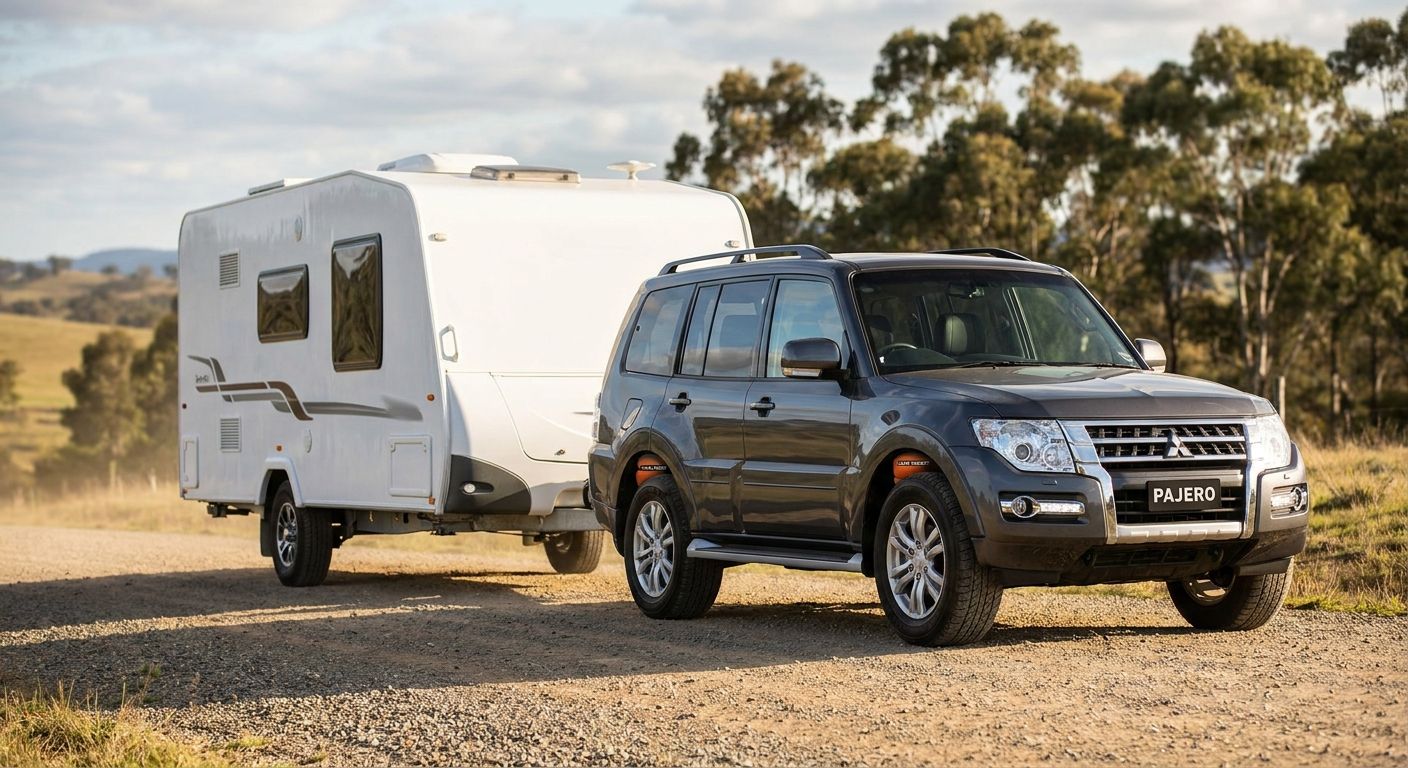
Rear-end sag under a loaded Pajero isn't cosmetic — it changes headlight aim, tyre contact and how the vehicle tracks behind a van on the highway. A mitsubishi pajero load assist kit brings the rear back to level and restores predictable handling, without pretending to add legal payload it was never rated for.
- A mitsubishi pajero load assist kit corrects rear sag from towing without altering GVM or legal payload — Buy for tow-ball weights that flatten the rear coils.
- Adjustable airbag pressure (0-100 psi) lets you match support to an empty Pajero or one loaded for a caravan trip.
- Skip kits with no vehicle-specific bracket data for the Pajero — mismatched brackets cause rattles and uneven bag wear.
- Boss Air Suspension backs load assist kits with a five-year warranty and Australian-based technical support.
Why this matters
<br/> A Pajero towing a caravan carries tow-ball weight on top of camping gear, water and passengers already sitting over the rear axle. Coil springs compress further than they were designed for, and the nose lifts while the tail drops.That drop does three things at once: it points your headlights up into oncoming traffic, it shifts weight off the front tyres and it makes the steering feel vague at highway speed. None of this shows up on the specification sheet, but every owner who's towed a van behind a sagging wagon has felt it.
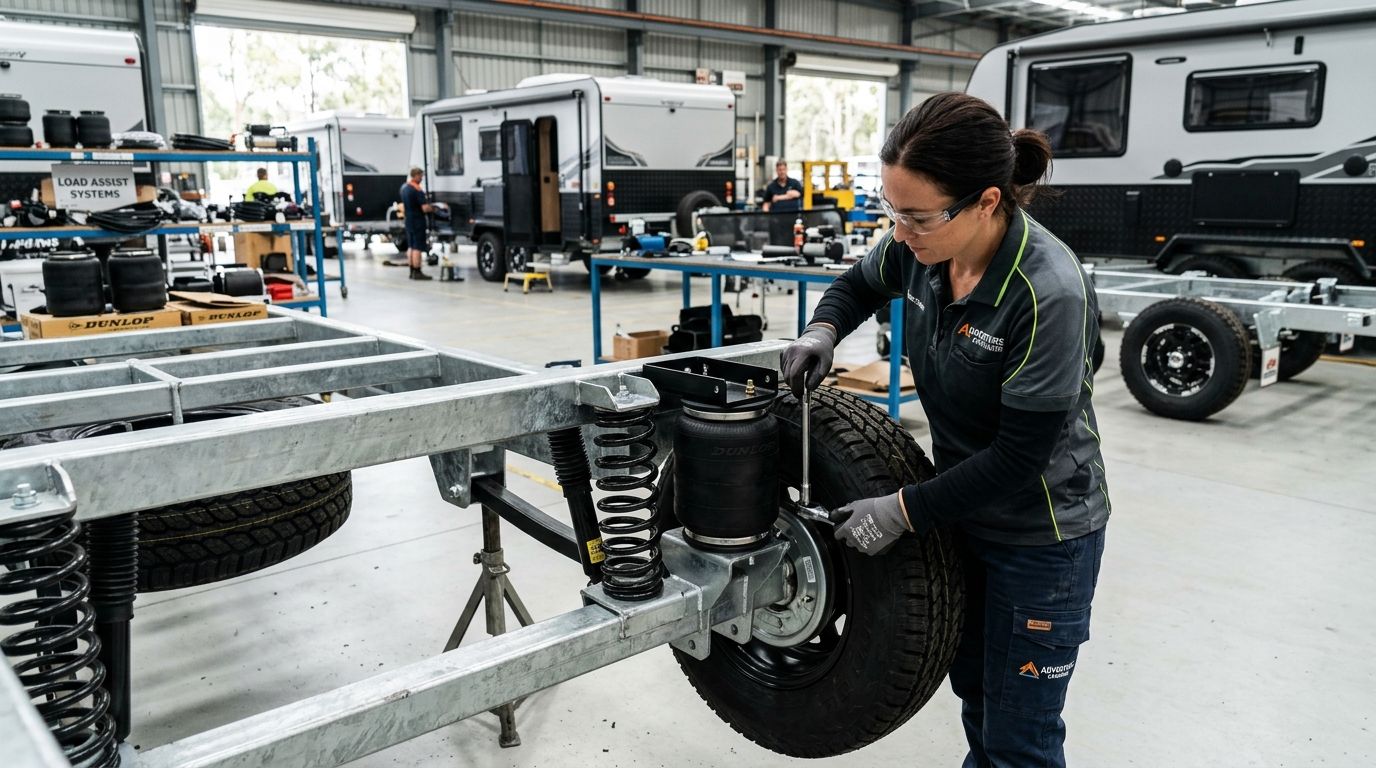
A correctly fitted load assist kit works with the Pajero's existing coil suspension rather than replacing it. Air pressure inside the bags does the job the coils can no longer do alone once the tow ball weight is added.
It's worth being clear on what this does and doesn't do. A load assist kit is designed to help reduce rear-end sag and improve stability — it does not increase the Pajero's GVM, legal payload or towing capacity beyond what Mitsubishi specifies for the vehicle.
Who this is for
This guide is for Pajero owners who tow a caravan, camper trailer or boat regularly and notice the back of the vehicle sitting low once the van is hooked up. It also applies if you're carrying rooftop tents, dual batteries or long-range fuel tanks that load the rear permanently. If your Pajero handles fine unloaded but wanders or feels light on the front end once a van is attached, this is the problem a load assist kit is built to address.
What to look for in a load assist kit for Pajero towing
Vehicle-specific bracket design
Generic "universal fit" kits rely on drilling and guesswork, which increases the risk of bags sitting at the wrong angle or rubbing on the chassis. A kit engineered for the Pajero's rear suspension geometry mounts in the factory locations and keeps the airbags aligned as the suspension travels.
Adjustable air pressure
Your Pajero isn't always towing at the same weight — an empty run to the shops is a different load to a fully hooked-up caravan trip. A kit with adjustable pressure, typically in the 0 to 100 psi range, lets you dial in support for the load on the day rather than living with a fixed, one-size setting.
Double-bellow airbag construction
Double-bellow bags handle more suspension travel than single-bellow designs and hold their shape better under repeated load cycles. For a Pajero doing regular caravan trips over multiple years, this construction detail affects how long the kit lasts before it needs attention.
Quality airline and fittings
The airbags only work as well as the airline and fittings feeding them. Push-fit connections and reinforced tube are less likely to work loose from vibration on corrugated roads than cheaper barbed fittings.
Access to a fill valve or remote inflation point
A fill point mounted somewhere you can actually reach — not buried behind the fuel tank or exhaust — makes adjusting pressure before and after a tow a five-minute job instead of a chore you put off.
Warranty and local support
Airbag suspension sits in a demanding environment: heat, vibration, road grit. A kit backed by a genuine warranty period and an Australian supplier who can answer fitment questions is worth more over the ownership period than a marginally cheaper import with no support behind it.
Getting the setup right
Most Pajero owners land on one of three configurations, depending on how often they tow and how hands-on they want the adjustment process to be.
The straightforward option: manual load assist kit The hook: this is the setup most Pajero towers start with. One spec that matters: pressure is adjusted manually at the airbag valve, usually in the 0-100 psi range depending on load. It's the simplest system to install and understand, and it's the baseline covered in how to choose the right load assist airbag kit if you're not sure which kit tier suits your towing frequency. Verdict: Buy if you tow a handful of times a year and don't mind checking pressure with a gauge before each trip.
The set-and-forget option: kit plus digital air controller The hook: this is for owners who tow often enough that manual checks get tedious. One spec that matters: a digital controller lets you view and adjust pressure from the cabin instead of crawling under the rear bumper. The digital air controller for ride height guide covers what's involved in adding one to an existing load assist kit. Verdict: Buy if you're hooking up a van most weekends and want pressure control without tools.
The touring add-on: load assist plus onboard air The hook: this suits Pajero owners who also run a fridge, air locker or tyre inflation off the same air source. One spec that matters: a shared onboard air system means you're not carrying a separate compressor just for topping up airbags on the road. See onboard air systems for caravan and camper trailer owners for how this integrates. Verdict: Consider if you already tour remotely and want one air system doing multiple jobs — Skip it if you only tow occasionally, since the manual kit covers that use case without the extra hardware.
For exact pressure settings by load, work from how to choose the right psi for load assist airbags rather than guessing — running bags too soft under-supports the rear, and running them too hard stiffens the ride unnecessarily.
What to avoid
- Kits sold as "universal fit" with no Pajero-specific bracket data. They may bolt on, but poor alignment shortens airbag life and can cause contact with the chassis under full compression.
- Any product claiming it lifts your legal payload or GVM. A load assist kit improves stability and ride height under the load you're already legally allowed to carry — it doesn't change what the vehicle is rated for.
- Ignoring the airline routing. Airlines run near heat sources or sharp chassis edges wear through over time; a kit with a poor routing plan will eventually leak regardless of airbag quality.
Verdict comparison
| Setup | Best for | Adjustment method | Verdict |
|---|---|---|---|
| Manual load assist kit | Occasional towing | Manual valve, 0-100 psi | Buy |
| Kit + digital air controller | Frequent towing | In-cabin digital adjustment | Buy |
| Kit + onboard air system | Remote touring, multiple air uses | Shared compressor and tank | Consider |
If the back of your Pajero drops more than a couple of centimetres once the van's hooked up, that's the signal a load assist kit is doing a job the standard coils can't finish alone.
FAQ
What does a Pajero load assist kit actually fix?
It reduces rear-end sag and restores more level ride height when the Pajero is towing or carrying extra weight over the rear axle. It works with the existing coil suspension rather than replacing it, improving stability without altering the vehicle's legal payload or GVM.
Does a load assist kit increase my Pajero's towing capacity?
No. A load assist kit is not designed to increase towing capacity, GVM or legal payload — it improves stability and ride height within the vehicle's existing rated limits. Any change to those figures requires an approved GVM upgrade with supporting documentation.
How much air pressure should I run in the airbags?
Pressure typically ranges from 0 to 100 psi and depends on the load you're carrying at the time. Check a vehicle-specific pressure guide rather than guessing, since over- or under-inflating changes ride quality and support.
Is a load assist kit a DIY install on a Pajero?
Many owners fit these kits themselves using factory mounting points and basic hand tools, though comfort with working under the vehicle matters. If you're unsure about bracket alignment or airline routing, get it checked by a suspension specialist after fitting.
How long do load assist airbags last?
Double-bellow airbags built for regular towing typically outlast single-bellow designs because they handle more suspension travel without excessive flexing. Boss Air Suspension backs its load assist kits with a five-year warranty, which reflects the expected service life under normal towing use.
Will a load assist kit stop my headlights pointing upward when towing?
Levelling the rear ride height through airbag support reduces the nose-up angle that causes headlights to aim higher than normal. It won't correct a headlight aiming fault unrelated to ride height, so check alignment separately if the issue persists after fitting.
Do I need a compressor to run a load assist kit?
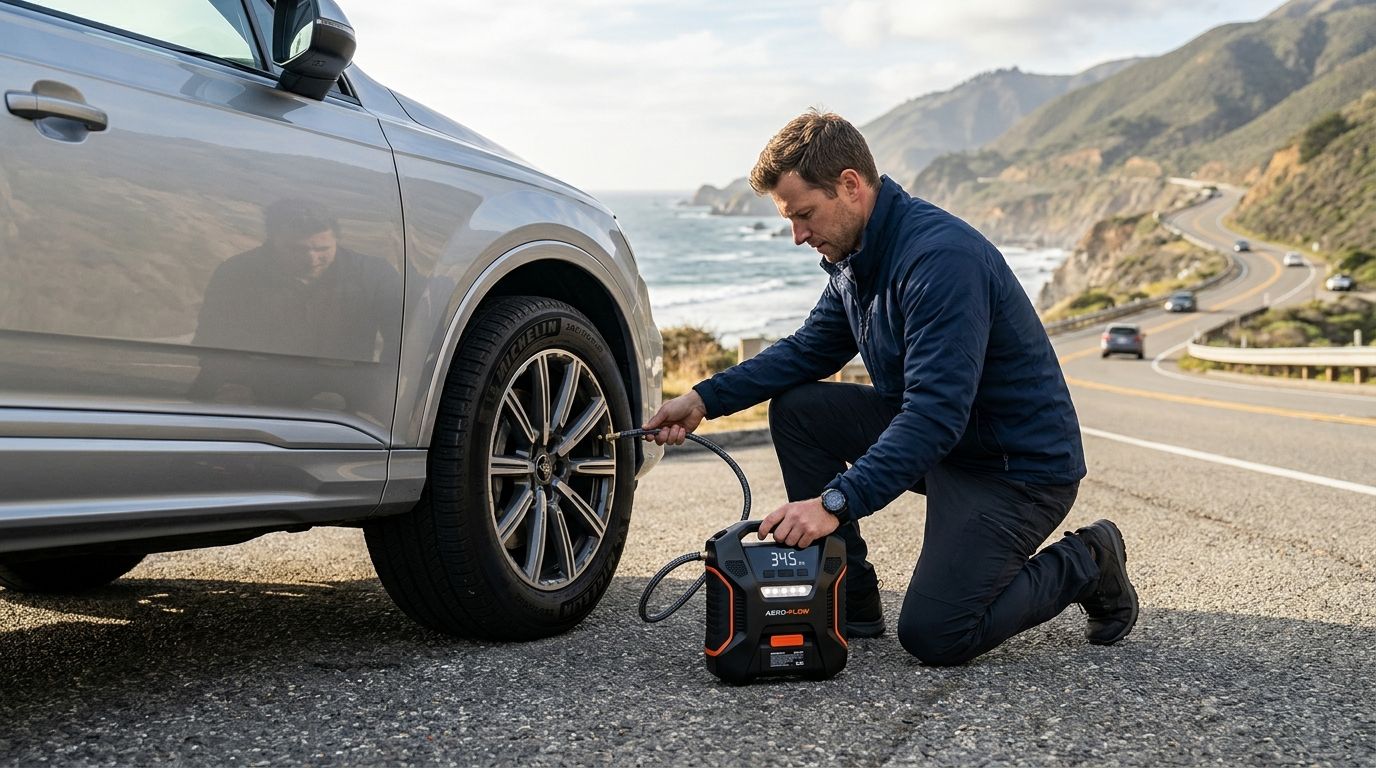
A basic manual kit can be topped up with a portable inflator or at a service station air point, so an onboard compressor isn't compulsory. Owners who tow often, or who already run other air accessories, usually add an onboard air system for convenience.
Can I fit a load assist kit if my Pajero already has a suspension lift?
It depends on the lift height and the specific kit's bracket design, so this needs to be checked against the vehicle's current ride height before ordering. Contact Boss Air Suspension with your Pajero's exact configuration to confirm the correct kit.
One last thing
The airbag pressure range on most load assist kits runs from 0 to 100 psi, which is a wider window than most owners ever use — dial in the lowest pressure that stops the sag rather than maxing it out, since over-inflating firms up the ride for no extra support benefit. Backed by a five-year warranty, a correctly adjusted kit should need nothing more than an occasional pressure check between trips through 2026 and beyond.