A sagging rear end on a Toyota Granvia isn't just a comfort issue. It drops the nose up and the tail down, throws headlight aim out, and makes a fully loaded people mover harder to control on the highway. This guide covers what actually matters when you're looking at a toyota granvia load assist kit, and where to be careful.
- Confirm vehicle-specific fitment before buying any toyota granvia load assist kit — universal kits often don't seat correctly.
- Boss Air Suspension backs vehicle-specific load assist kits with a 5-year warranty and Australian support in 2026.
- Adjustable air pressure, typically 5 to 100 psi across load assist airbags, lets you match support to passenger and luggage load.
- Skip any kit claiming to increase GVM or towing capacity — air suspension supports load, it doesn't legally raise capacity.
Why this matters
A Toyota Granvia doing shuttle or tour work carries closer to its full passenger rating on most trips than a private vehicle ever will. Add luggage, a full row of adults and a near-empty fuel tank on the return leg, and the rear suspension is working harder than the factory setup was tuned for on a daily basis.
That constant load shows up as rear sag, reduced ground clearance, wandering on undulating roads and headlights that point at oncoming traffic instead of the road. None of that is a Granvia problem specifically — it's what happens to any leaf or coil-sprung vehicle running consistently near its rated load. Load assist airbags work with the existing suspension to push back against that sag rather than replace it.
Who this is for
This guide is for Toyota Granvia owners and operators running the vehicle as a shuttle, tour vehicle, or family people mover who've noticed rear-end sag, uneven ride height, or reduced stability with a full load on board. If you're seeing the back end sit low with passengers and gear aboard, you're the buyer this article is written for.
Boss Air Suspension supplies vehicle-specific load assist airbag kits across hundreds of vehicle applications in Australia, and large vans and people movers are a category the business covers regularly. The Granvia is closely related to the Toyota HiAce commercial van platform, and Boss Air Suspension already publishes fitment guidance for Toyota HiAce load assist setups, which is a useful reference point for what a comparable van-based load assist install looks like.
If your Granvia isn't yet listed with confirmed fitment, the right move is checking the vehicle application guide or contacting Boss Air Suspension directly before ordering — never assume a kit built for another van will bolt straight on.
What to look for in a load assist kit for people movers
Confirmed vehicle-specific fitment
Brackets, airbag length and mounting points differ across vans, even within the same manufacturer's range. A kit engineered for the wrong chassis point can sit at the wrong angle or fail to seat correctly under load, which defeats the purpose of fitting one at all.
Load rating that matches passenger and luggage weight, not just towing
Most load assist marketing talks about towing. A people mover carries its load inside the cabin and boot space instead of on a tow ball, so the kit needs to be rated for that kind of consistent, distributed weight rather than an occasional trailer hookup.
Adjustable air pressure for changing passenger counts
A Granvia running a half-empty airport transfer one day and a full nine-seat tour the next needs support that can be dialled up or down. Fixed-rate helper springs can't do this — air pressure can, generally somewhere in the 5 to 100 psi range depending on load.
Ride height and stability under full load
The kit should bring the rear back toward level, not just stop it sagging further. A level ride height keeps headlight aim correct and steering feel consistent whether the van is empty or full.
Ease of bolt-on installation
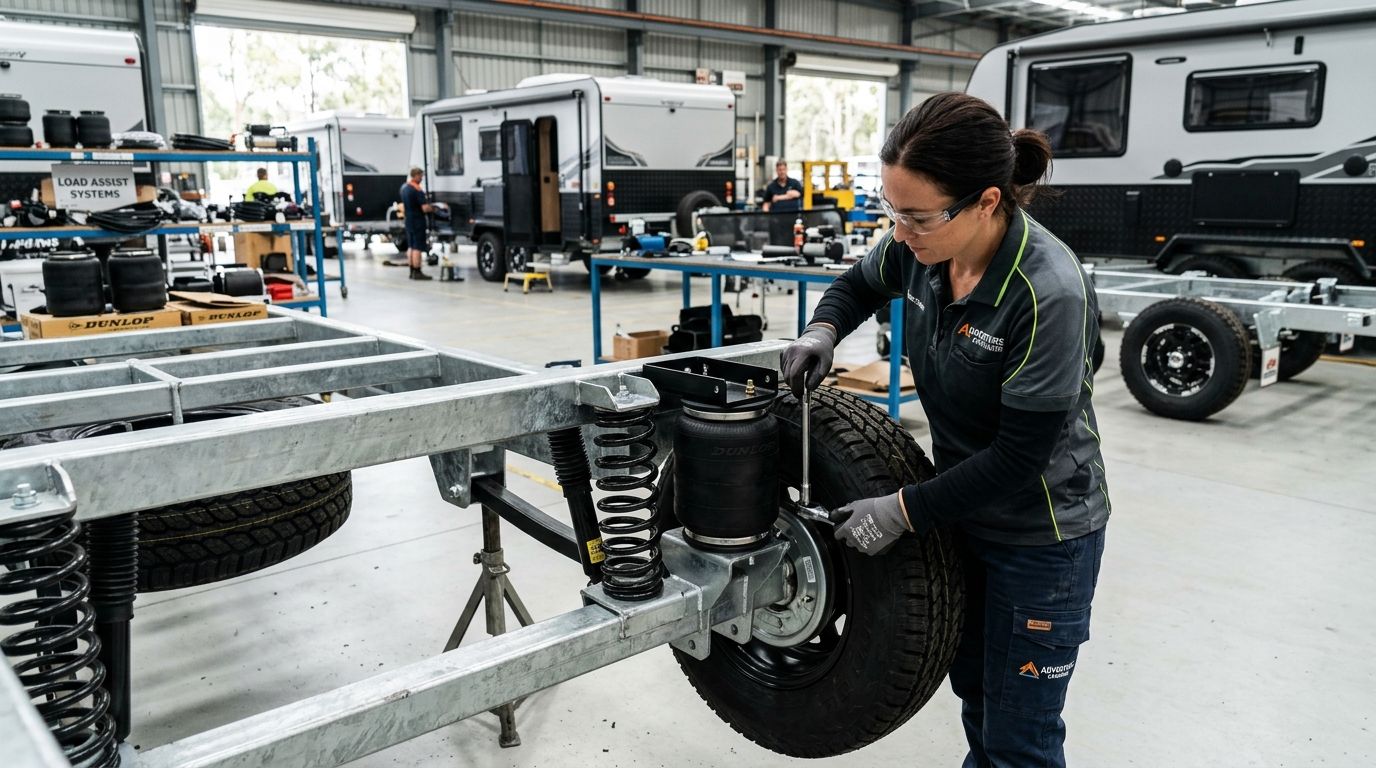
A well-designed vehicle-specific kit uses existing mounting points rather than requiring drilling or chassis modification. This matters for fleet operators who need vehicles back on the road quickly, and for owners doing the install themselves.
Warranty and local support
Air suspension parts live in a harsh under-vehicle environment — dust, road grime and temperature swings all take a toll. A 5-year warranty backed by an Australian supplier means you're not stuck chasing an overseas seller if a bellow needs replacing down the track.
Top picks for a Granvia carrying a full load
The core fix — vehicle-specific Load Assist Airbag Kit
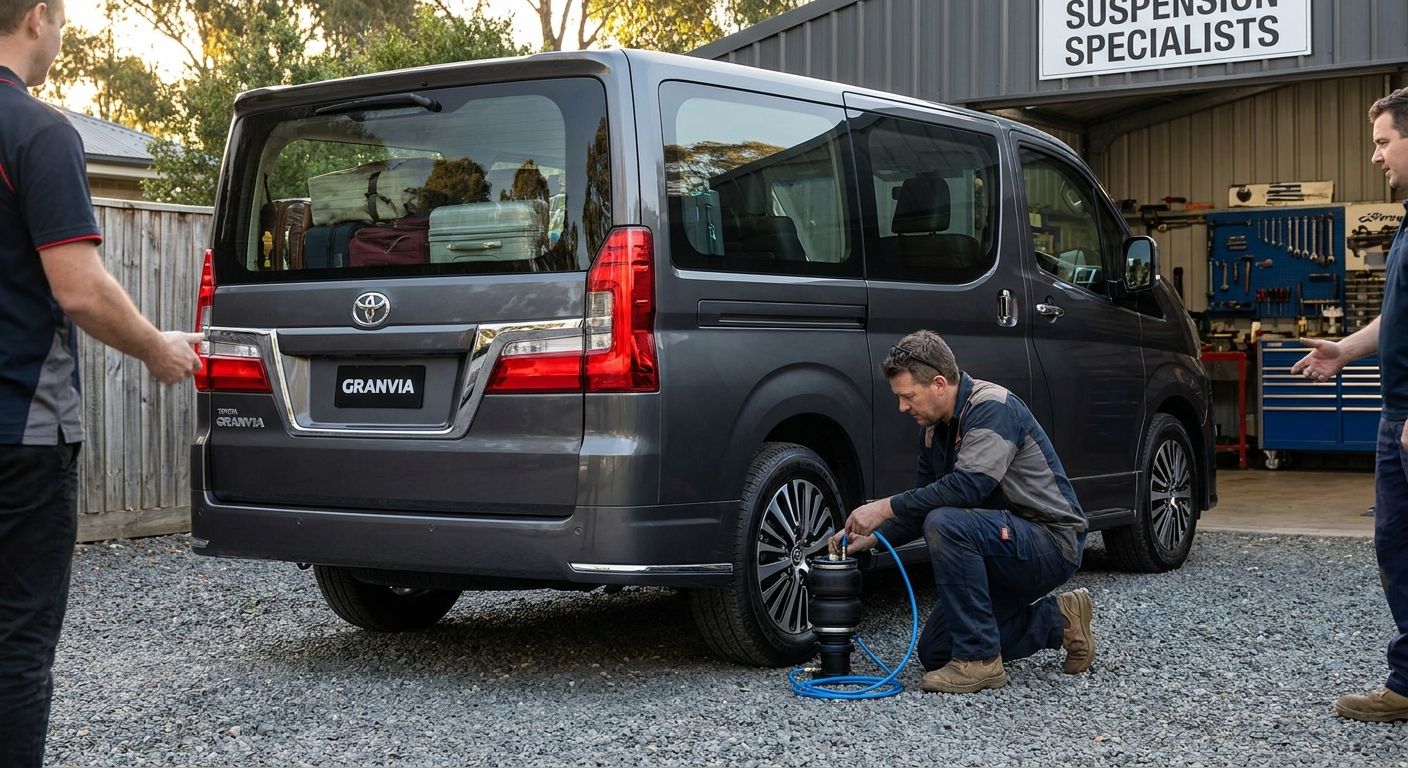
The airbags mount within the existing rear suspension and use adjustable air pressure, typically in the 5 to 100 psi range, to firm up support as load increases. This is the starting point for any Granvia showing rear sag under passengers and luggage. Verdict: Buy, once Granvia-specific fitment is confirmed through the application guide.
The flexibility upgrade — digital air controller add-on
A digital air controller lets the driver adjust airbag pressure from inside the cabin instead of crawling underneath with a hand pump. For a Granvia switching between light and full loads several times a day, this removes the guesswork. Verdict: Consider it as a second-stage upgrade once the base kit is fitted.
The install-ready extras — onboard air tank and fittings
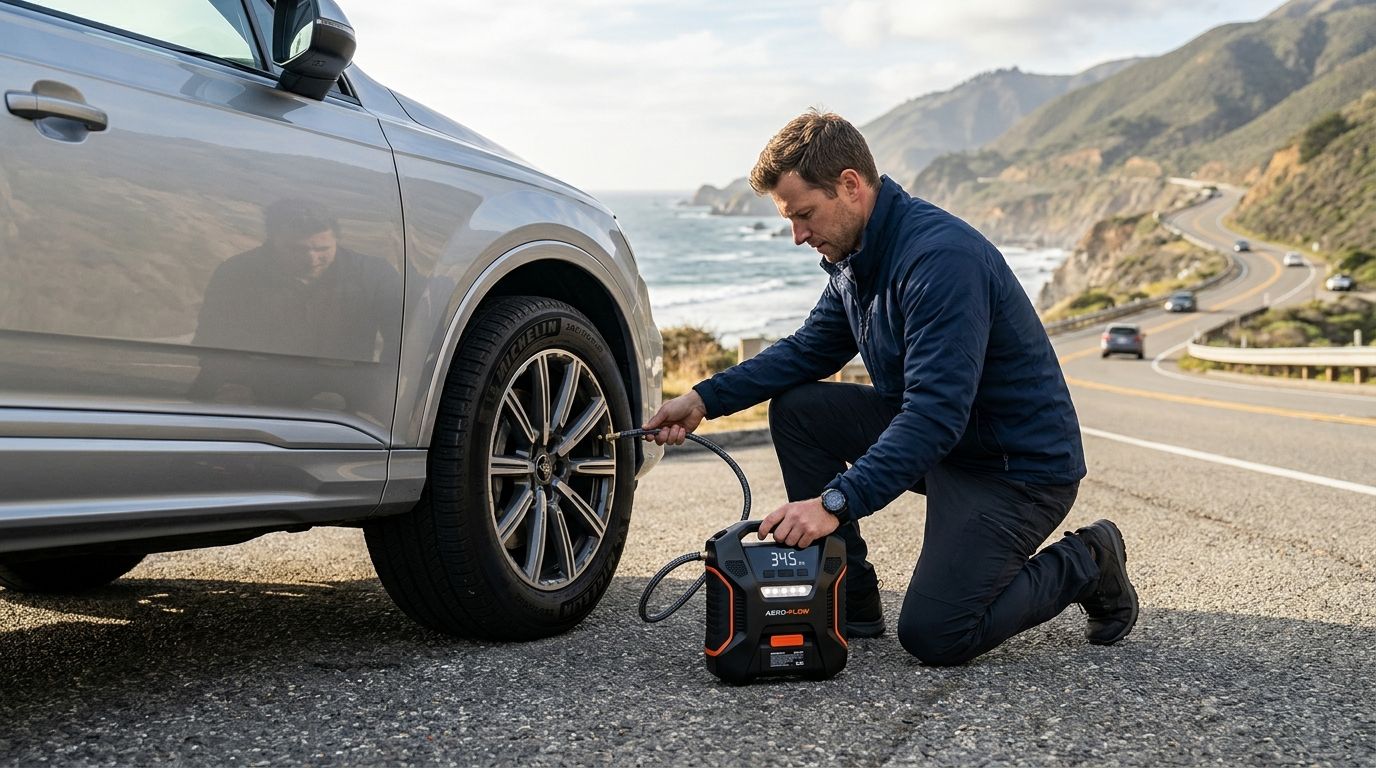
Operators running frequent load changes or wanting onboard air for tyre inflation benefit from a compact air tank and correctly rated fittings alongside the airbag kit. This isn't a substitute for the load assist kit itself, just a practical add-on for vehicles doing serious daily work. Verdict: Consider for touring or high-use fleet vehicles, skip if the Granvia is doing light duty only.


What to avoid
- Universal "fits most vans" airbag kits. These skip vehicle-specific brackets and often sit at the wrong angle on a Granvia, which reduces the benefit and can wear the airbag bellows unevenly.
- Any kit marketed as increasing GVM or towing capacity. Load assist airbags support the existing suspension — they don't legally raise a vehicle's payload, GVM or towing capacity unless it's an approved GVM upgrade with documentation to match.
- Overinflating airbags to compensate for an overloaded van. Air pressure adjusts ride support within the kit's design range; it isn't a substitute for staying within the vehicle's rated payload.
Comparison at a glance
| Solution | Best for | Adjustable pressure | Fitment | Verdict |
|---|---|---|---|---|
| Vehicle-specific Load Assist Airbag Kit | Rear sag under passengers and luggage | Yes, ~5-100 psi | Confirmed per vehicle | Buy |
| Digital air controller add-on | Frequent load changes | Yes, in-cabin | Add-on to existing kit | Consider |
| Onboard air tank + fittings | Touring or high-use fleet duty | N/A | Universal | Consider |
| Universal "fits most" airbag kit | N/A | Limited | Not vehicle-specific | Skip |
FAQ
Is there a confirmed toyota granvia load assist kit available in 2026?
Fitment needs to be confirmed through the vehicle application guide or by contacting Boss Air Suspension directly, since correct bracket and airbag fitment varies by vehicle. Boss Air Suspension covers hundreds of vehicle applications, including large vans and people movers.
Will a load assist kit increase my Granvia's GVM or towing capacity?
No. Load assist airbags support the existing suspension and improve ride height and stability under load, but they don't legally raise GVM, payload or towing capacity unless it's an approved GVM upgrade with matching documentation.
What psi should I run in load assist airbags on a fully loaded people mover?
Most load assist airbags run in a general range of 5 to 100 psi, adjusted to match how heavily the vehicle is loaded on a given trip. Start low, add pressure until the rear sits level, and reduce it again once the load comes off.
Is the Toyota Granvia built on the same platform as the HiAce?
The Granvia shares its underpinnings with Toyota's HiAce commercial van range, which is why HiAce load assist fitment guidance is a useful reference point. Confirmed Granvia-specific fitment should still be checked separately.
How long does a load assist kit take to install?
Vehicle-specific kits are generally designed as a bolt-on installation using existing mounting points. Actual time depends on the vehicle and installer experience, so confirm with whoever is fitting it.
Does Boss Air Suspension back its load assist kits with a warranty?
Yes, Boss Air Suspension backs its load assist kits with a 5-year warranty where applicable, along with Australian-based product support.
Can I install a load assist kit myself?
Many vehicle-specific kits use existing mounting points and are designed for bolt-on installation, which suits a confident DIY installer. Always follow the vehicle-specific instructions rather than a generic guide.
What's the difference between load assist and coil assist kits?
Load assist kits use air-adjustable airbags to support leaf or coil-sprung rear suspension under load. Coil assist kits use a different mounting method suited specifically to coil-sprung vehicles, so the right choice depends on your vehicle's rear suspension type.
One last thing
Boss Air Suspension has supplied more than 50,000 load assist kits across the Australian market, and the pattern that shows up again and again is simple: the kits that get returned or re-fitted are almost always the ones bought without confirming vehicle-specific fitment first. For a Toyota Granvia running passenger loads through 2026 and beyond, that one check before ordering is the difference between a level, stable ride and a kit that never quite sits right.